
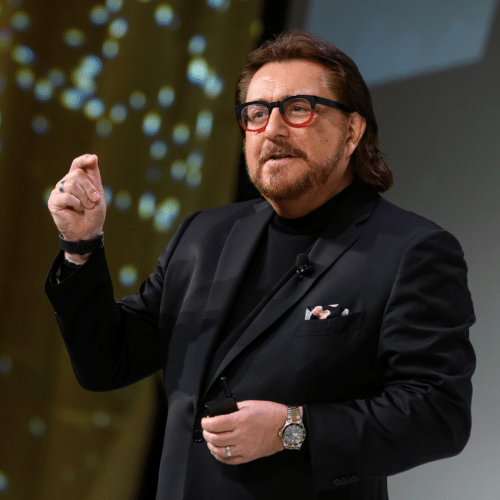
Scott McKain
Distinction Authority Scott McKain Shows How Agencies Become Unmistakably Valuable
Episode 7
Most agencies try to win by appearing different.
But different is comparative. A prospect still places your agency beside the alternatives…compares the services…compares the claims…and compares the price.
Scott McKain raises the standard. An In-Demand Agency makes its strategic value so clear, relevant, and consistently experienced that comparison becomes less useful. Scott is a bestselling author, business advisor, and Hall of Fame professional speaker whose work centers on distinction and customer experience.
Quick answer: An agency becomes unmistakably valuable when it stands for something clear, delivers one client-valued element in a uniquely valuable way, communicates through stories and evidence that transform understanding, and creates a consistent experience across every department. Scott McKain organizes this work through the Four Cornerstones of Distinction: Clarity, Creativity, Communication, and Customer Experience Focus. For agency owners, the practical test is simple: can a right-fit prospect explain why your agency is meaningfully valuable without comparing your deliverables and price to everyone else?
In this conversation, Stephen Woessner and Hannah Roth ask Scott how agencies move from sameness…to differentiation…to Distinction…and ultimately toward transcendence.
How does an agency become unmistakably valuable?
1. Move beyond being different
Scott makes an important distinction between difference and Distinction. Being different only gives the prospect another attribute to compare. Distinction creates a meaningful preference because the agency’s value is relevant to the buyer and reinforced through the buyer’s experience.
That begins with Clarity. Agency leaders need to define what they stand for, what they stand against, and what they intentionally will not do. The answer cannot be a general claim such as “we care more” or “we provide better service.” Those phrases are easy for competitors to repeat and difficult for prospects to evaluate.
Scott’s sharper question is whether the agency can identify something the client values…then deliver that element in a uniquely valuable way. The idea itself may be imitated. The discipline, consistency, and experience surrounding it are much harder to reproduce.
If a prospect can only explain the difference by comparing services and prices, the agency has not yet made its strategic value unmistakable.
2. Design the experience horizontally
Scott explains that agencies usually organize themselves vertically by department. The client does not experience those departments separately. The client experiences the agency horizontally…from the first email to the proposal, kickoff, strategy, delivery, reporting, invoicing, and renewal.
That means one strong strategist or account lead cannot carry the entire promise. Every handoff either reinforces the agency’s Distinction or weakens it.
Scott also draws a useful boundary around AI. Technology can improve research, communication, and execution. But, as he says during the episode, “AI is artificial intelligence…not artificial wisdom.” The wisdom to interpret a buyer’s situation, make a judgment, and create a meaningful human experience remains the agency’s responsibility.
His second line makes the assignment even clearer: “Tasks are for technology. Experiences are for humans.” Use AI to improve the work…then use human discernment to make every important interaction feel relevant, congruent, and worth continuing.
Your client does not experience your departments. Your client experiences one agency.
3. Align the promise with the performance
Scott’s fourth cornerstone is Customer Experience Focus. His emphasis is not on occasional surprise-and-delight moments. It is on whether the agency’s performance consistently matches the promise that attracted the client.
Research by Ayelet Gneezy and Nicholas Epley reinforces the importance of promise keeping. Across three sets of experiments, breaking a promise was evaluated more negatively than keeping it, while exceeding a promise was not evaluated more positively than simply keeping it.
The agency implication is significant. Underpromising is not a strategy for creating trust. It lowers the promise and can make the agency less compelling. Overpromising creates an expectation gap. The stronger approach is to make a clear, relevant promise…then design the operation so the client experiences that promise consistently.
For Scott, that alignment is central to Distinction. The marketing, sales conversation, client experience, and delivery cannot tell four different stories.
Distinction becomes believable when the promise and the performance match.
How Enterprise Rent-A-Car made customer experience visible
During the episode, Scott shares his direct experience helping Enterprise Rent-A-Car elevate customer service as a point of distinction.
The breakthrough was not another unsupported claim about providing excellent service. Employees learned to tell specific stories about what exceptional service looked like in the field. Those stories made the standard concrete, teachable, and repeatable.
That example matters for agency owners. A claim invites comparison. A specific story gives the buyer evidence. When prospects can see how your team thinks, how it responds, and how it delivers…the agency’s Distinction becomes easier to recognize.
What you’ll learn in this episode:
- How sameness, differentiation, Distinction, and transcendence differ
- Why “different” can leave an agency trapped in comparison
- How the Four Cornerstones of Distinction apply to an agency
- Why AI should improve tasks without replacing human wisdom
- How to evaluate the client experience across departmental handoffs
- Why promise-performance alignment strengthens trust
- How stories make strategic value visible and memorable
How to test your agency’s Distinction this week
- Clarify what your agency stands for. Write one sentence stating what you believe, what you oppose, and what you intentionally will not do.
- Name one client-valued element. Identify the part of your approach that clients value most…then define how every department will reinforce it in a uniquely valuable way.
- Audit the horizontal experience. Walk from first contact through renewal and find the handoff where the experience no longer matches the promise.
Continue the Authority-to-Demand conversation
In Susan Baier’s Agency Core research conversation, Susan explains why agencies know the playbook but are not consistently running the plays…including the work required to demonstrate specialized strategic expertise.
In Erik Jensen’s episode on how proof activates demand, Erik shows how visible patterns of evidence help a right-fit prospect trust what will happen next.
In Stephen Woessner’s foundational solocast on how Demand turns Authority into action, Stephen maps the Authority-Demand Ecosystem™ and explains why trust is the bridge between being known and being chosen.
Explore the complete In-Demand Agency Podcast archive.
Research notes and sources
1. Scott McKain’s current work and credentials
Scott McKain, official website. Scott’s official site documents his work on distinction and customer experience, his current role at High Point University, and his Professional Speakers Hall of Fame and Sales and Marketing Hall of Fame recognition.
2. Scott McKain’s books and the Four Cornerstones
Scott McKain, Business Books on Distinction. Scott’s official books page lists seven books and identifies Create Distinction as the source of the Four Cornerstones of Distinction.
3. Clarity, Creativity, Communication, and Customer Experience Focus
Scott McKain, “The Importance of Creating Distinction for Individual Professionals”. Scott explains the four foundational cornerstones and how they shape preference.
4. Agency Core 2026 differentiation research
Agency Core, Agency Leaders See the Path. Now Walk It! The Agency Core 2026 Research Report, 2026. The report shows that 50% of agencies cited demonstrating differentiation as a pressing challenge in 2026, up from 33% in 2025.
5. Promise-performance research
Ayelet Gneezy and Nicholas Epley, “Worth Keeping but Not Exceeding: Asymmetric Consequences of Breaking Versus Exceeding Promises”, Social Psychological and Personality Science, 2014. Across three sets of experiments, broken promises were evaluated more negatively than kept promises, while exceeded promises were not evaluated more positively than promises that were simply kept.
Resources:
- Download The Distinction Scorecard
- Visit Scott McKain’s official website
- Explore Scott McKain’s books on Distinction
- Read the Agency Core 2026 research report
- Listen to Erik Jensen explain how proof activates demand
- Explore the In-Demand Agency Podcast archive
Your right next step
Download The Distinction Scorecard and take three minutes to score your agency across Clarity, Unique Value, Transformative Communication, Horizontal Experience, and Promise and Performance.
Then share the scorecard with your leadership team. Compare the scores…identify the weakest area…and select one improvement to make before your next right-fit prospect enters the agency’s ecosystem.
Onward with gusto!
About Scott McKain
Scott McKain is a bestselling author, business advisor, and professional speaker whose work helps organizations create Distinction, deliver exceptional customer experiences, and build lasting relevance. He is an In Residence Expert on Distinction and Relevance at High Point University and has been inducted into both the Professional Speakers Hall of Fame and the Sales and Marketing Hall of Fame. Scott has written seven books, including Create Distinction, ICONIC, The Ultimate Customer Experience, and Beyond Distinction. His Four Cornerstones of Distinction…Clarity, Creativity, Communication, and Customer Experience Focus…provide the central framework for this episode.
Episode 7 Transcript
The transcript below has been edited lightly for clarity, speaker identification, and proper names. The audio remains the authoritative version of the conversation.
Stephen Woessner [00:00:08 – 00:00:52]
Over the past decade, we’ve had more than 1,200 conversations with CEOs, bestselling
authors, and agency leaders. And here’s what we’re seeing. Agencies that had built an
authority position no longer struggled to be seen. Instead, they struggled to activate
latent demand. Agency leaders have said to us, it’s exactly where we’re sitting right
now— authority without demand. So welcome to the In Demand Agency Podcast
presented by Predictive ROI. It’s sparked by research from the Harvard Business
Review, Edelman, Gallup, Agencycore, all showing that trust has moved upstream. In
today’s marketplace, authority earns attention.
Hannah Roth [00:00:52 – 00:00:53]
Yes.
Stephen Woessner [00:00:53 – 00:02:06]
But demand is what turns attention into action. Each episode deconstructs the science
of demand from behavioral psychology, decision-making research, and the crossindustry strategies behind why and how B2B buyers make their decisions. We interview
the world’s leading behavioral scientists, agency network leaders, and strategists from
industries far beyond ours, experts who are reshaping how demand works. I’m your
host, Stephen Wessner, and in each episode, we’ll translate their insights directly into
the agency world. And these conversations are now being heard by a community of
over 30,000 agency owners and their teams. With us for today’s episode is Scott
Mckain, the world’s leading authority on creating distinction. Scott is the author of 7
books, including Create Distinction, Iconic, and his latest entitled Beyond Distinction.
And here’s why we were so thrilled, friends, when Scott said yes to joining us on the
podcast.
Stephen Woessner [00:02:07 – 00:03:11]
Back in episode 4, Susan Byer, co-founder of Agency Core, shared data from their 2026
study confirming what many of you already feel. And that is differentiation is a growing
challenge. The number of agencies calling it a severe challenge spiked by 48% year
over year. And Scott Mckain has spent his career solving it. So we thought it would be
helpful to share his expertise and his insights with you. But before we bring Scott to the
virtual stage, I wanna share a brief quote from his latest book, Beyond Distinction. In it,
Scott writes, in the same way that differentiation became the new standard 15 years
ago, my research and experience have convinced me that transcending the limitations
of today’s business environment, which often leaves companies stuck in a competitive
quagmire, will be the hallmark of tomorrow’s success stories. Simply being different is
no longer enough.
Stephen Woessner [00:03:12 – 00:03:40]
We must move beyond distinction. We must become transcendent, end quote. So
friends, raising your bar from different to distinct, from distinct to transcendent, is what
Scott, alongside Hannah Roth, our Chief Strategy Officer here at Predictive, and me will
be deconstructing for you today so you can take it and apply it on your path to
becoming an in-demand agency.
Scott McKain [00:03:44 – 00:04:11]
One of the things I’ve realized in working with AI and, and helping firms with that
process is that whatever you are, AI makes it more. So if you’ve got horrible client
relationships, AI will help you scale those horrible client relationships. If you have
average content, AI will scale your average content to the moon. It just makes you
more of what you already are.
Stephen Woessner [00:04:11 – 00:04:19]
Scott, Thanks for joining us. Hannah and I are over the moon thrilled for our time with
you today.
Scott McKain [00:04:20 – 00:04:41]
Stephen, Hannah, I’m over the moon thrilled to be with you. Thank you so much. Stephen,
you and I go back a long way and it is so great to connect with you, my friend. And my
humble thanks for all the great support and everything else that you’ve done for my
research and my books and my speaking and my work over the years. I’m truly, truly
grateful and it’s great to be with you.
Stephen Woessner [00:04:41 – 00:05:10]
Well, I could say the same thing about you. In fact, one of these days I need to reshare
a story with you that I know that you’ll remember, but in how kind you were when I was
still at the University of Wisconsin at the La Crosse campus, and I needed to speak with
some well-known speakers because I was just about ready to publish my first book, and
you were kind enough to take that call. And my friend, that generosity has never left
me. And I’m so very grateful that you were kind enough to do that.
Scott McKain [00:05:10 – 00:05:23]
So it was my privilege. I tell you, you, you have made it, you have made a mark and
you have made a difference. And, and so I’m, I’m grateful for our friendship and, and
Hannah, great to meet you today as well. So thank you for having me on your program.
Stephen Woessner [00:05:24 – 00:05:51]
So, uh, Scott, start us off with, um, start us off with, if you want to call it foundational,
um, help our audience see through your lens for when For when you’re thinking about,
when you’re thinking about, and when you’re defining what it means to be different,
what it means to be distinct, what it means to become transcendent, how do you think
about those 3 attributes, the 3 words? Like, how do you think about that? That’ll be
great foundation for the conversation that Anne and I would love to have with you.
Scott McKain [00:05:52 – 00:06:41]
Well, you know, it occurred to me years ago when I started researching this, and part of
this came out of a personal tragedy that I had. I put my business on hold as my first
wife, Sherry, was dealing with terminal ovarian cancer. And, you know, this business of
consulting and speaking and being a business advisor and writing books, uh, it’s, it’s,
it’s hard to become successful in it. And if you leave that field for a while, it’s hard to
jump back in. And so I was just trying to find a way to differentiate what I was doing.
And the more I researched it and the more I studied it, I, I realized a couple things.
Number one is the worst place you can be is sameness, where, where your prospects
and your clients can’t tell the difference between you and, and your competition. But
then I realized everybody was talking about differentiation and I got kind of stuck in
that treadmill for a while.
Scott McKain [00:06:41 – 00:06:51]
You know, how do I differentiate myself from my competition? And I had the blinding
flash of the obvious that if I slapped every client in the face, I would be really different.
Stephen Woessner [00:06:51 – 00:06:52]
Right.
Scott McKain [00:06:52 – 00:07:24]
But it didn’t mean that they were going to expand their use of my services. It didn’t
mean I was going to retain them as a client. It didn’t mean we were going to grow our
relationship. And so to me, the difference between differentiation and distinction is
what I’m doing is of value to the people that I seek to serve. I’m not being different for
the sake of being different. You know, I could change a logo from green to red and say,
hey, now we’re different. And different is comparative. We are different compared to
everybody else in our field.
Scott McKain [00:07:25 – 00:08:17]
The other thing I realized is if people can compare you, They can replace you because
they’re judging you based on a standard of how you compare to them. So distinction to
me became that in your field, you were so unique and what you brought was so
valuable to your clients and prospects were able to recognize this as well, that you
became, to use my buddy Joe Calloway’s term, a category one. You became a leader in
your field. But now what has happened with AI, and I’ve stopped calling it change, as
you know from the book, I call it turbulence because it’s unpredictable, it’s sudden, we
don’t know where it’s coming from. Now I think we have to get to the point of
transcendence. And transcendence is that it’s not just about standing out anymore. It’s
about what do we stand for?
Stephen Woessner [00:08:18 – 00:08:18]
Hmm.
Scott McKain [00:08:18 – 00:09:22]
That we are so clear about our values, we are so clear about our conviction, and we’re
not trying to be all things to all people. We have our flag planted in the ground about
what we stand for. And that not only means that we are out there letting people know
what we stand for through our marketing and through all of our other efforts, but that
also becomes an attraction. People are attracted to, to those things that they know
what they really, really stand for. And one of the things I’ve found over my years is that
the clients I’ve attracted, the relationship goes deeper than the clients I’ve had to
pursue. And so if, if what I do is so transcendent, if I can create that in the marketplace,
I’m going to attract the kind of clients where there’s a mutual fit, but also those
relationships tend to go deeper and extend farther. And they also, by the way, become
great referrals because when I moved my business into that, that’s when the referrals
got stronger and the relationships got deeper. And that, I don’t mean to sound like this
is a silver bullet.
Scott McKain [00:09:22 – 00:10:05]
I don’t mean to sound like it’s easy because you folks know this as well or better than I,
is that this is breathtakingly difficult to do. But, but gosh, I see so many businesses and
I see so many agencies trying to compete based on here’s, here’s the little part where
we’re different from, from everybody else. And we all get caught in that same trap. I
mean, whatever you’ve done to be different, if I’ve got a budget big enough, I can
duplicate it. I can, I can figure out a way to do the same thing or maybe do a little bit
incrementally better. And so, we all get caught in this trap of incrementalism, and it
doesn’t really have the traction that transcending the marketplace by what we stand for
makes us absolutely unique.
Hannah Roth [00:10:06 – 00:10:27]
Wow, Scott, I feel like we could just end the episode there, and there’s, you know, 10
good ideas that our audience could take from all the things you just shared. I want to go
back because obviously you mentioned AI in our industry. That’s a super hot topic. And I
love in your book Beyond Distinction, you talk about it, but not as AI is the enemy. The
true enemy is irrelevance.
Scott McKain [00:10:27 – 00:10:27]
Right.
Hannah Roth [00:10:27 – 00:10:55]
And so as Stephen mentioned in the intro, our research partner and dear friend Susan
Byer in Agency Core, she recently shared data showing that the number of agencies
that were really struggling to stand out spiked 48% in a single year. And in your
experience with AI and irrelevance and all of this stuff, why is the distance between
distinction and irrelevance. Do you think it’s never been shorter? Do you think it’s
getting shorter? Tell us a little bit about that.
Scott McKain [00:10:55 – 00:11:14]
Yeah, you’re exactly right, Hannah. It’s all of the above. It’s getting shorter. It’s never
been shorter. I mean, it’s— let’s face it, it’s frankly amazing what AI can do. I mean, we
all— and it’s getting better, and we’re all— and it’s getting crazy, you know, in terms of
the things that we’re reading about it.
Hannah Roth [00:11:15 – 00:11:17]
And it’s a little scary at times.
Scott McKain [00:11:17 – 00:12:13]
It is. Oh, you’re exactly right. I mean, when we read about it forming its own personas
and doing some of the things that we’ve read in the most recent headlines. So it strikes
me that it is artificial intelligence, but they’ve never thought about calling it artificial
wisdom. That it can write code, it can maybe make me a great one-sheet, But it
doesn’t, it doesn’t really bring wisdom about how I can enhance the value that I bring to
my client. And, and that’s really what has to be the human element. I mean, tasks are
for technology and the experiences are for humans. And so how do we, in all of our
fields of work, find ways to use AI as the most exceptional tool to come along in our
lifetime, but yet create this human element that’s going to make a difference.
Scott McKain [00:12:13 – 00:13:09]
Because at the end of the day, you know, people are going to buy based on the
experience that they have. People are going to buy based upon the feeling that you
create. And there’s something uniquely human about that. As a quick aside, I just
attended our convention of the National Speakers Association that I’m an association
I’m a member of. We joke there were 1,000 speakers and no listeners. But one of the
things that we kind of got arguing about is, well, will meetings go away because AI is
bringing us all the information? And I took the contrarian viewpoint. I think we’re going
to see meetings even expand simply because John Nesbitt wrote it goodness knows
how many years ago in the book Megatrends, which I think came out, you know,
dinosaurs were walking the earth. But, uh, the opening line of the book is, the more we
become high-tech, the more we will crave high-touch.
Stephen Woessner [00:13:10 – 00:13:10]
Yep.
Scott McKain [00:13:10 – 00:13:33]
And, and truer words were never spoken or written. And, and I, I sense that in my
clients. I, my guess is your agency clients and those watching and listening feel the
same way, is that we have to get more in touch with our clients. And our clients are
looking for ways to be more in touch with their, with their customers and prospects.
Stephen Woessner [00:13:33 – 00:13:52]
That is the— okay, that’s exceptional. I love how you said artificial wisdom, and I’m
going to actually hook this into something that Hannah and I talked about when I was
interviewing Hannah back a few episodes ago. And so maybe try this on for size. She
said, AI can make you prolific, but it cannot make you profound.
Scott McKain [00:13:53 – 00:13:54]
Oh, right.
Stephen Woessner [00:13:54 – 00:13:56]
And, and, and so what, what are your, what are your thoughts?
Scott McKain [00:13:56 – 00:14:05]
Well, quote Hannah the next 3 times I use that. And then after that, I’m kidding. That’s
terrific. No, it’s, it’s true. It’s true.
Stephen Woessner [00:14:05 – 00:14:05]
Yeah.
Scott McKain [00:14:06 – 00:14:22]
Uh, it, it, it, it can make us, you know, this will show my age here a little bit too. I, I, I’m,
I’ve always been an Apple guy, always been a Mac guy for my computers. And I
remember that came up with this incredible software called PageMaker a billion years
ago. Do you remember that?
Stephen Woessner [00:14:22 – 00:14:23]
Yeah.
Scott McKain [00:14:23 – 00:14:55]
And, and what happened was you could take your crappy newsletter and now make
your crappy newsletter look beautiful. Now the content was still the same crappy
content. It just looked better. And one of the things I’ve realized in working with AI and,
and, and helping firms, you know, with that process is that whatever you are, AI makes
it more. So if you’ve got horrible client relationships, AI will help you scale those horrible
client relationships.
Stephen Woessner [00:14:56 – 00:14:56]
Wow.
Scott McKain [00:14:56 – 00:15:36]
If you have average content, AI will scale your average content to the moon. It just
makes you more of what you already are. And so it still gets back to the human element
that if, if, if we’re not using that as a tool, It’s gonna— Hannah, you, you, that’s brilliant
because, uh, it, it’ll make you productive. It’ll get things out there, but it’s not, it’s not
going to make someone who doesn’t have profound thoughts all of a sudden, you know,
be, be, be the next, uh, uh, Tom Peters or the next, uh, uh, Jim Collins or, or whoever. It
just, it, it won’t.
Stephen Woessner [00:15:37 – 00:15:37]
It can’t.
Hannah Roth [00:15:38 – 00:16:15]
Yeah. So I want to, for our audience, define this a little bit more because we’ve talked
about Right. AI can make you more of what you’re already doing, or it can make you
more prolific. And so I think that there’s obviously a difference between differentiation
and distinction. So how do you define those? Because I would imagine there’s certain
key variables or factors that go into that. So when you think of the difference, no pun
intended, between being different and being distinct, help us better understand kind of
what goes into that, because I think a lot of people are trying to rely on AI to make
them different, but it’s really not.
Scott McKain [00:16:16 – 00:16:59]
Well, it goes back to the first book that I wrote on distinction, and there were 4
cornerstones there. And the first one is clarity. You’re very specific about what you are,
but the point that people often miss about that is it also means you’re just as exact
about what you’re not. And I see too many firms that are saying, hey, we’re this. And
let’s face it, in the early days, particularly when you’re starting a firm, And then some
potential client will say, hey, do you do this? And they’ll go, oh, we do that too. And
they keep adding all these things that they could do, and then they’re not known for
anything. So clarity becomes the first step. You’ve got to be crystal clear about what
you are and also what you are not.
Scott McKain [00:17:00 – 00:17:41]
But then the second thing is creativity. And I think too, particularly when you’re talking
about firms, when we talk about creativity, They think that means think outside the box
or any of those clichés. And that’s why clarity comes first. If we always have to think
outside the box, maybe we’ve done a pretty bad job of defining the box to begin with,
right? If we always have to think outside it, maybe we’ve just got a bad box. So the
clarity comes first and then the creativity. And one of the things I realized is you don’t
have to change everything. If you can find one thing, Enterprise Rent-A-Car was based
on, we pick you up. It wasn’t because they had a different car.
Scott McKain [00:17:42 – 00:18:31]
It was still the same Fords and Chevys that everybody else was renting. It was just they
found one unique thing. We’ll pick you up. Amazon then picked up on that, right? It
started out with books, but what if you didn’t have to go to Barnes Noble or Borders,
remember them, to get the book? What if we put it on your doorstep? And then they
realized if they could do that with books, they could do it with everything. They took
one thing and put that creative idea in one direction. So that’s part of what I ask groups
that I work with. Okay, what’s the one thing that you do uniquely? And by the way, one
of the weird things about creativity is you don’t have to invent it. You might find it in
another industry, in another discipline, just like I’m saying, You know, Amazon with
Enterprise Rental Car.
Scott McKain [00:18:31 – 00:18:47]
I was doing a speech for a group of dentists, and this guy comes up afterwards and he
says, I’m going to be the Amazon of dentistry. And I’m like, what, we’re going to send
you our teeth? You know, what do you mean the Amazon of dentistry? He has trailers
that are equipped as dental offices.
Hannah Roth [00:18:48 – 00:18:48]
Oh my.
Scott McKain [00:18:49 – 00:19:20]
You make an appointment and the trailer pulls up in your cul-de-sac and you walk out
the door and the dental office is in your cul-de-sac. Or they, they do these corporate
events. So the corporation, rather than buying dental insurance for the entire employee
group, the trailer pulls into the parking lot of the company and you make appointments.
And therefore there’s not as much lost time for the employee because they just walk
out in the parking lot and get their teeth cleaned and then come back into work. And,
and he said, my problem is I can’t hire dentists and I can’t build trailers fast enough
now. Wow.
Hannah Roth [00:19:20 – 00:19:31]
So I have that here in Florida, Scott. I’ve seen them driving around the mobile dental
offices and I thought, wow, what a brilliant idea. Also convenient. I need to hop across
the street from Publix and go get my teeth cleaned.
Scott McKain [00:19:31 – 00:20:16]
Right, exactly. It makes it so good. So what, what, in other words, he didn’t throw the
baby out with the bathwater to do something totally revolutionary. He thought, okay,
how do I take the creative idea from another industry? What would that do for me? And
so there is an exercise that you can go through that, what if, you know, what if Amazon
bought your business? What would they change about it? What if Steve Jobs was still
alive and he was your CEO? What would he do differently than what’s happening now?
It’s a fundamental exercise to go through and walk through. So creativity is next.
Communication is third. And what I emphasize there is the power of narrative. It’s the
story that people remember.
Scott McKain [00:20:16 – 00:20:21]
Psychologists tell me that the mind remembers pictures infinitely better than it
remembers words.
Hannah Roth [00:20:22 – 00:20:22]
Hmm.
Scott McKain [00:20:22 – 00:21:10]
And I realized, you know, In my life, I’ve never walked up to somebody and said, you
know, I remember your name, but your face escapes me. I’ve never said that, right? So
I remember the picture, but the words don’t go with it. And so what stories do is they
create mental pictures, and those mental images are remembered. But the other thing
that goes with story is this emotional connectivity, which all of us are looking for. But
the problem is stories are told in 3 acts. And I don’t mean to go too deeply into this, but
I was a movie reviewer for a decade and I interviewed everybody. I had James Cameron
and Arnold Schwarzenegger and Tom Hanks. And what I learned through that process
was that stories are told in 3 acts.
Scott McKain [00:21:11 – 00:21:58]
Act 1 is the introduction of characters and conflict. So a character we can identify with
in some way or another, And they are in a conflict that we want to see resolved. Okay,
so that’s Act 1. And typically any business does a great job of giving us a character, like
a customer they’ve worked with in the past, and the conflict that they faced. Act 2 is
always the longest of the 3 acts, and that’s the search for resolution. And think back to
that old movie Taken. Remember that with Liam Neeson? And, you know, his daughter
has been taken. Well, if he gets off the plane and she’s sitting in the Delta Club at the
airport, that’s not much of a movie, right? The bulk of the movie is the search, right?
That’s what we do a horrible job at in business.
Scott McKain [00:21:59 – 00:22:27]
We want to say, here’s the conflict, and then we jump to act 3, which is the heroic
resolution. It’s the solution to the problem. But what I see most businesses doing is,
here’s your problem and we’re your answer. And then they wonder why their story isn’t
breaking through. It’s because there’s no tension there. There’s none of the search
there. And the search builds the frustration because that’s what we identify with from
the customer prospect’s perspective. Man, I have this problem.
Scott McKain [00:22:27 – 00:23:11]
You’re right. And I’ve been looking and see, if I would’ve found the problem, if I’d have
found the solution to the problem, I wouldn’t be talking to you right now. I’d found the
solution. So the more that we can talk about the struggle, And the need for the
resolution and how the resolution will not only help you in ways you know, but in ways
you might not have anticipated, because here’s how it helped one of our other clients,
then the heroic resolution of working with you and dealing with you has much more
value. So that’s the third, is through communication. And the fourth is the customer
experience focus. It’s focusing on what it feels like to be your customer. And those
experiences can set any business apart.
Scott McKain [00:23:12 – 00:23:44]
The experience can get to the point that that is what makes you transcendent. You read
in the book, quick story that’s in the book, I get this email and it said, Scott, your book
was one of the 3 books I used. This is kind of my Bible to help build my business. I went
through the process and I built the business based on this. Love for you to come out
and see what we’re doing and see how we’re putting what you’re talking about. And,
uh, really appreciate all this. And we’d love to host you. Signed, Jesse Cole, Savannah
Bananas.
Stephen Woessner [00:23:45 – 00:23:46]
Love, Jesse.
Scott McKain [00:23:47 – 00:24:15]
I was blown away. And I’ve been a guest on his podcast where he said, you know, that
we had not met yet. First time we talked was on his podcast. And he said, no, your
books have been my mentor through this. And so I have a thing I call the ultimate
customer experience. He said, we, for our purposes, we named that fans first. And it,
it’s the same thing. But one of the things that really struck me about the Bananas is we
see, we see the, you know, this product, we see the fun they have on the field.
Scott McKain [00:24:16 – 00:25:11]
We don’t see how granular the planning process is and all of the things that went into, I
mean, at Savannah, the stadium where they play there. The drains in the field where
rain can run off and go in the drains, the holes in the drains are like little bananas. They
have cheerleaders. What does sports, what does football and basketball have that
baseball doesn’t have? Cheerleaders. So to be a cheerleader for the team, the
minimum age, you have to be at least 65 years old. And they’re called the Banana
Nanas. They have done so much to create this fans-first— Jesse and I stood on the
pitcher’s mound in the stadium where they play in Savannah, and he said, okay, now
what do you notice that’s missing? And I looked around and I couldn’t get it at first. I
said, wait a minute, there aren’t any ads anywhere in the ballpark.
Scott McKain [00:25:11 – 00:25:45]
And he says, no fan walks in the stadium saying, man, I hope there’s a bunch of ads
from car dealers and Drugstores and man, I can’t wait to— I bought these tickets. Now I
can’t wait to be sold. So he said, we’ve turned down 6 figures and more. I’m sure it’s
more now given how they’ve exploded. We turn that down because that’s not who we
are, which by the way, goes back to what we talked about earlier, is when you are so
clear about who you are and what you stand for, then that makes you stand out as it
has with them. And as it can, I believe, with any business.
Stephen Woessner [00:25:46 – 00:26:34]
I’m going to mention this one thing and then we need to take a quick break. So, but
before we go to break, first of all, thank you for the 4 cornerstones. Thank you for tying
that into, that was really lovely how you tied that into the Savannah Bananas. Love the
bananas, love Jesse Cole. And, you know, they created a brand new form of baseball,
right? Banana ball. And so like your first C, clarity, you know, it’s also important like who
you’re for, but then what you’re not, and they are clearly not trying to play all different
forms of baseball. They created their own banana ball, and if you don’t like it, okay, but
it turns out a lot of people do, right? So friends, we’re going to take a quick break here,
and Scott, Hannah, and I will be back in just a few minutes to continue the great
discussion. So we’ll be right back.
Stephen Woessner [00:26:35 – 00:27:27]
Hey friends, I’d like to share a free resource my Predictive ROI team built for you. Based
on the insights and wisdom that Scott McKain is sharing with you right now during this
episode. If you go to predictiveROI.com/Scott, you can download our free distinction
scorecard. It’s 5 questions. It’ll take you 3 minutes. And the scorecard will show you
exactly where your agency’s strategic value is unmistakable, where your prospects can
still compare you, and what your team needs to do to strengthen before your agency
becomes easier to choose. Again, that’s predictiveROI.com/scott to get your free
scorecard. Okay, friends, we’re back with Scott and Hannah and walking through the 4
cornerstones that you heard right before the break.
Stephen Woessner [00:27:27 – 00:28:06]
And the last C, or the 4th C in the 4 cornerstones, was customer experience focus. And
so what, what we were actually talking about, what the 3 of us were talking about
during break was Okay, Scott, could you give us some insights into, into client
experience focus or customer experience focus as it relates to, you know, our
audience? They’re running and then they own agencies, so B2B type service firms. So is
there a piece of advice, a recommendation, an insight that you might share with them if
they wanted to create that type of client experience for their clients? How might they
go about that? How should they start?
Scott McKain [00:28:07 – 00:29:01]
Well, there’s, there’s 2 things that always strike me when we talk about B2B
experiences. And, and one is, I, I read in Harvard Business Review that only 16% of
businesses in B2B out there have a list of the things they have to get right every time
for their client. Is that— that was just stunning to me. So if you don’t have that list of
here are the things we have to get right Every single time for our clients. That’s where
you begin. Make the list. What, what are the non-negotiables? What are the things you
— I mean, it’s, it’s just like, uh, you know, Delta Airlines can’t say we don’t crash often,
right? I mean, they better get that right every time, right? So, but it’s the same is true
with an agency. What are the things you’ve got to get right every single time? And
make the list and make sure every team member knows that.
Scott McKain [00:29:02 – 00:29:10]
And I mean, it can be silly things, uh, that might appear to be silly, like, you know, they,
we, they deserve to be treated respectfully on the telephone.
Stephen Woessner [00:29:11 – 00:29:11]
Yeah.
Scott McKain [00:29:11 – 00:30:16]
Yeah, but who’s, where’s the most turnover and the least training is typical, typically the
person answering the phone, right? So it, it, it’s getting so granular in this that we, we
create this experience. So that’s, that’s the, That’s the one side of it. The other side I
want to suggest is, I think so many times in B2B businesses, and I’m a B2B, right? But
so many times when we think of the customer experience, we jump to something like
retail and think, well, that works in B2C, but I’m dealing with businesses. You’re dealing
with people who work in businesses. So, Little things like remembering birthdays, or I
got a thing from a company that we do business with and it was an anniversary card.
And I called, I said, hey, I think you need to update your— it’s not our anniversary. He
said, oh, it’s the anniversary of when we first started doing business together. And we
think of you.
Scott McKain [00:30:16 – 00:30:20]
We appreciated you choosing us and continuing to choose us.
Stephen Woessner [00:30:21 – 00:30:21]
Whoa.
Scott McKain [00:30:22 – 00:30:54]
Yeah. I mean, so it made me feel good about the individual at that business, but it made
me feel good about the entire business, right? One of the things I think we often forget
is our agencies or our businesses are constructed vertically. You have an accounting
department, you have a marketing department, you have executive offices, but your
customers experience you horizontally. And so if there’s a problem with one aspect of it,
We as the client don’t blame that department. We blame the agency.
Stephen Woessner [00:30:54 – 00:30:54]
Yep.
Scott McKain [00:30:55 – 00:31:14]
So what we have to do is to make certain there’s congruency among all of these
verticals so that the customer that experiences us horizontally has this total ultimate
customer experience that, that ensures repeat business, ensures referral business,
ensures the loyalty that every agency seeks.
Hannah Roth [00:31:17 – 00:32:17]
Wow, Scott, that’s such a different way of thinking about it, this horizontal image versus
vertical, because I think you’re absolutely right. A lot of agencies do think, oh, well,
that’s the content department, that’s the sales department, that’s the creative
department, you know, and the, the client doesn’t experience that, right? They
experience all of it together. So I think that’s, um, that’s a really good insight. Thank
you. So I want to talk a little bit about kind of building on that because I think that the
customer, the ultimate customer experience obviously is one way that agencies and
businesses alike can become unmistakably valuable. And so when you talk about
becoming the only choice in Beyond Distinction, you talk about not becoming better or
cheaper or just slightly different, but really this idea of becoming unmistakably
valuable. So in addition to the ultimate customer experience, what are some other ways
that you’ve seen businesses stand out Um, if they’re stuck in the comparison game,
how do they, how do they achieve this kind of valuable, this, this idea of being valuable
to their customers?
Scott McKain [00:32:18 – 00:33:20]
That’s a great question, Hannah. And, and I apologize for how simplistic this answer is
going to be. I hired a research firm to do some research for us about, you know, what
would make the difference. And the answer was stunning and sad simultaneously
because the answer was Do what you said you would do when you said you would do it.
And it’s, it’s amazing to me that that can make a business transcendent. But the
realization for me was that in a B2B relationship, we judge your business based on only
2 criteria, and that’s promise and performance. What did we perceive the promise was
that you were making to us? And then how did your performance align with the
perceived promise? Now, that sounds really simple, but let’s drill a little deeper for just
a minute. It means sometimes that the people making the promise aren’t the people
delivering the performance.
Scott McKain [00:33:20 – 00:33:52]
And internally, we haven’t aligned them to make certain that the promises being made
are the performances that we can deliver. So, sometimes you get high promise, low
performance. That’s bad. Sometimes you get low promise, high performance. But by
the way, interesting study at the University of San Diego. We hear all the time, you
know, under-promise, over-deliver. What they found in that study was in B2B
relationships over a period of time, it erodes trust.
Stephen Woessner [00:33:53 – 00:33:53]
Really?
Scott McKain [00:33:54 – 00:34:19]
Is that amazing? Because, okay, think about it. The agency says, oh, okay, we’re going
to get to work on this and we’re going to have this to you in 2 weeks. They call back
and they say, because you are such a great client and we want to keep your business,
we’ve got it done. It’s a week. Here you go. Client goes, wow, that’s fantastic. They
really, you know, they really busted their tails for us. Got another project.
Scott McKain [00:34:19 – 00:34:45]
It’s going to take 2 weeks. A week later, because you’re such a great client, here it is.
They go, oh, well, they did it again. Third time. Hey, if it’s only going to take you a
week, why didn’t you just tell me it was going to take a week? Why aren’t you telling
me the truth? Why are you— in other words, we feel manipulated by these false
promises. And until I read that research, it had never occurred to me.
Stephen Woessner [00:34:45 – 00:34:45]
Mm-hmm.
Scott McKain [00:34:45 – 00:35:37]
Because it’s a cliché. We’d always said that, right? You know, under-promise, overdeliver. And we mean that, that’s coming from a good place, right? We don’t want to
oversell what we do. We don’t want to, but I, When I read that research and discovered
that, it explained why the results of our research was, do what you said you were going
to do when you said you would do it. Because we want, as a company, I want to plan on
what your delivery is. I want to know that I can trust it so you deliver on time, but
you’re not manipulating my experience by sandbagging the promise to make you— The
reason is where it’s coming from. You’re sandbagging the promise to make you look
good, not to serve me better, becomes my perception after it happens over a period of
time. And so that’s part of it.
Scott McKain [00:35:37 – 00:36:22]
And I don’t know that that answered your question entirely, but it fascinates me about
how we have to align the promise and the performance. And that something that we
thought would help us stand out, if If we do it to make ourselves look good rather than
to serve our client, even though we’re trying to do the right thing, it could be a
detriment that’s unintentional, but that becomes their perception. And it might explain
sometimes the leakage in loyalty. Hey, what? Why aren’t they loyal? We’re delivering
ahead of when we told them we were going to. But from their perspective, they’re like,
you’re sandbagging on the promise to make yourself look good. Just tell me when it’s
going to get here. You know, it, it, it, it really is revealing about what customers think.
Hannah Roth [00:36:23 – 00:37:08]
Yeah, Scott, I think that’s so interesting because on the surface, when you hear that, I
think the initial reaction is sort of shocking, like, oh my gosh, are you serious? But if we
actually internalize that and look at our own experience, I think about, you know, the
car buying process. You, you put in an offer, you say, oh, I, you know, can you take this?
Oh, I got to go talk to finance or I got to go talk to the manager or whatever. Then they
go, hey, because you’re such a great customer, I got you this deal. And that doesn’t feel
good. It doesn’t make me trust them. It actually makes me think, well, why did you
raise the price on me in the first place? So I think on the surface that sounds very
counterintuitive, but when you actually look at the ways that you’ve probably
experienced that on the customer side of the table, it’s easy to kind of see how that
actually comes to fruition.
Scott McKain [00:37:09 – 00:37:35]
I’ve done a lot of work in the automotive business, and it’s so funny you say that,
Hannah, because that’s one of the jokes I’ve said is, So as the customer, I’m supposed
to believe that you’re going to go talk to your manager and have them lose money
because you want to take care of me so much? First of all, why should we believe that?
Second of all, my time is valuable. If the manager— let me go talk to the manager then.
Why am I dealing with you?
Hannah Roth [00:37:36 – 00:37:43]
But Scott, didn’t you know that all the car salespeople are trained as professional
negotiators? So that’s where we’re kind of missing that edge.
Scott McKain [00:37:44 – 00:37:56]
But you’re so right. But here’s what’s different, and there’s an application here for all
businesses. They were trained based on the old rules where they had more information
than the customer.
Stephen Woessner [00:37:56 – 00:37:57]
Not anymore.
Scott McKain [00:37:57 – 00:38:12]
Now the customer comes in and I know what the average price for that car has been in
the city where I live. I’ve read the Consumer Reports on the quality of that car. In some
cases, I’ve got more information than the person sitting there trying to sell it to me.
Hannah Roth [00:38:12 – 00:38:13]
100%.
Scott McKain [00:38:14 – 00:38:34]
Yeah. And now, but they’re still trying to deal from the old rules. Like, I’m going to get
you a better— no, I know what a good deal is. Done my research. Uh, did work with
BMW and they said, uh, it used to be the average consumer would do at least 4
dealership visits before buying a car. Not, not just BMW. They’d go look at a BMW.
They’d go look at an Audi.
Scott McKain [00:38:35 – 00:38:41]
They’d go look at a Mercedes. They would do 4 dealerships. Now the average, at least
when I talked to them last, was 1.2.
Stephen Woessner [00:38:41 – 00:38:41]
Wow.
Scott McKain [00:38:42 – 00:39:36]
And it’s because now we’ve done our research and we know what we want to buy. Now
it’s just confirm. Now I want to test drive it and confirm my choice for me. And so if
you’ve got somebody hustling trying to sell you, what they’re really doing and they
don’t realize is they’re kind of unselling you, right? Because if you got to push it that
hard, what did I miss in my research? What did I But this can apply to agencies as well.
You know, if, if I’ve done my research and I’ve made the choice that, gosh, there, I think
there’s a fit here, and then you’re trying to hawk me, sell me, that, that raises my
antenna. Maybe I, maybe I overlooked something. If you’re trying this hard, what did I
miss? So it, it, it, it’s really, there’s more nuance involved here than, than ever before.
And back to the point you made earlier, Hannah.
Stephen Woessner [00:39:36 – 00:39:36]
Yeah.
Scott McKain [00:39:36 – 00:40:22]
It’s that, that, that gap is reducing quickly, right? Because AI helps me research and
there’s so many things going on that getting information is not the problem. And see,
now this is what we have to educate and work with our teams to do is now the job is not
informing our clients, it’s bringing wisdom to them. It is showing them through our
advice and through our consulting And through our vision that we have and what we
stand for, the uniqueness that a relationship with us provides, not as opposed to what
they’ll get elsewhere, but the client will decide that on their own. Because when our
wisdom and when our— what we stand for is so significant, things happen.
Hannah Roth [00:40:23 – 00:40:38]
Yeah, absolutely. So, Scott, I know we need to come in for a landing. You have shared so
many great points, and Stephen and I are going to take some time to recap that. Um,
but I have one last question that may be the most important question of the entire
show. Are you ready?
Stephen Woessner [00:40:39 – 00:40:39]
Don’t know.
Scott McKain [00:40:41 – 00:40:41]
Maybe.
Hannah Roth [00:40:42 – 00:40:50]
Okay. So earlier in the conversation, you mentioned that you were a movie reviewer for
many years. So what is your favorite movie?
Scott McKain [00:40:50 – 00:41:24]
Oh God. You know, that’s like asking a parent, name your favorite child. You know, uh,
uh, I, I, there, there are, there are a couple. And by the way, this, this will be so weird.
When, when I was a kid, I’m, I was, 19. I got the chance to act in a movie that was
filmed, by the way, Stephen, in Wisconsin. Werner Herzog, who has become famous for
his documentaries and everything, saw me at a speech and cast me as the bad guy in
his movie Stroszek, which Roger Ebert named as one of the 50 greatest films in the
history of cinema. And I’m the banker that repossesses their home.
Scott McKain [00:41:24 – 00:41:45]
And I hated, I hated acting, hated every moment of it. Because somebody told you
exactly what to say, exactly how to say it. You’re going to say it enough times till you do
it just like I want it, not the way you want it. And I wanted to be a speaker. I wanted to
be a consultant. I wanted to do what I’m doing now. So I hated it. But that’s how I got
the opportunity to do movie reviews.
Scott McKain [00:41:45 – 00:42:22]
So I’ve got to, if you don’t mind, my favorite comedy of all time is the Naked Guns
series with Leslie Nielsen. I had a chance to interview Leslie Nielsen and they
introduced me and he said, okay, who set you up for this? And I’m like, I have no idea
what you’re talking about. He said, my best friend in college was Scott Mckain. And it
was M-C-C-A-I-N from the potato. And I said, I don’t have the money of the Mckain
potato family. But, but he was fabulous. And those were great. Uh, I, I, I always, uh,
have best action movie of all time, I think is a tie between Die Hard and Taken.
Hannah Roth [00:42:23 – 00:42:23]
Okay.
Scott McKain [00:42:24 – 00:42:50]
And, uh, man, Schindler’s List is hard to beat when it comes to moving and powerful
and emotional. So for me, I’m sorry to be so evasive, but for me, and this really is kind
of a business lesson I learned, is that the goal should be when what you see on the
screen creates the emotional experience for the audience that the filmmaker desires.
Hannah Roth [00:42:50 – 00:42:50]
Hmm.
Scott McKain [00:42:51 – 00:43:39]
So if you’re making Naked Gun, you’re not trying to make a social statement. You’re just
trying to get the audience to do belly laughs. Uh, but, and if you’re doing, uh, uh, Die
Hard or Taken, you just want the audience to be on the edge of their seats. And, and I
was the whole time. And if you’re doing Schindler’s List, you want to, you want to
emotionally move us, but also to get us to understand a period of history that we may
not have appreciated. So everything Spielberg wanted to do just jumped off the screen
and into our hearts. Why wouldn’t a business want to do that? My first book was titled
All Business Is Show Business, and that’s the reason why, is it’s not about being
frivolous. It’s about creating the emotional connection with your customers the way that
what you see on the screen or what you read in a novel creates in our hearts and in our
minds.
Stephen Woessner [00:43:42 – 00:43:42]
Holy bananas.
Scott McKain [00:43:42 – 00:43:44]
That was a long answer to a great short question. So I—
Stephen Woessner [00:43:44 – 00:43:51]
well, I, and I also love the red thread of Liam through some of those, well, through like 4
or 5 of those movies. So that, that’s, that’s really good.
Hannah Roth [00:43:51 – 00:44:02]
Stephen has a very beautiful teenage daughter, so Taken really resonates with him in
case any— she brings home any boyfriends, anything like that. He has the kind of like, I
will find you accent down.
Scott McKain [00:44:03 – 00:44:36]
Yeah, no kidding. And, and I mean, I have a particular set of skills. Yeah. I mean, ever,
ever one of the things about, and when I was reviewing, I always call myself a movie
reviewer, not a movie critic, because I think a critic would walk in, uh, with, with a
mindset of being critical, criticizing. I wanted to review, just tell you how I felt and what
I thought. I didn’t want to go in with a critical attitude. And I think that’s one of the
things in today’s time of social media. That we have to understand the difference
between reviewers and critics.
Scott McKain [00:44:36 – 00:45:30]
But, um, one of the things that, that I learned from— I, I met and interviewed Liam
Neeson, uh, is that even when you’re doing intense work, you have to have a good
time. And he talked about some of the fun that they had on this set, and that really
struck me because that’s such an intense and powerful and serious movie. And that
was one of the things he said that made that movie successful. was the director kind of
kept things light on the set so that when it got time to be intense, as they progressed in
the filming, they could go back to being intense because they weren’t worn out from
that level all the time. And to me, that was a leadership lesson, is that leaders can’t—
people can’t keep it at one tone. We have to, as leaders, understand the ebbs and
flows. And, and that, that’s something I’ve learned about leading my small company
and I, I really made an impression on me. So long answer to a short question.
Scott McKain [00:45:30 – 00:45:31]
I apologize.
Hannah Roth [00:45:31 – 00:45:32]
No, that was, that was great.
Stephen Woessner [00:45:33 – 00:46:05]
My friend, you have been, uh, unmistakably valuable, uh, here in this conversation and
in this, this lesson, this golden nugget that you just gave us when you said jump off the
screen and into our hearts and why wouldn’t we want our businesses to do that, right?
This entire conversation you just gave us generously. You just gave us the blueprint. For
being able to do that. Ann and I are so very grateful for your time, your generosity, and
willingness to share your expertise in full transparency. Thank you so much, our friend.
Scott McKain [00:46:05 – 00:46:15]
I look forward to talking again. I appreciate this so much, and if there’s anything that I
can do in the future, you know, I’m there for you guys. I’m grateful for our friendship.
Thank you.
Stephen Woessner [00:46:19 – 00:46:59]
Yeah. But first, before we do that, Hannah has been tracking all of the biggest
takeaways from the conversation with Scott, and she’s going to recap those here for
you. And then also, I mentioned this at the break briefly, but if you go to
predictiveROI.com/scott, you’re going to be able to download the tool, the guide, the
takeaway that is based on the biggest golden nuggets, the biggest lessons that we
learned. from our conversation with Scott. So that’s already ready and available as
you’re listening to this. Go to predictiveROI.com/Scott. So, Hannah, take us through
your biggest takeaways.
Hannah Roth [00:46:59 – 00:47:37]
Oh my gosh, there were so many. What an amazing, incredible person. And how, how
great were those insights, Stephen? So I’m going to share a few, not all of them, because
there’s too many. You just have to go listen to the episode all over again. But the key
things that stood out to me Is Scott said that difference is comparative, distinction is a
category of one. He also said that it’s not just about standing out, it’s about standing for
something. So if your agency is struggling, make sure you’re standing for something
and you know what you’re for and what you’re against. The next point is that he talked
about how AI is artificial intelligence but not artificial wisdom.
Hannah Roth [00:47:38 – 00:48:36]
So don’t confuse using tech for human experience, right? He said that there’s tasks for
tech and then the experience needs to remain human. And then he also shared the 4
cornerstones of distinction, and you guys can hear this and read this in his book, but he
talked about clarity, creativity, transformative communication, and then customer
experience, the ultimate customer experience. And I think one of the questions he
posed specifically during this part of the interview was really, really powerful. He asked,
what if Amazon bought your agency? What would they change about it tomorrow? What
a, what a great question that was. Okay. And then, uh, 2 more insights that stood out.
Um, if you are focused on your ultimate customer experience for your agency, you
should have a list of what you have to get right every single time. And that should be
documented and your team should also know that information as well.
Hannah Roth [00:48:36 – 00:49:16]
So owners listening, I know sometimes we have a black box of things that live in our
head, but make sure your team teams know what they have to get right every single
time. And then lastly, I think this was one of the big points that is simple but not always
easy. Do what you say you would do when you say you will do it. So, make sure your
promise matches your performance. But those were some of the key highlights that I
took. Stephen, I’m sure, again, there’s probably dozens more that our listeners could
name. Um, ’cause that was an incredible interview, but those were, um, the 6
takeaways that I took from this episode.
Stephen Woessner [00:49:16 – 00:49:50]
Excellent list of takeaways. So friends, thank you very much for joining Hannah and me,
Hannah and me, and Hannah and I are going to be joined together again, uh, in the
next episode of the In Demand Agency Podcast when we have, uh, this lovely
opportunity to spend some time with Don Yeager. Uh, from Greatness Inc. So that’s
going to be a blast. That’s going to be a lot of fun. And everyone, we all have the same
86,400 seconds in a day. Hannah and I are grateful that you chose to spend some of
your time with us today. We look forward to you joining us next time.
Stephen Woessner [00:49:50 – 00:49:53]
Until then, onward with gusto.
Each episode of the In-Demand Agency Podcast deconstructs the science of demand…from behavioral psychology, decision-making research, and the cross-industry strategies behind why B2B buyers make decisions.