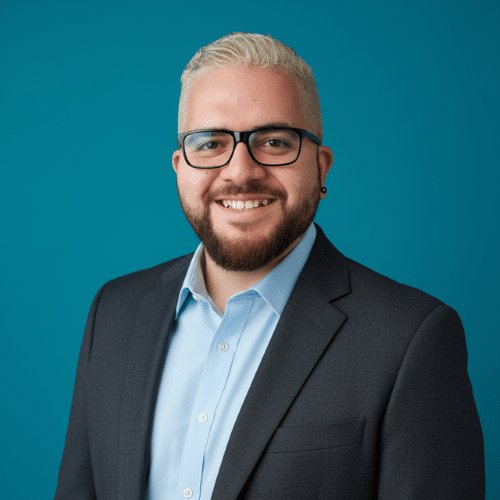
Guillermo Orellana
YouTube Strategist Guillermo Orellana Explains How Agencies Build Buyer Trust With Video
Episode 11: YouTube Strategist Guillermo Orellana Explains How Agencies Build Buyer Trust With Video
Your agency may have years of useful teaching in podcast episodes, webinars, workshops, and client conversations.
But a right-fit prospect arriving on your YouTube channel should not have to dig through an archive to find the answer to one question: Can this agency help us solve the problem in front of us?
Guillermo Orellana joins Stephen Woessner to show what changes when that archive becomes an intentional viewing experience. Guillermo founded Glitch Media Group and works as a strategic content partner to Don Yaeger. His production work includes YouTube and podcast strategy for Don’s Corporate Competitor Podcast.
Quick answer: Agencies build buyer trust with video when a right-fit viewer can find a relevant answer, see how the agency thinks, and decide where to go next. Guillermo Orellana’s approach begins before recording: know the viewer and the question they want answered. Give the video an accurate title and thumbnail; use the opening to fulfill that promise. Then organize existing interviews, workshops, and lessons into a library with useful pathways from a Short to a focused compilation or a full conversation. Review how viewers respond, but do not confuse views or subscriptions with a prospect’s decision to work with your agency.
In this episode, Guillermo and Stephen map the choices a viewer makes…from finding and choosing a video, to staying with it, to exploring a deeper lesson. Stephen then connects those choices to Predictive ROI’s Authority-to-Demand Ecosystem: visible expertise can earn attention, useful proof can strengthen the Trust Bridge, and the right invitation can help a prospect act. A YouTube view alone is not Demand.
How can an agency use YouTube to build buyer trust?
1. Make a promise the viewer can recognize…and keep it
Guillermo first looks at whom a channel is attracting and how those people respond. Subscriber totals and view counts can raise useful questions, but they do not settle whether the audience is a right fit. He asks where viewers arrive, what they choose, where they leave, and whether different groups respond differently.
His next move is to understand what the video teaches before packaging it. He uses the transcript to identify the subject, writes a description that makes the lesson clear, and then works toward the title and thumbnail. The two should complement each other rather than repeat the same words. Most important, they should make a promise the video can fulfill.
YouTube’s own guidance on titles and thumbnails emphasizes accuracy, brevity, and making the most important words visible early. Its content-performance guidance separates appeal from engagement and satisfaction: did someone choose to watch, stay, and find the experience worthwhile?
For an agency, the test is practical. When a prospect clicks a video titled around a specific business problem, does the opening begin helping with that problem…or does it make the viewer wait through an introduction that has nothing to do with the promise?
A title can earn the first decision. The teaching has to earn the next one.
2. Turn an archive into a route through your expertise
Guillermo does not tell agency owners to discard their existing work and start from zero. He begins by cataloging it. Transcripts make past interviews, presentations, and workshops searchable so a team can find a strong lesson without rewatching every recording.
Next comes editorial judgment. Which older idea still matters? Which audience question does it answer? Could several short segments from different conversations become one useful, focused compilation? Guillermo describes assembling clips around a shared subject, watching the result as a whole, and asking whether the sequence works for the viewer…not simply whether it was easy to edit.
Then he gives the viewer a path. A Short can introduce one idea. A related video can point to a focused compilation. An end screen on that compilation can offer a full conversation. YouTube documents the related-video feature for Shorts and end screens for eligible videos. Those features make the route possible; they do not guarantee that viewers will take it.
Guillermo’s question is whether each step earns a deeper one. A person who wants one answer should receive that answer before being asked for an hour of attention.
The library becomes more valuable when a prospect can follow an idea…and see more of the agency’s judgment at each step.
3. Build a channel your team can sustain and your business can evaluate
At the end of the conversation, Stephen asks Guillermo what an agency should do if it commits to a year on YouTube.
Guillermo begins with agreement inside the business. Decide whom the channel is meant to serve, what the team can produce, who owns the work, and which results leadership will use to evaluate it. A producer reporting views while the owner expects qualified conversations is a problem to solve before the publishing calendar fills up.
His recommended sequence is to establish the goals and production logistics first, publish and learn from the response, then build enough of a content backlog to keep the commitment the team has made. Start with a cadence the agency can keep. Review what viewers choose, how long they stay, which subjects bring people back, and what happens after they watch.
YouTube’s recommendation guidance encourages creators to follow audience response, prioritize sustainable quality, and help viewers discover related content. For an agency, that platform evidence is only part of the scorecard. The business also needs to notice when a right-fit prospect mentions a video in a biz dev conversation, uses a resource, requests a meeting, or brings a clearer understanding of the agency’s expertise into the room.
A sustainable channel makes the work repeatable. Buyer evidence tells you whether that work is moving in the right direction.
What Guillermo’s work with Don Yaeger illustrates
Guillermo and Stephen discuss Don Yaeger’s Corporate Competitor Podcast as a working example of an existing interview library with more than one entry point. A known guest or timely subject can introduce new viewers to a conversation. Guillermo then considers what else the viewer might find useful…another lesson, a thematic compilation, or a full-length episode.
That is a production example, not a promise that a particular guest, collaboration, or Short will deliver the same result for another agency. Guillermo also cautions that an unexpectedly popular video may owe its reach to several factors. The right response is to inspect what happened rather than declare a universal tactic.
For an agency owner, the application is to choose a recurring problem that right-fit prospects recognize. Gather existing teachings about it. Put the best insight first. Build one honest invitation from the short version into the deeper explanation. Then ask whether prospects understand your agency’s thinking more clearly after taking that path.
What you will learn in this episode
- How Guillermo diagnoses a channel before recommending another format or publishing schedule
- Why a title, thumbnail, opening, and video must make and fulfill the same promise
- How transcripts can turn older webinars, podcast interviews, and workshops into a searchable library
- How a Short, a focused compilation, and a full conversation can serve different viewer needs
- What YouTube’s related-video and end-screen tools can do…and what they cannot promise
- Why a channel needs a production cadence the agency can maintain
- How to distinguish viewer activity from evidence that a right-fit prospect is moving toward a conversation
Put one prospect question through a video-path test
- Choose the question. What does a right-fit prospect ask before deciding whether your agency understands the business problem?
- Show your thinking. Which existing recording, example, or teaching answers that question with enough depth to demonstrate your team’s judgment?
- Map the next step. What shorter introduction would help the viewer find that lesson…and what useful invitation belongs at the end of it?
Before your team produces something new, see what already exists under your digital bed. Guillermo’s suggestion is to catalog it, test the viewer path, and make the next useful decision visible.
Continue the Authority-to-Demand conversation
In Erik Jensen’s episode on how proof activates Demand, Erik explains why specific proof helps a right-fit prospect recognize a relevant pattern. Guillermo shows how a video library can give the prospect time to examine that proof.
In Don Yaeger’s episode on business stories that move people to act, Don makes the listener central to the story. Guillermo carries that listener-first principle into the title, opening, edit, and viewing path.
In Simon Bowen’s episode on showing your agency’s thinking, Simon makes specialized expertise visible through models. Guillermo explores how to make expertise watchable and discoverable through a coherent YouTube library.
Explore The In-Demand Agency Podcast archive.
Research notes and sources
1. Guillermo Orellana’s work
Glitch Media Group’s official site identifies Guillermo Orellana as its founder and describes his work across strategy, storytelling, YouTube channels, podcasts, and content systems. Don Yaeger’s official Corporate Competitor Podcast page credits Guillermo as an editor. Guillermo describes his broader role and method in this recorded interview.
2. What YouTube says about discovery and viewer response
YouTube’s title and thumbnail guidance recommends accurate, succinct titles that put important words early. Its content-performance guidance distinguishes appeal, engagement, and satisfaction. Its recommendation-system explanation says recommendations follow audience signals and encourages sustainable quality. These sources support the platform mechanics in the notes; they do not establish that any one tactic causes agency revenue.
3. A route from a Short to a longer video
YouTube explains how a related video can be added to a Short and how end screens can promote other videos. Both features have eligibility or availability conditions. Guillermo’s proposed Short-to-compilation-to-episode sequence is his production approach, not a platform guarantee of viewer movement.
Resources
- Explore Guillermo Orellana’s work at Glitch Media Group
- Connect with Guillermo Orellana on LinkedIn
- Explore Don Yaeger’s Corporate Competitor Podcast
- Read YouTube’s title and thumbnail guidance
- Read YouTube’s explanation of content performance
- Explore The In-Demand Agency Podcast archive
Your right next step
At your next content meeting, bring one question a right-fit prospect asks before the prospect is ready to meet your team.
Find the strongest answer you have already recorded. Give that answer a truthful title. Make sure the opening delivers on the title. Then decide what the viewer should learn next…and connect the two pieces so the prospect can see more of how your agency thinks.
Do not begin with a subscriber goal. Begin with a viewer you want to serve and an idea worth staying for.
Onward with gusto!
About Guillermo Orellana
Guillermo “GMO” Orellana is the Founder of Glitch Media Group and a strategic content partner to Don Yaeger. He works across storytelling, video production, YouTube and podcast content, channel strategy, and the systems that help a team publish consistently. Don Yaeger’s Corporate Competitor Podcast site credits Guillermo as an editor. In this episode, Guillermo draws on his production work to explain how an organization can turn existing content into a more useful viewing experience…one designed around the audience’s questions and the next piece of expertise the audience needs to see.
The transcript below has been edited lightly for clarity, speaker identification, and proper names. The audio remains the authoritative version of the conversation.
Stephen Woessner [00:00:08 – 00:00:54]
Over the past decade, we’ve hosted more than 1,200 conversations with CEOs, bestselling authors, respected researchers, and agency leaders. And that body of work has generated nearly 1 million podcast downloads and YouTube views from listeners and viewers in more than 100 countries. 100 countries. And here’s the red thread running through the insights we’ve collected. Agencies that have built an authority position no longer struggle to be seen. Instead, they struggle to activate latent demand. Agency leaders have said to us, is exactly where we’re sitting right now, authority without demand. So welcome to the In Demand Agency Podcast presented by Predictive ROI.
Stephen Woessner [00:00:55 – 00:02:12]
Sparked by research from the Harvard Business Review, Edelman, Gallup, Agencycore, all showing that trust has moved upstream. In today’s marketplace, authority earns attention. Yes, but demand, demand is what turns attention into action. Each episode deconstructs the science of demand from behavioral psychology, decision-making research, and the cross-industry strategies behind why in how B2B buyers make their decisions. We interviewed the world’s leading behavioral scientists, agency network leaders, and strategists from industries far beyond ours, experts who are reshaping how demand works. I’m your host, Steven Wessner, and in each episode, we’ll translate their insights directly into the agency world. And these conversations are now being heard by a community of over 30,000 agency owners and their teams. With me for today’s episode is Guillermo Orellana, founder of Glitch Media Group and strategic content partner to Don Jaeger.
Stephen Woessner [00:02:12 – 00:03:11]
And you may recall Don recently joined us for episode 8 of the podcast. Guillermo is a storyteller and producer, an operator who loves the data, and in his words, a psychological marketer who wants to understand what the audience is experiencing before creating content. And here’s why I was so excited, over the moon, when Don introduced Guillermo and me. Agencies spend their days helping clients make their expertise visible. Awesome. But when it comes to their own YouTube channels, many of those same agencies take a webinar, a podcast, a Zoom recording, they upload it and hope that the platform does the rest. And I know that you know this, but that’s not a winning strategy, friends. And it doesn’t create the experience that your prospects want from you as they look for the visual indicators of proof.
Stephen Woessner [00:03:11 – 00:03:41]
That you may be the right partner to help them solve an important business issue or challenge. So Guillermo and I, we’re going to map out what happens in a viewer’s mind from the moment that they read one of your video titles and they see one of your thumbnails to the opening seconds of watching that video, and eventually to the next step your prospects take as they begin to walk across your trust bridge and over to the demand side of your ecosystem.
Guillermo Orellana [00:03:44 – 00:04:07]
Breaking consistency is probably the worst thing that you could do because your audience is going to expect the thing. Hey guys, we’re going to be posting a video every single week. And if you drop that in like the first few months, now you’ve lost trust. And then losing design trust is probably the one word that I’ll use for anything that we do here. If you don’t have the trust of the audience, they won’t trust you there. Therefore, they won’t view you, watch your content, buy your product.
Stephen Woessner [00:04:10 – 00:04:23]
Guillermo, welcome to the In Demand Agency Podcast, my friend. I am so thrilled that you said yes, and I cannot wait to learn from you and to share your insights and wisdom with our audience. Thank you.
Guillermo Orellana [00:04:23 – 00:04:34]
Yeah, no, thank you, Stephen. It’s an honor to be on here with you. Uh, thank you to our mutual friend, Mr. Don Yeager, for putting us here together. Uh, basically all storytellers, right? That’s what we are.
Stephen Woessner [00:04:35 – 00:05:24]
Amen to that. So we’re going to dive right into YouTube, friends. We’re going to focus on that particular channel and how to, as you heard in the introduction, how to take Guillermo’s insights from psychology, from behavioral science, how that gets all knitted together into content, how you present it, and so forth. So let’s say that you’re looking at a company And on the surface, maybe the company is successful, but yet their content is not really up to par. What are some of the data points? What are some of the leading indicators? What are some of the things that you look for first to assess where they’re at channel-wise before you even start to, to, to make recommendations with respect to content?
Guillermo Orellana [00:05:26 – 00:06:00]
Yeah, you know, there’s always a good look at ratios. So if you were to— it’s easy. You can, and you can all find this public information too. If you were to look at a, let’s say, YouTube channel’s subscribership versus how many views they have, which is public information that we can all access from the channel. And if the ratio doesn’t match, then, you know, there’s something missing there. I could make assumptions about certain channels if they’re purchasing ads, which is a fine strategy to do, right? If they’re purchasing views, which is— there’s a whole strategy about, you know, getting good views from certain countries around the world.
Stephen Woessner [00:06:00 – 00:06:00]
Yeah.
Guillermo Orellana [00:06:01 – 00:06:19]
Um, and then there’s if they have a lot of subscribers but low views. Okay, what’s going on? And that kind of leads me into the first questions that I would ask them. High subscribership, low views. Okay, maybe you’re not capturing the people that are actually subscribed to you. Maybe not giving them the right content. Maybe they’re not the right audience that you want subscribed to you.
Stephen Woessner [00:06:19 – 00:06:20]
Okay.
Guillermo Orellana [00:06:20 – 00:06:50]
But the other way around, lots of views, low subscribership. Cool. Maybe your content is getting out there. Maybe it’s being viewed by a lot of people. But those people aren’t then converting to being fans of you, right? Subscribing to you. There’s a wonderful book called Superfans where they talk about making those people that love your content, like they love you, love your content. And those are the people that are subscribed to you. Heck, they might even subscribe to the community on Patreon or something like that where they pay you a couple bucks a month for extra content.
Guillermo Orellana [00:06:51 – 00:07:03]
Those are the superfans. And that’s what I would look at first, basically what goes there. And that’s just public information. So I would do that pre-analysis with somebody. Uh, and then before, like you said, before diving into that content.
Stephen Woessner [00:07:03 – 00:07:29]
So how do, okay. So you, you, you mentioned something a minute ago when you said, um, hopefully I got these ratios right. I think I heard you say high subscriber count, low audience. And then you said maybe that’s not then the right audience. So how, how do you know, like how, so that, that’s obviously a leading indicator, a ratio. How do you peel that back even further to know, is this the right audience?
Guillermo Orellana [00:07:30 – 00:08:55]
Yeah, a great indicator is, um, you know, here’s where we get into the real data, the metrics of it, right? Um, how far is your engagement, right? Do, do people, uh, on a 10-minute video that you post, do people fall off after the first 30 seconds? Okay, you haven’t kept them. Do they fall off halfway? Okay, uh, maybe that’s a, a new indicator for how long your video should be, maybe 5 minutes instead of 10 minutes, right? Because what matters a lot, uh, to YouTube specifically, and the algorithm changes, I would say every 3 months, it’s probably every month, um, and they just don’t tell us, right? Um, I’d probably say that the percentage of engagement matters a lot nowadays. Um, so having someone watch 100% of your 5-minute video versus 50% of your 10-minute video. The 100% is going to be more important because it lets YouTube know, hey, this channel is creating content that engages the customer or their audience the most. And if you’re— you can actually look at your subscribers versus non-subscribed. Your subscribed people, if they’re watching at a low percentage, I would say that’s the wrong audience. Maybe, maybe there are people, maybe you ran a promotion at some point where you said subscribe to do this XYZ thing. Maybe it’s just people that followed you before you maybe altered your content a little bit and you’re just not— it’s just not the right fit.
Guillermo Orellana [00:08:56 – 00:09:30]
Everything I’ve ever learned in terms of the psychology of marketing is the right people with the right content at the right time. You know, you don’t want to be putting the wrong content at 2 a.m. to the right audience. They’re never going to see it. And there’s always different formulas that you can do with that. But, um, and then you can look at your non-subscribers and see, oh wow, they’re watching at a higher percentage than my subscribers. What is that? Maybe I should, maybe there’s a new audience for me to go out there. And then you can really dive down if you really want to into age ranges and all that kind of stuff, gender and stuff.
Stephen Woessner [00:09:31 – 00:09:58]
Wow. Okay. So before we get into like maybe bolstering engagement, so non-subscribers, for example, well, actually let me, let me rewind just a little bit further because I think I, I just want to make sure that I heard this correctly. Uh, it sounds like YouTube, uh, it’s better for you, for your subscribers to watch 100% of a shorter video than 50% of a longer video. Did I get that correct?
Guillermo Orellana [00:09:58 – 00:10:12]
Yeah. And, and YouTube actually changed their algorithm in July of 2025, I believe it was, to favor Shorts, uh, which is a short video anyway, right? It’s not long-form content. So, uh, and that shows engagement. Did they watch your whole Short?
Stephen Woessner [00:10:12 – 00:10:35]
Huh. Okay. It’s interesting. Our team has been producing a lot of Shorts and maybe, it may be, uh, our team knew that. I didn’t know that. Um, so, okay. Interesting. Um, so then when you mentioned like non-subscribers, so let’s say that your non-subscribers seem to be more engaged with your content, at least the data seems to indicate that they’re more engaged in your content than the subscribers.
Stephen Woessner [00:10:35 – 00:10:52]
So how do you peel that back further to figure out more about who the non-subscribers are. It’s not like YouTube gives you a list of the non-subscribers. So, but, but there must be a way to, to, to figure that out a little bit closer and then start producing maybe some test content for that. So how do you figure that out?
Guillermo Orellana [00:10:53 – 00:11:08]
Yeah, that’s a, that’s a hard one. And, and, you know, it’s funny, you could look at any big YouTuber. I’m going to give one example of a guy that I watch a lot. His name is MKBHD. He does tech reviews online. Uh, he’s kind of an industry guru in sorts of tech and cars and all kinds of stuff.
Stephen Woessner [00:11:08 – 00:11:08]
Okay.
Guillermo Orellana [00:11:09 – 00:11:15]
He has, uh, shown in his analytics as well that most of the people that watch his videos are non-subscribers.
Stephen Woessner [00:11:16 – 00:11:16]
Really?
Guillermo Orellana [00:11:16 – 00:12:07]
I’m talking, and I’m talking north of 85%, like big numbers, non-subscribers. And that’s just the culture of YouTube, right? Um, if you don’t want to be getting notifications from, uh, one person, you’ll watch maybe a video that maybe is about the content you want, about the new Apple iPhone Duo, whatever it is, right? But you don’t necessarily want to look at all the other content of that person. You might want to just watch that video. And now you become a view, an engagement score, but you’re also tagged as a non-subscriber for that person. That’s the hardest one to convert to, but a lot of people feel weird about this because it does mean a change in your content. You got to ask them for it. Hey guys, subscribe for more content like this. Hey guys, I’m going to, you know, for the notification, uh, right when the next video posts, please subscribe to the video.
Guillermo Orellana [00:12:07 – 00:12:19]
It helps the channel. It’s the actual content makers asking for it. And you’ll notice that with any video you watch nowadays, even big channels like WatchMojo, they’ll say like, subscribe, and ring the bell for notifications, right?
Stephen Woessner [00:12:20 – 00:12:59]
Wow. Okay. So, so let’s go to some of the videos. Well, I mean, you helped Don with, uh, Don and his team, because you’re part of the team, uh, you know, building out the YouTube channel. And it’s impressive within a very short period of time, you guys have, uh, garnered, I think about 2 million views and you’re up to now probably north of 6,000 subscribers, but some of your videos, so 6,000 subscribers and some of your, in some of the, you know, the videos, Corporate Competitor Podcast, get 300,000 views. It’s like, well, how do 6,000 subscribers generate 300,000 views? But, but I guess it’s like what you’re talking about with non-subscribers are contributing to a big chunk of that.
Guillermo Orellana [00:12:59 – 00:13:08]
Yeah. And with Don, it’s very unique because, so I used to work with John Maxwell as well, another author. Actually, the YouTube plaque that I have behind me is from the John Maxwell channel.
Stephen Woessner [00:13:08 – 00:13:08]
Yeah.
Guillermo Orellana [00:13:08 – 00:13:41]
I helped them achieve that. And they have collaboration posts where people love John, but he might not be in any generational thing. So the people that he’s working with or creating content with kind of bring in some of the audience too. And that’s what I’ve noticed as well with Don Yeager. So Don Yeager is a 13-time New York Times bestseller. And every single time we have somebody on his podcast that has Notoriety out in the world, those videos kind of seem to shoot up. So we take advantage of that collaboration post. We just had an episode with Simon Sinek.
Guillermo Orellana [00:13:42 – 00:14:26]
So immediately there’s a section in every YouTube video that you post where you can ask a collaborator to collaborate with you. And essentially what that does is it sends that video to their audience as well, which boosts up your views of your video. You get all the views and all that, all the benefits of it. Hmm. But you are expanding your audience to their audience as well. And a great example is what you just said. Uh, we did have a video that let’s call it viral, right? North of 300,000 views with, I believe it was Leland Vittert, who is, uh, was Don’s 13th New York Times bestseller when the book launched October of last year. So because of the launch of the book, because of him on there, because people searching him, he’s also an anchor on the news that goes on the news every single day.
Guillermo Orellana [00:14:26 – 00:14:31]
that kind of helps the notoriety of the video, which boosts stuff like that, which only helps the channel.
Stephen Woessner [00:14:31 – 00:15:01]
Yeah, for sure. Okay, so, so those are some really, well, both strategic and tactical things that you can, you can control, um, or at least try to sort of like put on the calendar and see if these things kind of sync up and, and all of that. And, and then, and then are there, are there the times where a video Where, you know, maybe, maybe you’re normally getting 10,000 views or something like that. Then you get a 300,000 view and you’re like, hmm, how in the world did that happen? Does, does that ever happen?
Guillermo Orellana [00:15:01 – 00:15:17]
Yeah. And it happens a lot. And that’s where you have to really look at the data. Um, there is, uh, there’s some software out there that you can look at where you can look at follow-through, uh, views. So maybe somebody posted a video with the Delta CEO speaking about XYZ.
Stephen Woessner [00:15:18 – 00:15:18]
Okay.
Guillermo Orellana [00:15:18 – 00:16:11]
And then from that video, your video with Delta CEO, as a, for example, for Don, it was recommended to that person for them to look at next. And that’s where things like descriptions, tags, uh, like audiences, um, tagging people, you know, uh, kind of helps because it helps you become a follow-through video on the content, stuff like that. Um, it, it really matters. Um, looking at the data because it could just be a fluke. It could just be that that week that topic was popular on the internet and your video was posted at the right time. It’s hard to gauge virality, uh, because you’d have to be trying to predict the future, like the stock markets at all times, right? But you can gauge kind of intent if there’s something big going on. Like right now, the mortgage rates are really high as of the recording of this. They’ve shot up to 7%.
Guillermo Orellana [00:16:12 – 00:16:29]
I would assume that people who are worried or potential homebuyers, which is someone you can target on Google and YouTube, people looking to buy a home, are probably looking at videos that would have that kind of content. So creating that kind of content for content creators is probably a good idea right now if that’s your niche.
Stephen Woessner [00:16:30 – 00:16:30]
Okay.
Guillermo Orellana [00:16:30 – 00:16:34]
So it’s staying ahead of the, of the, of what’s going on in the world.
Stephen Woessner [00:16:34 – 00:17:28]
This is so good. Oh my gosh. I feel like I’m just like, Interrogating you with all these questions, but this is so good. So let me, let me, let me ask you this and then, and then, and then we’ll take a break after this. But so instead of maybe trying to like game the algorithm, it sounds like if we’re creating good, helpful content that, and if it’s topical or timely, as you just mentioned, like interest rates, even better. And then to give, we have to give ourselves the best opportunity for success. Like when you mentioned like the recommendation of the follow-through videos and so forth, by taking advantage of tags and so forth, because if we don’t, then we’re essentially, that’s a missed opportunity. So instead of gaming the algorithm, focus on good quality content that your audience is going to find helpful and then take advantage of some of the tech pieces like tags and other things that you mentioned in order to give us the greatest opportunity for success.
Stephen Woessner [00:17:29 – 00:17:30]
Am I tracking with you?
Guillermo Orellana [00:17:30 – 00:17:40]
Yeah, absolutely. So the first thing that, for example, that I would do with someone asking the question that you originally asked, why is our content not doing too well? What can we do to make it better?
Stephen Woessner [00:17:40 – 00:17:40]
Yeah.
Guillermo Orellana [00:17:40 – 00:18:31]
Okay. The word, I guess the word that I’ll use is streamlined. Is your content streamlined with the things that you just mentioned? Tags aren’t as big nowadays, but you should have them. Do your videos have tags? Do your videos have good descriptions? Because AI nowadays, generative engine optimization, right? It’s like SEO. AI will look at content that has text in it. So does your video have the right text for AI to grab onto to even connect you with the content that the user at the other end is searching? Right? Descriptions, titles, in the order of, of, you know, of importance. If, for example, I’ll use Don since we’re using him as an example. He has a lot of CEOs, you know, C-suite type people on his shows.
Guillermo Orellana [00:18:31 – 00:18:50]
Um, but do we put maybe a relatively unknown name, uh, in the title of the video, or do we put the lesson that that person gave and maybe the name of the company, right? Is the name more important than the, the lesson? And that’s the kind of stuff that you’d have to gauge and streamline based on your content.
Stephen Woessner [00:18:51 – 00:19:17]
Okay, I lied. I’m going to sneak in another question, uh, you know, before the break. So when you just mentioned the right text for AI, So immediately I thought, well, isn’t that the transcript? But maybe it isn’t. Maybe it’s something in addition to the transcript, or is it making sure that your video has a transcript that is broken into chapters, like the, the description is really built out like that? So can you give us a little more context around that?
Guillermo Orellana [00:19:17 – 00:20:20]
Yeah, transcript is important, but it all kind of ties together. Title is probably the leading thing, right? That’s the thing that someone’s going to read, uh, when they’re just skimming YouTube. They search the word, uh, buying my first home and stuff is going to load up based on your title, your description, your transcript that YouTube thinks is relevant to that user. Now, the hard part is it’s not relevant to someone searching that thing. It’s relevant to that user, right? Everything that you get, if, if you and I were to search the same thing on our YouTube accounts, we’d probably get slightly different, uh, uh, recommendations because they’re trying to target us. And that’s where titles, descriptions, and the transcript actually really help if you’re trying to find the right audience. So if we, you and I were to search the same words, are you the right audience or am I the right audience for what the content creator wants? And they should streamline their content for who they want, myself, yourself, or someone completely different from us. Or, and the hardest part is if they want both of us, it’s, is a catch-all enough to get both of us in the same search?
Stephen Woessner [00:20:21 – 00:20:44]
Well, now, now I’m feeling pretty good about that. When this episode is published to YouTube, I’m feeling pretty good that we’re going to rank pretty well because of the information that you’re sharing. Like, okay, if we do a good job with the, with the title, the description, and do all the technical things that you just mentioned, then, you know, because your expertise likely aligns pretty well with what people are searching for, how to get better on YouTube.
Guillermo Orellana [00:20:45 – 00:20:54]
Yeah, absolutely. And I mean, I don’t know if the numbers are still accurate, But, uh, the biggest search engine in the world has been Google for a long time.
Stephen Woessner [00:20:54 – 00:20:54]
Yeah.
Guillermo Orellana [00:20:54 – 00:21:27]
And the second biggest search engine has been YouTube for a long time. And YouTube is owned by Google, right? So whatever helps you on the YouTube side helps you on the Google side, which just kind of helps your business. That’s why I’ve always loved the idea of helping other businesses streamline their content versus creating my own content, because, uh, because the algorithms are changing and there’s so much different niche that you can get into. And this is just a wonderful world. And now you throw the third thing into the mix, the AI searches, right? That’s an— is that moving above YouTube? I don’t know, but they all go hand in hand.
Stephen Woessner [00:21:28 – 00:22:03]
Well, okay, I promise everyone this, this is the last thing I’m going to say and/or ask, and then, and then I, and then we will take a break. Um, you know, Don blew me away during one of our Friday accountability calls. I, I didn’t know this, and, and he said, I think this was maybe right about, maybe you guys were already launching corporate competitor on YouTube. Maybe you’re a couple months in or something like that. We were talking about like how it was going. And he said to me, he goes, you know, YouTube is now the number one destination for people listening to podcasts. And I was like, what? And then I had to think back. I’m like, oh, wait a minute.
Stephen Woessner [00:22:03 – 00:22:32]
You know, Caitlin, my daughter, or our daughter, who is going to be turning 20 in January, you know, I’ll, you know, walk in, she’s getting ready in the morning, that kind of stuff or whatever. and I see that she’s watching something and I’ll say to her, I’m like, oh, what are you watching? And she’ll say, I’m listening to a podcast. And I’m like, what? No, you’re, you’re watching something. But to her it’s the same, it’s the same thing. And I’m like, you’re watching something. No, I’m listening to a podcast. And, and, and that just like sort of didn’t make any sense to me. So then when Don said that, I’m like, wow.
Stephen Woessner [00:22:33 – 00:22:54]
So, um, you know, the fact that YouTube is the number one place where People are going for podcasts, which is totally surprising to me. But I mean, when, you know, I see it in your guys’ data, it is so impressive. So smart move doing that. But my guess is you would encourage other brands, agencies, and so forth to also take advantage of a massive channel.
Guillermo Orellana [00:22:56 – 00:23:16]
Uh, yeah, absolutely. Always take advantage of the massive channels. And yeah, uh, when we moved from audio to video on that, um, around the same time there was a feature that was released and you got I stay up to date on these features because I’m a huge geek, right? But YouTube created YouTube Premium. I don’t know if a lot of you have heard of YouTube Premium.
Stephen Woessner [00:23:16 – 00:23:16]
Yes.
Guillermo Orellana [00:23:16 – 00:23:46]
But YouTube Premium started allowing you to play the audio of the video that you’re watching when you close your device. So that allows— I don’t know, I think about that a little. You got to think about that a little bit. So if you’re watching a podcast that’s an hour podcast, you can now hit play. and then turn off your device and it’ll keep playing so you can go on your drive. You can listen to that podcast on your drive. And that lets me know, okay, cool, people are listening to YouTube too. They listen to music, music videos.
Guillermo Orellana [00:23:47 – 00:23:57]
YouTube Music is a big thing that started going off of that. So just all those little things kind of tell you like where things are headed. And video is— video is always going to be king, in my opinion.
Stephen Woessner [00:23:58 – 00:24:57]
Well, friends, okay, so now we’re going to take the break that I kept promising you and then coming up with 16 other questions to ask Guillermo. So we’re going to take a break here. And then when we come back, we’re going to get deeper into Shorts and thumbnails and hooks and all of those things so that as you are thinking about how to make your expertise visible on the biggest visual platform and where the biggest audience is for this type of content, uh, then you’ll have some really good steps that you can take. So we’re going to take a quick break and then we’ll be right back with Guillermo again. Hey friends, my Predictive ROI team built a free scorecard from the insights Guillermo Orellana is sharing with you right now during this episode. Go to predictiveROI.com/youtube to download the YouTube Buyer Trust Scorecard. It’s 5 questions in just 3 minutes. See whether your videos answer a right-fit prospect’s question, keep the promise made in the title, and lead to a deeper experience of your expertise.
Stephen Woessner [00:24:58 – 00:25:42]
Again, that’s predictiveROI.com/youtube. And you’ll be able to download your free scorecard. Okay, friends, uh, welcome back. And, um, at the break, uh, Guillermo and I were just back and forth, back and forth, back and forth. There’s so many things that I want to be able to cover and be able to ask him and so forth. Um, so let me set up this second segment, um, this way. If, if what you heard from Guillermo in this sort of appetizer, if you will, in segment number 1, If that sounded interesting, which, which I hope that it did, I hope it was also motivating. Here’s the thing that I also want you to know is that it’s a low bar, meaning that if your agency decided that, you know, this is, we’re going to get serious about YouTube.
Stephen Woessner [00:25:43 – 00:26:21]
We’re going to publish once a week and we’re going to do something good and helpful. And we’re going to lean into business issues and challenges that we know our audience is struggling with. And we’re just going to do that in a consistent manner. And, you know, relatively good quality and just all of those things, the bar is pretty low, meaning many of your competitors are not doing it. And so you’re going to really set yourself apart. Let’s go back to episode 7 with Scott McCain was teaching us all about distinction. Like this is a way to create the experience on YouTube to create distinction for your agency because you’re not going to be competing with a lot of people. So that’s the first point before we dive back in.
Stephen Woessner [00:26:21 – 00:26:41]
Second, just before we came back, Guillermo said, you know, if everybody wants to take like the transcript of this episode, what you’re listening to right now, friends, take the transcript, download it, turn it, give it to AI, give it to Claude, give it to Manus, whatever. You can turn it into an SOP. So Guillermo is giving you all of the ingredients in full transparency.
Guillermo Orellana [00:26:41 – 00:26:41]
Amazing.
Stephen Woessner [00:26:42 – 00:27:30]
So now take this, take the transcript or take the audio, create a transcript. In fact, the transcript is part of today’s show notes. Uh, take those show notes or transcript, excuse me, give it to Claude, give it to Manus or whatever, create an SOP, and then that will give you the blueprint to follow. And then lastly, I want to kind of create a visual metaphor now here for the second segment, and that is think of yourself looking at a Lego board. Um, and, and you’ve got all of these pieces scattered around. You got brown ones and white ones and red ones and yellow ones, all the, you know, colors of the rainbow, um, you know, in Lego pieces. And so now what we’re talking about, or what we will be talking about, is how do we take those pieces and put those together so you can start building your trust bridge and creating that right experience one video at a time? Okay, friends. So here we go.
Stephen Woessner [00:27:31 – 00:27:57]
We’re going to dive back into that piece. We’re in the second segment. So let’s, let’s think of maybe the first place to start. Let’s say that an agency listening to you, Guillermo, Maybe they’ve got a library of webinars. Maybe they’ve hosted a podcast. Maybe they’ve done, uh, you know, teachings. Maybe they’ve, uh, got online courses. They’ve got a lot of things under their digital bed.
Stephen Woessner [00:27:57 – 00:28:16]
Maybe they’ve guested on other shows. So how, how would you advise them to start looking at that, kind of taking inventory of what is under their digital bed to start to think of, okay, yep, this could actually be good content on YouTube. This, no. So how could you advise them on making some of those early-on decisions?
Guillermo Orellana [00:28:17 – 00:28:52]
Yeah, I mean, the first thing would be cataloging all that stuff, right? The best kind of catalog that I’ve seen that I’ve been doing lately, I do this for all my clients, is I use any software that’ll basically give you a transcript of the audio or video of that so that you can have access to that at any point. That’s probably number one, cataloging the right kind of stuff. And then, um, A lot of creators, what happens is they’ll create content and then that content is posted or, you know, it’s used for whatever reason publicly. And then they’ll— they probably won’t do it or post it again. They move on to new content.
Stephen Woessner [00:28:52 – 00:28:53]
Mm-hmm.
Guillermo Orellana [00:28:53 – 00:29:44]
And then you’re kind of just leaving that old content there sitting where it was sitting, which is fine, right? That’s, that’s how you get the library. That’s how you get people watching your videos. But are those streamlined? Should we go back and kind of look at that? So what I love to do is what content is timely that we’ve already done that we can repurpose now today, right? Okay. Next week we can use the video that we did 3 years ago on this, this, and this, upload it as a new thing, maybe cut it up a little bit, throw a 2026 on there, and then now it’s new content, right? There’s a lot of people that will use— and I’ve seen this strategy work really well for people, especially people that make courses. or that do content that’s, let’s just call it evergreen content that like leadership, leadership’s a great set of content.
Stephen Woessner [00:29:44 – 00:29:44]
Okay.
Guillermo Orellana [00:29:44 – 00:30:36]
If you posted something 10 years ago that was about this, this, and that, and then, but the concepts are still really good, you could probably do a 2026 version based on somebody, some internet asking, you know, specific questions, throw some more new visuals on it, throw a 2026 on it, and now you’ve repurposed old content with like minimal work upfront. It’s, it’s really looking at what people are searching based on the content that you have. But if you don’t have the transcript to go back, it’s a lot of tedium to do that. I could take any one of my clients’ content right now, load it up, find the word momentum, and it’ll tell me everywhere where it says momentum. And if I want to make a compilation video that I think would be good in quarter 4 of 2026, Then I could do that based, but I already have the cataloging that somebody didn’t have to do.
Stephen Woessner [00:30:37 – 00:30:58]
That is amazing. Okay. So the compilation as it relates to like the corporate competitor, uh, so you’ve got all of the episodes where Don is interviewing guests. And, and so then you could do the search, like you said, for momentum and let’s say it’s 12 videos. And then would you, would you physically go through those 12 videos and select the clips? Or is there a better way to do that? Maybe more efficiently.
Guillermo Orellana [00:30:59 – 00:31:25]
Yeah. Uh, so for, I’ll, I’ll speak from my point of view because I have a software that allows me to extract those clips and put them into one compilation as one. Um, and that software allows to do that. If you’re using something like maybe Otter.ai or something that just takes the transcript, you don’t really have the option to do that. There’s some softwares that do. Uh, but for me, that’s exactly what I would do. Just take them all, put them into one compilation, and then kind of watch it all together and see if it makes sense.
Stephen Woessner [00:31:26 – 00:31:27]
This is amazing.
Guillermo Orellana [00:31:27 – 00:31:58]
For the client? Does it make sense for that topic that we want to do? A great example is John Maxwell’s Minute with Maxwell. He takes one word and he talks about it for about a minute. Usually it’s like 3 minutes, but he’ll do it and he’ll talk about it. But it’s content that he just picks a word on, right? And I could do that same, okay, hey, this week John Maxwell talked about this. I’d like to piggyback off of his stuff. and create a compilation video based on everything he did and see if I can get some views based off of his content.
Stephen Woessner [00:31:59 – 00:32:26]
This is amazing. So, so let’s maybe one final question on the, on the thumbnail. Excuse me, not thumbnail, the compilation. So if I’m understanding you correctly, you’re creating a compilation video. You said like a 2026 compilation. It’s going to have a new title, a new thumbnail. And so then that’s the repurposing. So you’re going to publish that As when I say full length, that, that may not be the right way to say it, but, but maybe it’s a 10-minute video.
Stephen Woessner [00:32:26 – 00:32:41]
And then from that, are you, are you from that video, are you, are you extracting 30-second clips or whatever the time period is in order to create Shorts? And so then essentially those Shorts lead to the full video. Is, is that, is that sort of the pathway?
Guillermo Orellana [00:32:41 – 00:33:04]
That’s exactly right. I look at everything about content in sort of a customer journey. Um, if I, if I want to, and that’s, that’s basically what I help businesses do. Hey, let’s talk about your customer, the right person, the right ask at the right time. Right. Um, but I will look at that and say, okay, what could lead somebody to the ultimate thing that I want? And I want them to watch a full-length, uh, podcast episode.
Stephen Woessner [00:33:04 – 00:33:04]
Okay.
Guillermo Orellana [00:33:04 – 00:33:31]
So what gets them to that route? Does a short that leads to a compilation that leads to a podcast video, is that the right customer journey? So you give them the, uh, you know, it’s the whole firehosing water. If someone asks for water, you don’t firehose them. You give them a sip of water. I’m trying to give them a sip first and then offer them the glass and then we can go to the fire hose. Right. But if that’s the path that, that of what I want for my business, then that’s what I would do.
Stephen Woessner [00:33:32 – 00:34:05]
Okay. This, this is so, this is so awesome. I never even thought about that. Uh, when, when you were just saying a short to a video, then maybe to an episode. So a Short to a compilation to then to an episode. So forgive my ignorance. So don’t, don’t, don’t laugh at me, Chimo. But like, what, what is the physical path? Like, are you embedding a link in the description? Is it actually in like, is there a CTA embedded in the video itself? Like, how do you make it super seamless for somebody to go Short, compilation, episode? Yeah.
Guillermo Orellana [00:34:05 – 00:34:48]
So I would post the middleman first, which is the compilation video in this case. So Compilation of, let’s say, 5 episodes that 2 minutes each, it’s a 10-minute video in the end, blah, blah, blah. So from that, you create the Shorts. YouTube actually has an option where you can put a related video that plays or is offered to the user at the end of a Short. So you can post a Short that’s like you said, 30 seconds and say the related video is this compilation video. So if you’d like to hear more, here’s what we recommend type of thing. And then from that one, at the very end of the compilation video, there’s the classic recommend this to the user, recommend that to the user. And that’s where I would do the next path.
Guillermo Orellana [00:34:48 – 00:35:17]
Like the physically, that’s where you put it. It’s at the cards at the end of the compilation video in this scenario. And in those cards, you can choose recommend this specific video, recommend my most recently uploaded, or pick what’s best for the user. Those are options that YouTube gives us. I’ve learned that with giving people 2 options is usually pretty good. One that let YouTube decide for them and one that I decide for them too. But that’s usually the route.
Stephen Woessner [00:35:17 – 00:35:17]
Okay.
Guillermo Orellana [00:35:17 – 00:35:56]
I create the compilation and you can reference in all your Shorts the compilation. And at the end of the compilation, you’ve got those cards that leads them to the next thing you want. Now you’re just kind of creating those superfans we talked about, right? Where like they started I’ve heard of this content. Now I want to watch more of this content. Like, you want that desire, that want, that— and that’s really what we all want, right? For any business, that’s what sales is. You’re trying to get them to want your content. They’ve now heard of you. How do you get them to want to more? So that’s where the behavioral science, the psychology comes in, because it’s really all psychology that stands the test of time.
Stephen Woessner [00:35:57 – 00:36:23]
Well, it is. Absolutely. I’m so glad that you mentioned the word desire because, you know, friends, that’s what we talk about. Um, or that, that’s what we’re encouraging you to create with your content. You want to create intrigue, curiosity, and desire. When you do that, that is the pathway to demand. First, they have to walk across your trust bridge to get to the demand side. You do that by being intriguing, creating some curiosity, building some desire, and you do that through your content.
Stephen Woessner [00:36:24 – 00:36:52]
And Guillermo is giving you the blueprint to do that. So is, is, let’s go back to title, thumbnail, Maybe the opening of— some call that the hook. Um, so like, where, where does one research that as far as— or is it just a guess as far as how to actually name, or like how to, how to actually word the title? Um, how to design the thumbnail? Like, can you give us some insight into how you would approach that?
Guillermo Orellana [00:36:53 – 00:37:01]
Yeah. Um, so let’s talk title specifically. Uh, I usually use the transcript of the video to help me figure out a description.
Stephen Woessner [00:37:02 – 00:37:02]
Okay.
Guillermo Orellana [00:37:02 – 00:37:36]
And then from the description helps me figure out a title. When you do a description, and then that helps me with a thumbnail actually. So the thumbnail and the title always have to be different. You never want them to match. So it’s sort of like the thumbnail’s like 300% increase in XYZ. And that’s okay. Maybe like, so that someone’s now hooked and they’ll, the next logical move is for them to see the title. Uh, this is how I turned my business from this to a 300% increase by doing this one thing.
Guillermo Orellana [00:37:37 – 00:38:02]
And that sounds a little clickbaity, but that might be what your, your video is. Now you’ve got them with the visual hook. You’ve got them with the, uh, with the title hook. And then, uh, you move them on and hopefully they go in and watch the video. Um, to do the first types of hooks, there’s standards that you can, you know, you can look online. There’s a bunch of different Uh, offers there. There’s some software like vidIQ, which tries to predict that for you. Uh, vidIQ is a great one.
Guillermo Orellana [00:38:02 – 00:39:08]
There’s, there’s a ton of other ones. That’s just one I’m, uh, giving the example of here. Um, but really to get the true how it’s going to work for me is you post 5 or 6 or 10 videos and see how your audience reacts, really. Um, if you are back to your podcast example, if you are a podcast watcher, Do you like seeing a trailer at the beginning of it? Maybe you include that in the stuff that you do. Do you like a blooper at the beginning to show like, oh, this is going to be a funny one, or this is going to be a serious one, right? What kind of hook makes sense for the audience that you’re trying to get to, to get them to convert? And all you’re trying to do is to increase that engagement percentage, right? Get them to watch more and more percentage of, um, and only the numbers will really, really tell you at the end. Because maybe you have a great hook that gets them to click on it. Now you’ve done like 30% of the battle, get somebody to click on your video. Now, how do you get them to stay? What are those first 30 seconds, that first 2 minutes that’s going to make them want to convert? And you can only really look at your numbers from that because you could probably see somebody dropping off.
Guillermo Orellana [00:39:08 – 00:39:17]
Or what if like 100,000 people dropped off at 15% of the video? That means you did a good job in your first 15%, but you didn’t keep them, right?
Stephen Woessner [00:39:17 – 00:39:17]
Yeah.
Guillermo Orellana [00:39:17 – 00:39:33]
So now you need to adjust that. So the numbers really is what tells you. When you get started, it’s pretty simple. You can even use a software, like I said, like vidIQ, for example. But the real money in it and the real engagement and followership is when you get into the numbers.
Stephen Woessner [00:39:35 – 00:40:26]
So I know we need to come in for a landing here. I can’t even believe that we are almost out of time. So this is maybe probably the big question, maybe with some layers that we need to need to peel back. Let’s say that an agency owner and their team, they’re listening to you right now, and again, they make the decision like, okay, we’re going to give this channel, we’re going to give this platform, we’re going to give YouTube 12 months. Um, and if, if what we heard is true, that it’s a low bar, we’re going to give it 12 months. Um, so I’m gonna, I’m gonna ask you how to break it down if you can, and, and maybe some— I know you can, but In, in maybe some time periods, like in the first 30 days, agency, you ought to do this. In the next 60 days after that, you should do this. By about 6 months, maybe you should be here.
Stephen Woessner [00:40:27 – 00:40:44]
So if you could sort of break down that path and setting reasonable expectations, not we’re going to have a million subscribers at the end of 6 months, you know, if you could break down sort of that timeline sort of in chunks. That might be really helpful as they build out the SOP that you were talking about before.
Guillermo Orellana [00:40:45 – 00:41:08]
Yeah. Yeah, no, that, that, that, that’s great. And 12 months is a good runway, um, to really gauge if this is going to be a worth it ROI, right, for, for your business or not. Uh, the, one of the most difficult things that I’ve seen when I work with any agency, and this is agencies that are, or companies that are 10 people or less. versus a company that’s 100 or more.
Stephen Woessner [00:41:08 – 00:41:08]
Got it.
Guillermo Orellana [00:41:09 – 00:41:51]
If they don’t have decided business rules, that’s gonna break apart their business right away. So I would say in that first maybe 2 weeks to the month, make sure that the person who is running this thing understands what the goals of it are from their director, understands the goals of what their C-suite wants or whatever that is. Because the moment you bring back a report as the person that’s maybe running the channel, let’s say you’re the, you’re the, you know, director of social media or whatever it is running the channel. You bring back numbers that don’t make sense to the C-suite. Then there’s a discrepancy. Then that changes. Okay. Hey, maybe we should change what we’re doing.
Guillermo Orellana [00:41:51 – 00:42:53]
And now what you’re working towards in those 12 months becomes null and void, right? Like, I want to see views. But maybe the CEO of the company wants engagement and subscribership, right? But sometimes views is good, sometimes the other one’s good, but just those business rules have to be locked down before it— and I would say it’s prior to those 12 months, but if you really want to go in that and lock them down in the first month. And then it’s probably in that same month, it’s just planning what kind of content you can create. What’s available in your budget? Uh, what’s available long distance, short distance? Can you do it all in a podcast recording studio that you have in your office? Can— is everyone okay with doing it from home, uh, on their Zoom accounts? Does everyone have the right equipment? Logistics, let’s say. And what can— what can we create? Uh, is it possible to create full-length, uh, Netflix-style documentaries? Do you guys have the budget for that? Please do, because good generated content is— it’s always loved.
Stephen Woessner [00:42:53 – 00:42:53]
Mm-hmm.
Guillermo Orellana [00:42:54 – 00:43:24]
But I have noticed that sometimes it can be overproduced. So there’s a fine line between someone shooting something on their cell phone versus somebody having a whole production. So I would probably say that first month is all logistics and deciding and making sure that everyone’s on board with the path that you want to take. And then there’s a solid 3 months of, of posting content and iterating, posting, iterating, posting, iterating. Let’s say you start the channel directly from zero, right? most people would start from zero.
Stephen Woessner [00:43:25 – 00:43:25]
Got it.
Guillermo Orellana [00:43:25 – 00:44:10]
Uh, what in that first month, you’ve also defined your audience, but in those 3 months that after that, you’re probably refining your audience. What do the people actually want? Because, uh, what you post out there and what you intend to might not be what actually happens in the market. And that goes for any business, for anything that you’re doing. And, but specifically for YouTube as well, you don’t know how people are going to react. And then I think in those first now 1 month plus 3 months, I think in those first 4 months, Uh, you’ve now really set up, okay, is this going to be a remaining path that I want to do? Can we sustain this? Because, uh, consistent— breaking consistency is probably the worst thing that you could do because your audience is going to expect the thing. Hey guys, we’re going to be posting a video every single week. And if you drop that in like the first few months, now you’ve lost trust.
Stephen Woessner [00:44:11 – 00:44:11]
Yeah.
Guillermo Orellana [00:44:11 – 00:44:52]
Um, and then losing design trust is probably the one word that I’ll use for anything that we do here. If you don’t have the trust of the audience, they won’t trust you there. Therefore, they won’t view you watch your content, buy your product. 4 months. And then the rest of the year until maybe up to the last month is basically volume. Are we going to be able to post for the next 3 months? And do we have a back catalog of continuing doing the thing? One of the worst things that I’ve seen is where— a good example is South Park, right? South Park posts episodes every single week. And they work on it that week and then they move on to the next one. So they’re like down to the deadline every single week.
Guillermo Orellana [00:44:53 – 00:45:59]
That’s probably the worst way to work. A lot of people don’t have that choice, right? But if you can have a backlog of content, that’s, uh, and you can, you can create a backlog of content on your own. Taking a one, one day to just film for 8 hours and you film the next month’s worth of content, right? If, uh, I would go probably for volume, um, that’ll sustain you through the end of the year. And then that last month is sort of like real, real numbers. What did we do? What happened? What did we learn? Should we sustain this? What converted to our ultimate goal, whether that’s more subscribers and it’s just the goal for the YouTube, or whether that it converted to actual dollars in the bank to some business that’s out there, a product, a service, or whatever it is. That last month is the decider month where you have to actually say, like, can we sustain this? And you could stretch that out to anything else. And the entire time though, there’s a baseline of what’s the algorithm doing? What’s the news about YouTube? The Google event that happens once a year. What did they say that’s going to affect YouTube and kind of learning all that kind of stuff, um, and keeping up to date with it.
Stephen Woessner [00:46:00 – 00:46:39]
This is so good. And I love how you emphasized the trust piece, trust with the audience. And that’s how our conversation began about helping your audience see your expertise, making your expertise watchable, visible, because when you do that consistently and you’re, you’re, so every time your audience turns around, there you are with something helpful that builds trust. The content builds trust. And also I think what you’re saying, uh, Guillermo, is that your consistent cadence also builds trust. If they’re expecting it on a certain day, uh, and it’s not there, Then that erodes trust, right?
Guillermo Orellana [00:46:40 – 00:47:02]
Yeah, absolutely. Absolutely. And, um, start, start slow. Don’t, don’t, don’t overcommit. Like back to what something that Steven said that we can’t get a— we are probably not going to get a million subscribers in a month, right? Unless you really like spend some ad dollars. Um, but you probably can’t say I’ll post a video a day. If that’s difficult for you, be realistic. We’re going to start with a video a month, get a backlog.
Guillermo Orellana [00:47:02 – 00:47:07]
Hey, we can move now to bi-monthly. Cool. Now we can do 2, and so on and so on.
Stephen Woessner [00:47:08 – 00:47:31]
This is so great. So I know we need to come in for a landing. And Guillermo, I just want to say thank you. Thank you for your generosity and sharing your insights and wisdom. Thank you for your transparency. Thank you for pulling back the curtain so we could hear the data, so we could walk along that path and journey with you. This has been absolutely amazing, super incredible, and I’m grateful for your time. Thank you, my friend.
Guillermo Orellana [00:47:32 – 00:47:38]
Absolutely. I appreciate it. I hope everyone’s out there creating good content, uh, content that makes you happy too. You gotta have fun with this too.
Stephen Woessner [00:47:42 – 00:48:46]
Okay, friends, I hope you enjoyed that conversation with Guillermo as much as I did. And candidly, as I thought about our own YouTube channel, I thought about it much differently when Guillermo mapped out the route from a short To a compilation, to a full conversation, a full conversation like this video, the full length of the In Demand Agency Podcast video on YouTube. My predictive team and I, we’ve published a lot of helpful, useful teaching at depth, but that can still be amiss. And that was a big aha in the conversation with Guillermo because publishing a video in helping a right-fit prospect find the next piece of that teaching. Those are 2 completely different jobs. And that was really, really clear after this conversation with Guillermo. So let me share 4 takeaways with you that, that I’m hopeful that you and your team can then put into practice straight away. And if my list is different than your list of takeaways, please email me your list.
Stephen Woessner [00:48:46 – 00:49:42]
I’d love to have an opportunity to learn from you. So takeaway number 1, start with the person, not the platform. Guillermo looks at views, subscribers, and how long people stay engaged with the video. Yes, of course, because those numbers tell him where to ask better questions. And then the questions underneath the metrics are, who are we trying to reach and what does that person need to learn right now? Guillermo described it as, and I’m quoting him here, the right person, the right ask at the right time. So for your agency, that might be a prospective client trying to understand why maybe one of their media campaigns or one of their PR campaigns is no longer producing results. Start with that question. Start with a question that ties to a business issue and a challenge.
Stephen Woessner [00:49:42 – 00:50:31]
Don’t start with The format that you want to make or a subscriber target that you want to reach. Start with the questions. All right. Takeaway number 2. The title, your title of the video, it makes a promise and the opening of the video has to keep that promise. So your title and your thumbnail, yep, that can earn you the click and earn you that initial view. But your prospect who arrives, who’s watching then, And starting to consume that content, they have an expectation. So if your title offers an answer to a business problem and the opening spends 2 minutes somewhere else, you’ve made the prospect wait for the thing that you promised, which can feel like a whole lot of not awesome from the perspective of the viewer.
Stephen Woessner [00:50:32 – 00:51:33]
So Guillermo explained how he works from the substance of a recording to its description to its title, then to its thumbnail. He also looks at where viewers leave and tests what the opening needs to do better next time. And that matters to your biz dev because a right-fit prospect is evaluating more than your production quality. Your prospects are thinking, they’re asking whether you and your team truly understand the business issues and challenges they are facing, and can you teach them something helpful about it or about what they’re struggling with. So takeaway number 3 is, uh, give the viewer a sip before asking for an hour. And candidly, this may have been my most favorite part of the conversation. So as Guillermo put it, and this again is his quote, you give them a sip of water. So this is also kind of illustrating the path of knitting that together, like I mentioned a couple minutes ago.
Stephen Woessner [00:51:33 – 00:52:30]
So a short, a YouTube Short can answer one small question, and then a focused compilation video can go deeper into that same subject. And then a full-length, full-length conversation like this episode can show how an expert thinks across the entirety of the problem, or perhaps several problems that are linked together. And Guillermo maps those pieces into a route. So when I heard him do that, I’m like, oh my goodness, yes, that’s a big aha. Rather than hoping that your viewer is going to search through an archive or go through the entirety of your channel and discover that next lesson by themselves. And I’ve seen Guillermo do this masterfully well with Don Jaeger’s Corporate Competitor Podcast on YouTube. So your agency probably already has pieces of that route, whether that’s old podcast interviews, maybe current podcast interviews, maybe webinars, maybe workshops. So catalog them.
Stephen Woessner [00:52:30 – 00:53:27]
Guillermo gave you some advice on how to catalog them and then find one question that’s maybe running through them that you know matters to your prospects. And then you can start linking those things together to make the next lesson super easy for your prospect or prospects and your audience to find inside your channel. Okay, so takeaway number 4, as we come in for a landing here, takeaway number 4. Build a system that your team can keep. So when I asked Guillermo what an agency should do over, let’s call that 12 months, and thinking about like getting started, he did not begin with cameras or tech or, or even a really grandiose publishing calendar. He began by asking questions. Who is the channel for? Who’s going to own the work? What are the stakeholders going to count as progress? Then he gave some practical advice. Start slow.
Stephen Woessner [00:53:28 – 00:54:39]
Publish at a pace that your team can sustain and be consistent at. And learn from what viewers choose and where they leave and pay attention when a right-fit prospect mentions a video. Maybe then they bring a question into a conversation you’re having with them, uh, in, in how they’re taking that next step with your team. All of those are great clues. As you continue to build out your content in, in that next step, that last piece, this piece that Guillermo was walking us through and how that all gets knitted together, that my interpretation of that was what we call the authority to demand ecosystem, right? Authority is going to help you earn that first look, that first click, friends, right? That first view or maybe subscribe. Or the thumbs up or some comments, then one of your helpful videos can make your expertise visible. And by doing that, you’re starting to strengthen then your trust bridge. Your prospects are starting to move from the left side authority, not yet over to the right side demand, but they’re starting to maybe see where that trust bridge is.
Stephen Woessner [00:54:39 – 00:55:47]
And then a relevant invitation gives one of your prospects a way to act and to start their journey walking across that trust bridge. Toward becoming your next new client. So here’s my challenge to you. Before you and your team have your next content meeting, ask them to bring one question a prospect asks before they accept your invitation to meet with you. Find the strongest answer that maybe you have already recorded. And if you do, watch those first 30 seconds together as a team. Does the opening of that video, does that deliver on the promise of the title? And does it hook into, does that content tie into the question that you know your prospect is asking? Then choose the next lesson that would help your prospects see more of your thinking and understand more of your expertise and connect those 2 videos together so your prospect now has a path to follow. One question from a prospect, one useful answer, one clear next step.
Stephen Woessner [00:55:48 – 00:56:08]
So friends, thank you very much for spending your time with Guillermo and me today. We all have the same 86,400 seconds in a day, and I am grateful that you chose to spend some of your time with Guillermo and me today. That is awesome. We are incredibly grateful. Until next time, onward with gusto.
Each episode of the In-Demand Agency Podcast deconstructs the science of demand…from behavioral psychology, decision-making research, and the cross-industry strategies behind why B2B buyers make decisions.