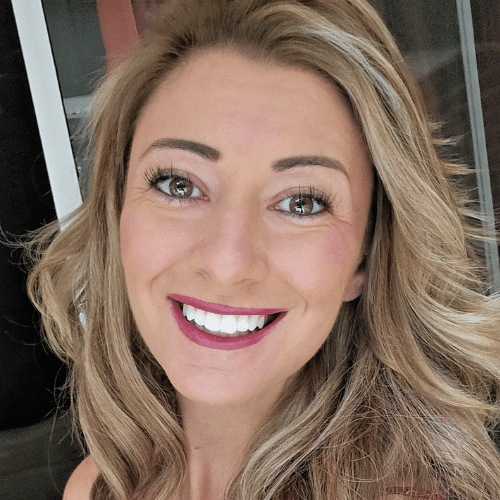
Hannah Roth
Predictive ROI CSO Hannah Roth Reveals The Gap Between Being Admired and Being Chosen
Episode 2: Predictive ROI CSO Hannah Roth Reveals The Gap Between Being Admired and Being Chosen
Your right-fit prospects say your agency is smart.
They say your team is generous.
They say your content is helpful.
Awesome.
But those compliments do not automatically become conversations, proposals, or opportunities to work alongside the prospect.
An agency can be admired…and still not be chosen.
Hannah Roth is Chief Strategy Officer and Partner at Predictive ROI. She works in the trenches alongside agency owners and their teams, studying what happens after an agency has built authority…but before a right-fit prospect decides to act.
In this episode, Hannah joins Stephen Woessner to map out that gap. They examine why authority has become the ante, how AI has raised the bar from prolific to profound, and what an agency must architect between being known for smart thinking and becoming the team a prospect does not want to lose.
Quick answer: An agency moves from being admired to being chosen when its authority becomes specific, relevant, and easy for a right-fit prospect to act on. Helpful content earns attention. Profound content demonstrates depth. Visible specialization tells the buyer what the agency should be trusted for. A permission-based invitation creates a safe next step. Preparation and a strategic conversation prove that the agency can apply its expertise to the buyer’s world. Those elements form the Trust Bridge between Authority and Demand…then BAMFAM keeps the relationship moving without turning the first conversation into a pitch.
Why is being admired different from being chosen?
A prospect can believe your agency is intelligent and generous without believing the agency is the right choice for a specific problem.
That is the gap Hannah names in this episode.
On one side sits Authority. The agency publishes, teaches, speaks, contributes, and earns attention.
On the other side sits Demand. A right-fit prospect chooses to lean in, accept an invitation, enter a strategic conversation, and consider working with the agency.
The Trust Bridge connects the two.
Authority answers, “Do these people know what they are talking about?”
The Trust Bridge must answer, “Can these people help us solve this problem?”
Demand begins when the prospect gains enough confidence to act on that second answer.
Hannah describes the commercial difference through two statements:
“Wow, these people are smart.”
And:
“Wow, I cannot lose them.”
The first statement recognizes knowledge.
The second recognizes indispensable value.
The goal is not to become less helpful. The goal is to make the value of that helpfulness easier for a right-fit prospect to recognize, trust, and choose.
Why does profound content matter more than prolific content?
AI has made it easier to produce a large volume of polished content.
That does not mean the content demonstrates mastery.
Hannah’s standard for profound content has three parts:
- Insightful: It reveals a pattern, implication, or decision the audience may not have seen.
- Relevant: It is built around the audience’s priorities, constraints, and current situation.
- On-the-nose helpful: It gives the audience something useful for the problem directly in front of them.
Hannah says:
“It is not enough to be prolific. Everyone can be prolific these days…you have to share something profound.”
John Winsor makes a related argument in a March 2026 Harvard Business Review article. His published summary says generative AI and content platforms make it effortless to sound authoritative, leaving organizations surrounded by polished insight that rarely creates real change.
That research context does not create Hannah’s three-part framework. Her formulation comes from the episode and Predictive ROI’s work in the field.
The connection is still important.
When content becomes easier to produce, volume is not the advantage. Demonstrated depth is.
What must a prospect understand before choosing an agency?
Hannah says the agency must become clear about what it offers, who it serves, and how its expertise creates value.
A niche cannot remain hidden behind the curtain.
The buyer must be able to see the agency’s specialization and understand why that specialization matters.
Agency Edge 2026 reinforces the point. In a survey of 400 agency-client decision-makers, 57% said they prefer deep specialization, compared with 33% who prefer broad, one-stop-shop capabilities. Eighty-two percent said they would pay more for specialized expertise, and 67% said a niche gives an agency an advantage in being hired.
Agency Core 2026 adds the agency-side perspective. Seventy-three percent of responding agency leaders agreed that specialized expertise will continue to be something clients cannot easily reproduce internally. Seventy-five percent expect increased demand for specialized expertise, and 71% expect clients to seek strategic experts over tactical support.
Hannah gives agencies a practical way to test the value they are presenting. A prospect may need the agency because the prospect lacks one or more of three things:
Capability
The organization does not have the tools, technology, process, or operating infrastructure required to do the work.
Expertise
The organization does not have the specialized knowledge, judgment, pattern recognition, or scar tissue required to make the right decisions.
Capacity
The organization does not have enough time, people, or attention to do the work with excellence.
The agency should know which gap it fills.
Then it should make that gap and its value visible in the content, proof, outreach, and sales conversation.
How does an agency move from Authority to Demand?
Hannah maps out five connected moves.
1. Map the Opportunities™
Do not assume the only path to new revenue is a stranger who has never heard of the agency.
Map the people and relationships already inside the ecosystem:
- Right-fit prospects who know the agency but have not taken the next step
- Current clients whose goals or circumstances may have changed
- Lost leads whose timing, leadership, or priorities may now be different
- Former clients the agency would value working alongside again
- Strategic relationships that can open doors to groups of right-fit prospects
One client identified a foundation leader with relationships across 120 nonprofit organizations. That person was not the direct buyer. The relationship still created strategic proximity to a large group of right fits.
This is why Map the Opportunities is simple…but not easy.
The gold may already be inside the ecosystem. The team still has to map it.
2. Extend a Conversation Spark™
A Conversation Spark is a proactive, permission-based invitation.
It is not, “Would you like to hear us pitch for 45 minutes?”
It offers something the prospect has a reason to say yes to…a relevant brief, a useful strategy session, a new point of view, or a clear explanation of a service designed for the buyer’s situation.
Gartner’s 2025 survey found that 73% of B2B buyers actively avoid suppliers that send irrelevant outreach.
The problem is not outreach by itself.
The problem is outreach that gives the buyer no relevant reason to engage.
3. Prepare the Brief
Once the prospect accepts the invitation, do not wing the conversation.
Research the person and the organization. Study the market. Identify the useful insight. Decide why the prospect should care. Rehearse the sequence.
Hannah puts it plainly:
“The first time you show up to the World Series, you do not want that to be the first time you are swinging a bat.”
Preparation is part of the Trust Bridge because it lets the prospect experience the agency’s expertise in context.
4. Architect a strategic conversation
A friendly catch-up can end with, “It was great talking. Let us do this again next year.”
A premature sales pitch can leave the prospect wondering why the conversation matters.
A strategic conversation does something different.
The prospect knows why the meeting is happening. The agency brings an insight that is relevant to the prospect’s world. The conversation surfaces context, clarifies the problem, and creates value before the agency prescribes a solution.
That is not a performance.
That is alignment.
5. BAMFAM
BAMFAM means Book a Meeting From a Meeting.
Hannah’s standard for the first conversation is not to sell.
It is to earn the next conversation.
The agency should show up prepared enough, be relevant enough, and create enough value that the next step feels natural.
That keeps the relationship moving without asking the prospect to jump from one useful interaction straight into an engagement.
Why every interaction is a deposit in the trust bank
The episode includes an anonymous Predictive ROI field example.
An agency owner first experienced Predictive ROI during a two-day intensive. Later, Stephen and Hannah invited the owner to join them for a podcast interview. They researched the agency, prepared smarter questions, and created an experience that demonstrated care and depth.
Months later, Stephen extended another invitation…this time to a brief.
The agency owner accepted and explained that there was already enough trust to believe Stephen had something worth hearing.
Hannah reframed the sequence as a series of deposits in the trust bank.
The intensive was a deposit.
The well-prepared interview was a deposit.
The helpful content was a deposit.
The thoughtful invitation was a deposit.
None of those interactions forced a sale.
Together, they made the next invitation feel credible.
That is how the Trust Bridge works in the field. It is built before the agency asks the prospect to cross it.
What you will learn in this episode
- Why being considered smart and helpful does not guarantee that an agency will be chosen
- How the Authority-Demand Ecosystem distinguishes attention from action
- Why AI has raised the bar from prolific content to profound content
- How insightful, relevant, and on-the-nose helpful content demonstrates mastery
- Why specialization must be visible rather than hidden behind the curtain
- How capability, expertise, and capacity clarify the value a prospect cannot create alone
- How Map the Opportunities surfaces latent Demand among prospects, clients, lost leads, former clients, and strategic relationships
- Why a Conversation Spark should create a permission-based next step rather than disguise a pitch
- How a well-prepared brief turns authority into an experience of expertise
- Why BAMFAM keeps a strategic relationship moving one conversation at a time
- How consistent deposits in the trust bank make a later invitation easier to accept
Put Hannah’s framework into practice
Bring your leadership and biz dev teams together and answer three questions.
1. Where is our agency being admired but not chosen?
List the right-fit prospects who read, listen, attend, reply, compliment the work, or stay connected…but have not moved into a strategic conversation.
2. What would make our expertise profound for each prospect?
Identify one insight that is relevant to the prospect’s current situation, demonstrates depth, and is on-the-nose helpful.
3. What is the permission-based next step?
Choose the right Conversation Spark. Prepare the brief. Architect the conversation. Decide what the next meeting should be before the first meeting begins.
Do not begin by asking the prospect to invest.
Begin by giving the prospect a reason to lean in.
Continue the Authority-to-Demand conversation
Start with Stephen Woessner’s opening solocast on how Demand turns authority into action. Stephen introduces the Authority-Demand Ecosystem and the gap this conversation with Hannah examines in depth.
Continue with Erik Jensen’s episode on how proof activates Demand. Erik shows how specific and visible proof gives the Trust Bridge its structure.
Then listen to Libby Stinson’s episode on how purposeful questions build trust and Demand. Libby maps out how preparation and listening turn a biz dev conversation into an experience that feels different.
Explore the complete In-Demand Agency Podcast archive.
Research notes and sources
1. Hannah Roth’s role and background
Predictive ROI’s official team page identifies Hannah Roth as Chief Strategy Officer and Partner. Her professional background includes work as a fisheries biologist, zoologist, small-business owner, and Predictive ROI strategist. Her current work combines data analysis, field observation, and strategic insight to help agency leaders identify patterns, test assumptions, and turn expertise into action.
Hannah’s Authority-Demand Ecosystem, profound-content test, Map the Opportunities process, Conversation Spark, and trust-bank explanation are presented in the episode as Hannah’s and Predictive ROI’s field-developed work. They are not attributed to the external research below.
2. Gartner’s irrelevant-outreach finding
Gartner’s June 2025 release on a survey of 632 B2B buyers reports that 73% actively avoid suppliers that send irrelevant outreach. The survey was conducted in August and September 2024.
The same study found that 61% preferred an overall rep-free buying experience. Buyers nevertheless preferred seller involvement for contextual tasks such as determining whether an offering fits the organization’s needs.
The findings support Hannah’s distinction. Buyers do not need more generic outreach. They need relevant expertise applied to their situation.
3. Harvard Business Review on AI-era thought leadership
John Winsor’s March 2026 Harvard Business Review article, Has AI Ended Thought Leadership?, argues that generative AI and content platforms have made it easy to sound authoritative while increasing the volume of polished insight that fails to produce real change.
The article supports the wider episode context that abundant content raises the premium on demonstrated depth. Hannah’s description of profound content as insightful, relevant, and on-the-nose helpful remains her own framework from the recording.
4. Agency Edge 2026 on specialized expertise
The Agency Edge 2026 executive summary reports findings from 400 agency-client decision-makers responsible for marketing activities, budgets, and the legal and compliance factors affecting agencies.
Fifty-seven percent said they prefer deep specialization in an agency, compared with 33% who prefer broad, one-stop-shop capabilities. Eighty-two percent said they would pay more for specialized expertise. Sixty-seven percent said a niche gives an agency an advantage in being hired.
The research supports Hannah’s statement that buyers want expertise and specialists.
5. Agency Core 2026 on strategic and specialized expertise
The Agency Core 2026 interactive findings report responses from 434 agency leaders, with 263 completing the full attitudinal battery used for segmentation.
Seventy-three percent agreed that specialized expertise will remain something clients cannot easily replicate internally. Seventy-five percent expect more client demand for specialized expertise, and 71% expect clients to seek strategic experts over tactical support.
The study was conducted by Audience Audit for Agency Core, the nonprofit research initiative founded by Susan Baier of Audience Audit and Brian Gerstner of WhiteLabel IQ.
6. C-suite tenure clarification
Stephen uses leadership turnover to explain why a former client can become a live opportunity again after organizational change. That principle is sound. The broad tenure range stated in the audio needs more precision.
Spencer Stuart’s December 2025 S&P 500 C-Suite Snapshot reports an average tenure of 5.2 years across the nine most common C-suite roles. The averages vary materially by role, from 3.3 years for COOs and 4.1 years for CMOs to 7.6 years for CEOs.
A separate February 2026 analysis of S&P 1500 CEO transitions reports that departing CEOs averaged 8.5 years in role during 2025, while 37% left within five years.
7. The Demand Activation Diagnostic
The Demand Activation Diagnostic translates the wider Authority-to-Demand problem into five scored dimensions: The Curiosity Gap, The Next Logical Step, The Binge Factor, The Outbound Bridge, and The Trust Architecture.
The diagnostic helps an agency determine whether its ecosystem is intentionally activating latent Demand or whether its authority is stopping at attention.
Resources
- Download The Demand Activation Diagnostic
- Watch Predictive ROI’s Conversation Spark video training
- Meet Hannah Roth and the Predictive ROI team
- Connect with Hannah Roth on LinkedIn
- Find Hannah Roth on Substack
- Read the Agency Edge 2026 executive summary
- Explore the Agency Core 2026 findings
- Explore The In-Demand Agency Podcast archive
Your right next step
Download The Demand Activation Diagnostic and have each member of your leadership and biz dev teams score the agency independently.
The diagnostic takes approximately three minutes and examines five places where authority can fail to become Demand: curiosity, the next logical step, content depth, proactive outreach, and trust architecture.
Compare the scores.
Choose the lowest-scoring dimension. Then identify one right-fit prospect already inside the agency’s ecosystem…one profound insight that prospect would value…and one permission-based invitation your team can extend.
Do not wait for the prospect to connect the dots.
Make the right next step visible.
Onward with gusto!
About Hannah Roth
Hannah Roth is Chief Strategy Officer and Partner at Predictive ROI. With a background as a fisheries biologist, zoologist, small-business owner, and strategist, Hannah brings a scientist’s discipline to agency growth. She works alongside agency owners and their teams to identify patterns, challenge assumptions, build defensible recommendations, and architect the systems that help agencies move from Authority to Demand.
The transcript below has been edited lightly for clarity, speaker identification, proper names, framework terms, and source notes. The audio remains the authoritative version of the conversation
Stephen Woessner [00:00:08 – 00:00:52]
Over the past decade, we’ve had more than 1,200 conversations with CEOs, bestselling
authors, and agency leaders. And here’s what we’re seeing. Agencies that had built an
authority position no longer struggled to be seen. Instead, they struggled to activate
latent demand. Agency leaders have said to us, it’s exactly where we’re sitting right
now— authority without demand. So welcome to the In Demand Agency Podcast
presented by Predictive ROI. It’s sparked by research from the Harvard Business Review,
Edelman, Gallup, Agencycore, all showing that trust has moved upstream. In today’s
marketplace, authority earns attention.
Stephen Woessner [00:00:52 – 00:01:52]
Yes. But demand is what turns attention into action. Each episode deconstructs the
science of demand from behavioral psychology, decision-making research, and the
cross-industry strategies behind why and how B2B buyers make their decisions. We
interview the world’s leading behavioral scientists, agency network leaders, and
strategists from industries far beyond ours, experts who are reshaping how demand
works. I’m your host, Stephen Wessner. And in each episode, we’ll translate their
insights directly into the agency world. And these conversations are now being heard by
a community of over 30,000 agency owners and their teams. With me for today’s
episode is Hannah Roth, Chief Strategy Officer and my business partner here at
Predictive ROI.
Stephen Woessner [00:01:53 – 00:02:36]
And Hannah spends her time in the field working alongside agency owners and their
teams, studying what happens when an agency has done the hard work of building
authority, but their prospects say things like, wow, these people are smart. Wow, these
people are helpful. But those same prospects are not saying, wow, these people can
solve my problem. Wow, I cannot lose them. And that gap between being admired and
being chosen is what Hannah and I are going to be deconstructing today. She calls it the
authority-demand ecosystem, and most agencies do not yet know it exists.
Hannah Roth [00:02:38 – 00:03:11]
Obviously, it feels lovely anytime somebody says, wow, you’re so smart, or these
people are so smart. But what we’ve seen is there’s something there that’s missing that
doesn’t take you from, wow, these people are smart, to, wow, I need to hire these
IDA_Hannah Roth_V05
3 of 31
people? And so, in my opinion, the reason is because I think that you used to be able to
say knowledge is power, right? And I believe that. I, I do believe that knowledge is
power. But with AI and how things are accelerating and just how accessible knowledge
has become, I think knowledge has become very cheap.
Stephen Woessner [00:03:14 – 00:03:19]
Hannah, thanks very much for joining us. I am thrilled for our time together.
Hannah Roth [00:03:20 – 00:03:22]
I am so excited. So thank you for the invitation.
Stephen Woessner [00:03:23 – 00:04:24]
Well, you, you are very, very welcome. So here’s, here’s where I’d like to dive in, sort of
a, you know, really big piece right away. Um, so, uh, I, I think you know, but I have
always admired you for your gift of how you see How you see situations, how you see
challenges, how you see issues, how you see them differently. The way that you see
insights, the way that you make observations is different. And you pick up patterns that
other people miss, and you seem to always be on this quest, or you seem to have this
hunger to find the truth. You have zero tolerance for hyperbole. You always want to
make sure that your recommendations are research-backed. And maybe all of that can
be summed up in the fact that you’re a data scientist by trade, or maybe there’s a
different sort of pivotal moment or some sort of explanation for that.
Stephen Woessner [00:04:24 – 00:04:37]
So help us better understand this superpower because I think it absolutely is one of
your superpowers and how you cut through that and see things that others miss. So
take us there first, and then we’ll dive in with the others.
Hannah Roth [00:04:38 – 00:05:13]
Okay. Well, thank you first of all for all of those lovely compliments. It is always nice to
hear what people admire about you. So thank you. I appreciate that. No, I think you
mentioned a key term there, which is pivotal moments. And I think that obviously the
way that I observe and look at patterns and the way that I give recommendations is
IDA_Hannah Roth_V05
4 of 31
based on my time as a data scientist, you know, my background. But I actually think I
was, I think I’ve always kind of been a scientist even before that was my like recognized
title.
Hannah Roth [00:05:14 – 00:05:36]
And so, when I think about a pivotal moment of when this became really solidified, I can
go back to a time when I was in college. I was doing a paper on biomimetics, which is a
fancy way of saying, We look at nature to engineer, um, you know, make innovative
engineering decisions.
Stephen Woessner [00:05:36 – 00:05:36]
Okay.
Hannah Roth [00:05:36 – 00:06:48]
So, uh, I was studying biomimetics and I was specifically looking at humpback whales
because they are incredibly hydrodynamic. Um, they’re incredibly acrobatic despite
their large size. And so one of the things that, um, has happened in innovation is we’ve
looked at humpback whales to say, how can we make things more aerodynamic? Or
how can we make things more hydrodynamic? And so I started, you know, looking into
all of this around this topic, you know, putting together my paper. And as I was working
with one of my professors on it, she noticed that I was using a lot of assumptive
language, you know, I think, or I, I, you know, maybe this is why, or I believe, because I
was kind of just digging into this. And she looked at me very pointedly and she said,
well, If I put you in front of a class and you say you think or you assume, I will never
invite you to speak in front of the class again. So, um, at the time it felt a little harsh,
but I think it has served me well. And so one of the things, um, to your point, in my kind
of quest for truth or, um, when I’m giving recommendations is that lesson comes back
to me. I don’t want to give empty recommendations.
Hannah Roth [00:06:48 – 00:06:50]
I wanna be able to defend the recommendations.
Stephen Woessner [00:06:50 – 00:06:50]
Yeah.
IDA_Hannah Roth_V05
5 of 31
Hannah Roth [00:06:51 – 00:07:05]
I want to have a defensible position. And so that kind of shapes, I think, how I operate.
And in client sessions or in leadership sessions, I think that’s really ingrained into my
DNA.
Stephen Woessner [00:07:06 – 00:07:58]
Well, and candidly, friends, one of the reasons why I was so excited for Hannah to join
me for this episode, this being episode 2, last week was a solocast where I where I
introduced in that solo cast the Authority Demand Ecosystem that Hannah and Eric are
the chief architects of. And I was excited about being able to have this conversation
now with Hannah to be able to add more context, more meat, more context to that
ecosystem. But then also from the point of view of it’s defensible, it’s research-backed.
We’re not making things up here. This is not A term that we just came up with and
they’re like, oh, well, that sounds really good, right? That’s not the point of this new
show. The point of this new podcast, the In Demand Agency Podcast, is to elevate that,
is to have things that are research-backed.
Hannah Roth [00:07:59 – 00:07:59]
Have—
Stephen Woessner [00:08:00 – 00:08:18]
we’re going to be interviewing the world’s leading authorities and scientists in many
areas. Hannah is a scientist by trade, so it made sense that Hannah be that first guest
that I interview. in order to start taking this conversation deeper. So Hannah, thanks
very much for joining me, and I’m really excited about this conversation.
Hannah Roth [00:08:19 – 00:08:25]
Yes, me too. Thank you for letting me dork out in the first, you know, 3 minutes there.
Hannah, get us started.
Stephen Woessner [00:08:26 – 00:09:30]
Well, so as you know, in the previous episode, episode 1 in the Solocast, I asked our
audience, our friends, to To sketch out a box on the left or square on the left, square on
the right, and then to identify the square on the left as authority and the square on the
right to identify that box or that square as demand, trust bridge in the center. And one
IDA_Hannah Roth_V05
6 of 31
of the things we talked about underneath the box on the left were some statements.
And it’s lovely to hear those statements. But then there’s also something missing from
those statements. So like when an agency owner hears a prospect say, wow, these
people are smart. Uh, most agencies and their, you know, most agency owners and
their teams will consider that to be a win, but there’s something missing, uh, in, in those
words too. So, so what do you think is missing and maybe why a statement like that
isn’t enough anymore for where we’re at? Yeah.
Hannah Roth [00:09:31 – 00:10:32]
Yeah, I think that’s a great question and it is something that we hear a lot and candidly,
we used to hear this about us, right? And then there was still something missing. So it
was sort of through the exploration of our own journey that we, I think, came to a lot of
these, um, realizations and insights. So, um, obviously it feels lovely anytime somebody
says, wow, you’re so smart, or these people are so smart. But what we’ve seen is
there’s a turn of Not being smart enough to get hired, right? Or not— there’s something
there. There’s something there that’s missing that doesn’t, doesn’t take you from, wow,
these people are smart, to, wow, I need to hire these people. Um, and so in my opinion,
the reason is because I think that you used to be able to say knowledge is power, right?
And I believe that. I, I do believe that knowledge is power. But with AI and how things
are accelerating, And just how accessible knowledge has become, I think knowledge
has become very cheap.
Hannah Roth [00:10:33 – 00:11:09]
I think it’s really easy now to either become smart or pretend you’re smart or be
perceived as smart, which are all a little bit different there than actually, you know,
being smart. And so I think that’s kind of been one of the big shifts in the way that
especially B2B buyers are behaving. Being smart is not good enough anymore because
a lot of people can seem smart. A lot of people can get smart. It’s, I think, more about
what you do with those smarts that matters these days.
Stephen Woessner [00:11:10 – 00:11:33]
So this is, this is reminding me of a side conversation that you and I were having.
Maybe it was after, after a strategy session or Actually, no, I think it was during our
most recent quarterly planning session. And you said that, you said that AI, AI makes it
easy for someone or an agency to be seen as prolific.
IDA_Hannah Roth_V05
7 of 31
Hannah Roth [00:11:33 – 00:11:34]
Yes.
Stephen Woessner [00:11:34 – 00:12:08]
But that doesn’t mean that the content is helpful at depth. And really, that’s where it
matters is like, Yes, you can use a variety of AI tools and MCP connectors and all of the,
you know, API keys that you want in order to create a lot of something. But is it taking
your knowledge to a depth that is truly helpful for your audience and to also
demonstrate mastery? And, but most importantly about that mastery is, can you be
helpful in solving business issues and challenges, right?
Hannah Roth [00:12:09 – 00:12:24]
Yeah, absolutely. And one of the interesting stats that I came across recently is 73% of
B2B buyers will avoid, like avoid a vendor if they’re doing irrelevant outreach.
Stephen Woessner [00:12:25 – 00:12:25]
Oh.
Hannah Roth [00:12:25 – 00:13:21]
And so that’s where it becomes this, you know, used to, to share authority, you had to
be prolific, right? That was one of the things you want to be, you know, everywhere that
your prospects are. You want to show up there with something relevant to talk about.
And I think with AI making everything a little bit easier, a little bit faster, a little bit more
efficient, one of the things we really have to be careful of is we need to share something
profound. It’s not enough to be prolific. Everyone can be prolific these days, right? You
can put in something in Claude or ChatGPT, and it’ll give you an OK blog about
something. But I think to really get people’s attention and stand out in all of that noise,
you have to share something profound. You have to share something that’s insightful,
that’s relevant, that is on-the-nose helpful. It’s not enough to be present anymore.
Stephen Woessner [00:13:21 – 00:13:22]
Yep.
IDA_Hannah Roth_V05
8 of 31
Hannah Roth [00:13:22 – 00:13:28]
Not enough to be prolific anymore. You have to be profound and share something that’s
truly different.
Stephen Woessner [00:13:29 – 00:13:54]
They’re so good. Um, and profound, uh, sounds goofy to say profound is such a
profound word, but it’s a powerful litmus test what you just said. That if it’s not
insightful, that if it’s not relevant, that if it’s not, uh, using your words, on the nose
helpful, then if, if, if a piece of content or a whatever is missing those 3 ingredients, that
it’s not profound.
Hannah Roth [00:13:55 – 00:13:55]
Yeah.
Stephen Woessner [00:13:55 – 00:14:39]
It has to, as we talked about in the, in the last episode in the solo cast, that to have an
authority position today is the ante. It’s, it’s the, it’s the price you have to pay to be in
the game, to be in the business development game. And if you haven’t done it, then,
you know, you have to pay the ante first. And then also to what you’re saying here is
how you put that ante on the table really matters too. Because trying to like pay less
than what the toll is required doesn’t get you where you need to be. Like when you’re
building your authority position, you must do it in such a way that the content is
profound, that it has depth, that is insightful, relevant, on the nose, helpful. Right?
Hannah Roth [00:14:39 – 00:15:05]
Yeah, absolutely. And I think where you start to move into that territory, especially in
the authority demand ecosystem, is by the trust bridge, right? That’s where a lot of that
becomes. that deeper level becomes, you know, more relevant if, if you’re trying to
cross the trust bridge and pay that toll. You know, there’s certain checks and certain
things there that you really have to make sure that you’re doing with excellence.
Stephen Woessner [00:15:06 – 00:16:04]
So when you’re, when you’re working alongside agencies and their teams, agency
owners and their teams, um, in the field, and, and you, you hear an agency say, You
know, this just doesn’t make any sense to me. I mean, we, we have built what seems
IDA_Hannah Roth_V05
9 of 31
like a strong authority position, but for Pete’s sake, we seem to have authority without
demand. Like, like, how does that, how does that happen? How do you build an
authority position? How are you recognized in the niche as an expert and yet doesn’t—
where there’s no demand, or at least— Maybe not as much as one would hope. So, but
you’re having those conversations. So can you peel some of those conversations back a
little bit so our friends listening can, can better understand those conversations and
situations and maybe they’ll hear something that they’re feeling too, or maybe
something different?
Hannah Roth [00:16:05 – 00:16:21]
Yeah, absolutely. A few statements come to mind because this is something that
obviously we hear quite often. So one of them is, We get good engagement. Our
engagement is good. We’re sending a regular newsletter. People are reading it. We
attend events. We went to this trade show.
Hannah Roth [00:16:21 – 00:16:42]
We went to that trade show where we show, we’re showing up. And then we have a
great reputation. We think our clients, when they work with us, they really love us. We
have a great reputation. And all of those things are lovely. But again, to your point,
authority has become sort of table stakes, right? You, you expect somebody that you
work with to have a good reputation.
Stephen Woessner [00:16:42 – 00:16:42]
Yeah.
Hannah Roth [00:16:42 – 00:17:41]
You expect somebody that you work with to show up. You expect somebody that you
work with to be engaging and you want to engage with that person. But I think that
there is a lot of proactivity that we have to do these days that we didn’t have to do
before. And so I think where agencies are struggling a little bit to kind of activate that
demand and really jumpstart that authority and start to move it is You know, you have
to do specific sales outreach. You have to make an ask. You have to show up in a
strategic way that is not just a conversation, but a strategic conversation, a sales
conversation that doesn’t feel like selling, doesn’t feel like pitching. So I think there’s a
IDA_Hannah Roth_V05
10 of 31
real art to this. Um, and this is sort of where, you know, the science of, okay, we can
have this formula, we can do this newsletter, we can show up to these trade shows, like
A plus B equals C.
Hannah Roth [00:17:41 – 00:17:55]
I think this is where it starts to move into the art of how do we, how do we architect this
in such a way that leads to that next step instead of just stalling out at, wow, that was
really helpful. That was a great conversation.
Stephen Woessner [00:17:57 – 00:18:23]
Okay. Okay. So let’s, let’s, let’s keep peeling some layers because I think you’re really
onto something. So Let’s assume that, um, someone listening right now has had the
experience where their agency was, uh, that this was shared with their agency, the,
this, this type of statement of the, wow, you and your team are incredibly helpful.
Hannah Roth [00:18:24 – 00:18:25]
Awesome. Mm-hmm.
Stephen Woessner [00:18:26 – 00:19:03]
And that’s different, as we know, from a prospect or a client saying, we cannot lose
these guys. Like, we cannot lose this agency. Like, they’re indispensable. So in, in, from
your point of view, in that situation, what, what has to shift, uh, for the prospective
client to say that second statement? Because that’s what the agency really wants.
Because if they hear that consistently, then, then one could argue, okay, They’re
starting to build that in-demand reputation.
Hannah Roth [00:19:04 – 00:19:57]
Yeah. So I’m going to answer this in a few different ways because I think there is
something that the agency has to do before that can shift for the prospective client. So
from an agency perspective, I think there has to be a lot of clarity around what they
offer and who they offer it for. So we work with You know, some agencies we work with,
some agencies in the past where they want to niche down, but it’s sort of, well, we don’t
want to change our website that much and we kind of want to be niched behind a
curtain or we want to have this other separate site. So I don’t think that that’s, that’s
IDA_Hannah Roth_V05
11 of 31
working anymore. And actually the latest research that Audience Audit did with AMI and
then also Agency Core with White Label IQ. It’s showing that, that buyers want
expertise. They want specialists.
Hannah Roth [00:19:57 – 00:20:35]
They want people who are really experts. So I think that it’s not enough to hide behind,
you know, a curtain, like hide your niche or not put it on your website. Um, and then I
think the other thing that agencies really need to do is they need to be very clear about
what they do. And it has to be something that their prospects can’t do for themselves.
So let me, let me peel that back a little bit because I’m not talking, you know, you have
to do something that’s impossible for them to do. There’s a few, a few variations of that.
So the first one is capability.
Stephen Woessner [00:20:35 – 00:20:36]
Okay.
Hannah Roth [00:20:36 – 00:21:12]
So if you are doing something and your prospects don’t have the necessary things,
whether that’s tools or software or whatever it is, they don’t have the capability to do it
themselves. Okay. So that’s, that’s one way that you show up, that you’re able to do
something that they’re not able to do for themselves. The second way is expertise. So
this is, I don’t have the right knowledge. I don’t have the, you know, the right smarts. I
don’t know how to run paid ads, like whatever that thing is, they don’t have the
expertise to do it themselves.
Stephen Woessner [00:21:12 – 00:21:12]
Nope.
Hannah Roth [00:21:12 – 00:22:01]
And then the last way that you show up that you do something they can’t do for
themselves is capacity. So this is time. I don’t have the time. I don’t have the team, you
know, whatever that looks like. So I think that if a prospect is looking for an agency,
what they do, who they do it for, and how they do it needs to be really clear. It needs to
be really obvious and really evident. And then I think that you have to define those
things and then you have to talk about them and you have to be proactive and you
IDA_Hannah Roth_V05
12 of 31
have to reach out. And so this is where you start getting into the trust bridge, uh, you
know, between the authority and demand where you’re looking at your opportunities,
right? You’re trying to figure out, okay, who have we talked to recently that is kind of
sitting there waiting for something, you know, waiting us, waiting for us to make a
move.
Hannah Roth [00:22:02 – 00:22:39]
Um, so I think you need to map your opportunities and then I think you need to create
different ways to engage in conversation. So we, you know, here at Predictive call that
the conversation spark. You have to reach out with a compelling thing that they want to
say yes to. Sometimes we’ve seen that work with a products or services overview,
right? Something that’s new or something you put together that’s really helpful. Um,
again, identifying who it’s for and what it is, how it helps. Um, so that’s one way you can
do the conversation spark. Another way is if you’ve got some sort of insights or there’s
some industry trend, offering a brief or a strategy session.
Stephen Woessner [00:22:40 – 00:22:40]
Yeah.
Hannah Roth [00:22:40 – 00:23:14]
about whatever that is. Okay? Because if you’re inviting somebody to that, they’re more
likely to say yes instead of, hey, want to come listen to me pitch for 45 minutes?
Obviously nobody really wants to attend a Tupperware party like that. So I think, um,
having people come along to an interesting strategy session or a brief or something
where you’re sharing something helpful, um, is, is a good way to do that. And then
obviously showing up in a way that conveys your authority that is helpful. that is not
confusing. They understand why they’re there. They understand, you know, what they
came for. They get what they came for.
Hannah Roth [00:23:15 – 00:23:25]
And then being able to strategically link that to the next conversation. So, one of the
things that I always tell our clients is your goal in the first conversation is not to sell.
Stephen Woessner [00:23:25 – 00:23:25]
Hmm.
IDA_Hannah Roth_V05
13 of 31
Hannah Roth [00:23:26 – 00:23:54]
Your only goal in the first conversation is to get another conversation. You have to show
up well enough and be interesting enough and be compelling enough and be helpful
enough to get another conversation, to get that second date. Okay. So that’s, um, I
hope that answered your question. I know that was sort of a long-winded answer, but I
think there’s a lot of elements in that. It’s a complicated question. And I think there’s a
lot of, a lot of different variables that have to be achieved to get the output that you
want.
Stephen Woessner [00:23:55 – 00:24:36]
Well, you not only answered my question, you sparked 5 more and I, I’m not joking, 5
more. Uh, so here, here’s, here’s what we’re going to do. We’re going to take a quick
break. Uh, so friends, we’re going to take a quick break and when we come back, um,
here’s, here’s the 5. I’m going to be asking Hannah to give us more of an orientation
because she just actually highlighted, uh, several bricks, uh, or stones or whatever
you’re going to make your bridge out of, uh, you know, components that go into the
trust bridge. So you just heard her talk about map your opportunities, uh, or map the
opportunities. The conversation sparked the brief showing up, um, you know, with
expertise and so forth. And then The 5th one was your only goal, get another
conversation.
Stephen Woessner [00:24:37 – 00:25:29]
Here at Predictive, we call that BAMFAM, book a meeting from a meeting. But there’s,
there’s art and science to how to do that with excellence. So we’re going to take a quick
break and then when we come back, we’re going to work through these 5 pieces. So
we’ll be right back. Okay. So, Hannah, right before the break, or as we were going to
break, I should say, You shared 5 things that I would really love to slice apart, peel back,
whatever word you want to use or words you want to use, because these are really
helpful elements. Like, I’m thinking back again to the quarterly planning session that
you and Eric and I had several weeks ago when you and he were like, okay, on the left
side is the authority, on the right side is demand, and what connects them in between
is the trust bridge. And it’s like, well, okay, what are some of the things that go into the
trust bridge? And it’s like, it’s MTO, it’s the spark, it’s the brief and all of that.
IDA_Hannah Roth_V05
14 of 31
Stephen Woessner [00:25:29 – 00:25:59]
So. Let’s talk through each of these. And then friends, there’s going to be some
resources in the show notes for today’s episode that I wasn’t even thinking about that
we’re going to link over to our YouTube channel because we’ve got some, some kind of
mini workshops, if you will, trainings on some of these. But Hannah, would love to get
your insights. So first you mentioned MTO. So frame that up and, and share with our
audience a little bit more context around MTO. It’s a process that you developed.
Hannah Roth [00:26:01 – 00:26:49]
Yeah, so MTO stands for Map the Opportunities, and this I think is one of the simplest
things that an agency can do. That said, it’s not easy. So it’s simple, but it’s not easy,
and this is why most agencies don’t do it. Um, so Map the Opportunities is when you sit
down and you look at your ecosystem. What events have you attended? What regular
things are you doing, whether it’s a podcast or a webinar, um, you know, a speaking
engagement that you showed up for. So really mapping kind of where you are showing
up and, and where you’re engaging with right-fit prospects. Okay. And so say that you
show up, right? You want it to be a good pond.
Hannah Roth [00:26:49 – 00:27:35]
You want at least 80% of the people there to be right fits for you. Um, but you’ve got to
sit down and you’ve got to figure out you know, where you’re showing up and how
you’re engaging with people. If that list is small, you may need to look into that. You
may need to look at, okay, how can I show up better in more places to get, you know,
more faces? That’s part of building the authority piece. Um, so that’s step one, right?
Figure out kind of where you’re showing up and map your current ecosystem. And then
you want to start thinking about strategic conversations that you can have with people.
Now, this can be obviously the first and foremost is potential clients, right? How are you
showing up to potential, you know, clients? These are prospects. These are, you know,
well-fit, right? Well-prepared, right-fit prospects.
Hannah Roth [00:27:35 – 00:27:41]
Um, so you want to list out those people. You also want to look at current clients.
Stephen Woessner [00:27:41 – 00:27:41]
Hmm.
IDA_Hannah Roth_V05
15 of 31
Hannah Roth [00:27:41 – 00:28:17]
And this is the part that’s a little surprising. This is the part where, uh, some agency
owners kind of cringe or mute me or say they have internet problems because the
Sometimes it’s difficult when you think about, well, our current clients are already
paying us. I don’t know. I don’t really think there’s opportunity there. And so they say no
before they even have a conversation to really uncover, you know, what, what are our
current clients facing that we don’t know about? You know, what is their goal? That’s
maybe their, their big, hairy, audacious goal that we don’t know about. And so for that,
we recommend having regular milestone check-ins. That’s probably a topic for another
time. Yeah.
Hannah Roth [00:28:18 – 00:28:45]
But, um, you want to make sure that you’re asking your current clients strategic
questions because the last thing you want is for them to go pick another agency, which
has never happened to any of us, but they pick another agency and you say, well, we
do that. Why didn’t they come to us? Okay. Again, we have to be proactive now. We
can’t wait for them to come to us. We have to go to them. We have to actively seek to
uncover these opportunities. Okay. So that’s number 2 is your current clients.
Hannah Roth [00:28:45 – 00:29:25]
Um, you also want to look at lost leads. So who did you pitch to? Who did you have a
good relationship to? Who did you really want to win? Maybe you came in second.
Maybe they just decided not to move forward with an agency at all at that time. Um,
but don’t discount your lost leads that are, um, you know, good prospects because we
know that, you know, and honestly, this has accelerated. Um, People used to change
their agencies about every 2 to 3 years. So just because the door closed once doesn’t
mean the door is closed forever. Um, so looking at your lost leads can, can, can uncover
some of those opportunities as well. And then you also want to look at past clients.
Hannah Roth [00:29:26 – 00:30:35]
So what clients did you love working with? What clients are, you know, maybe still a
right fit? Um, what clients have grown or changed? And then, um, start to list out those
people who, um, you may want to have conversations with. And then there’s another
bucket that I’m going to talk about. And again, this may be a bigger conversation for
another time, but there are also typically strategic partnerships or strategic
IDA_Hannah Roth_V05
16 of 31
relationships where it may not be a right fit that’s going to hire you, but it may be a
conduit to other right fits that can hire you. So for example, one of our clients, um,
works with a lot of nonprofits. And so when we did the, um, MTO with her, She
identified, um, someone who is the head of a foundation and actually has, uh,
relationships with 120 nonprofits. So you can see, um, we actually set up a meeting,
um, for her with this person. You can see how that’s a strategic relationship that opens
a door to potentially 120 of her right fits. Um, so that’s another piece of the MTO that is,
um, sometimes helpful is figuring out, okay, who can open the doors or who is a conduit
to some of our right fits.
Stephen Woessner [00:30:36 – 00:31:44]
So friends, I want to tease out a couple of other, um, uh, or highlight a couple of other
pieces here before we move on to the conversation spark. Um, as, as you heard me
frame up, uh, maybe you heard me frame up in the solo cast last week that our goal in
this, our goal with the new podcast here is, is to be help— is to be helpful or help you
Activate latent demand. When Hannah designed the MTO, that exercise, that was the
point. And it was, how do we activate latent demand that is inside the ecosystem
already? Now, you may have just been rolling your eyes at what I just said. So I’m going
to share a quick little story. And that is in one of the recent instances where Hannah and
our team worked alongside one of our clients to do the MTO. They, this, this particular
client identified a former client and they lost that relationship because of a new CEO.
And we all know the tenure in the C-suite isn’t great between 2 to 4 years, whether you
talk about CEOs, CMO, you know, whatever the position is, somewhere around a handful
of years.
Stephen Woessner [00:31:44 – 00:32:20]
Okay. And the fact is, is that that particular client and the CEO who had fired the
agency, that CEO Also then left the organization. And our client was astute enough to
say, you know, we really enjoyed working with that agency, or excuse me, that client.
So they became part of the MTO, which we then helped activate that latent demand
downstream because things change. So this framework that Hannah is giving you and
sharing with you right now, it absolutely helps you activate latent demand. It helps you
surface the gold. But first you got to map the gold. You got to navigate the path.
IDA_Hannah Roth_V05
17 of 31
Stephen Woessner [00:32:20 – 00:32:24]
You got to create the path. order to be able to surface the gold, right?
Hannah Roth [00:32:25 – 00:33:05]
Absolutely. And I think too, sometimes when people are hesitant to do this exercise, you
know, they’re typically very linear, kind of almost tunnel vision. And I’ve talked about
this before, but a lot of agencies think that their way to new revenue is new clients, and
they kind of neglect everything that’s sitting around them. And it’s sort of like they’re
looking At the gold on the horizon instead of the gold that’s sprinkled right around at
their, at their foot, at their feet. Um, so that’s why this is an important exercise. Now
that said, again, it is simple, but it’s not easy. You need to devote some time and some
brainpower to this. And I always think it’s helpful to bring in other members of your
team, especially your account team.
Hannah Roth [00:33:06 – 00:33:15]
They often know things that you don’t because they’re on the front lines. They can say,
oh yeah, I know that this person is having a baby and going on maternity leave in 2
months.
Stephen Woessner [00:33:15 – 00:33:15]
Yeah.
Hannah Roth [00:33:15 – 00:33:26]
Guess what? Probably some things your agency can do to fill that gap, at least for a
time, and then maybe look for additional ways to serve your client or to expand the
relationship.
Stephen Woessner [00:33:26 – 00:34:17]
So amazing. All right. So Hannah, take us into Conversation Spark and The Brief
because they certainly go hand in hand. And then, and then friends, if you look at the
show notes for today’s episode, you’re going to see 2 different links to 2 different
trainings in our YouTube channel where we share how to write your conversation spark
and how to build your brief in full transparency. Hannah, um, several weeks ago wrote,
um, several worksheets and AI prompts and designed those for GPT or Claude,
whatever your particular, you know, platform is, uh, or excuse me, platform of
IDA_Hannah Roth_V05
18 of 31
preference is, a preferred platform is what I’m trying to say. So those are there. We’re
going to link to those in the show notes, but Hannah, uh, walk us through conversation
spark in brief that you had shared before the break.
Hannah Roth [00:34:18 – 00:34:55]
Yeah. So I mentioned a little bit about the conversation spark, um, is essentially an
invitation, right? We’re trying to be proactive. We can’t wait for them to come to us
anymore. So, um, a conversation spark is a really fantastic way of reaching out with
something helpful as an invitation. So whether that’s an invitation to a strategy session
where you’re sharing some of the things that you’re seeing within your industry or
seeing, you know, within their niche or, you know, changes that are occurring, things
like that. So conversation spark can include some of those things. Here’s what we’re
seeing. Would you like to, you know, schedule a brief? That’s one way to do it.
Hannah Roth [00:34:55 – 00:35:04]
Again, another way to do it is to share something new with you. So like, for instance,
we’ve got one for our sprint program.
Stephen Woessner [00:35:04 – 00:35:05]
Okay.
Hannah Roth [00:35:06 – 00:35:55]
It talks about, you know, what it is, who it’s for, why we designed it, all of those things.
And so we have sent Conversation Sparks, including an overview to that, because I
think a lot of times we assume that people just know all the ways that we’re able to
help. And so we kind of neglect sharing what we actually do and how we actually help.
And, and the why behind how we architected some of our, you know, products and
services. So it’s important to have documentation around that. Not only for your internal
team, but that can become a really great asset when you are sending it as part of the
conversation spark. Um, so that’s what it is. It’s essentially a way to reach out and be
proactive and essentially inviting someone to a conversation or inviting them to get
closer into the relationship with you.
IDA_Hannah Roth_V05
19 of 31
Hannah Roth [00:35:55 – 00:36:43]
And then obviously the end goal is to have a conversation and then for them to become
a client if, if they’re the right fit and if it’s the right time. Um, so that’s the conversation
spark. Uh, and to Stephen’s point, we’ve got examples and guides and things like that
that’ll be in the resources. Um, and then the brief is essentially you want to not step
into this meeting and wing it. And this is something that I think, um, we’re all guilty of
at times. I think it’s sometimes normal, and I think a lot of us in agencies are kind of
used to winging it a lot of the time. Um, this is not one of those times where you want
to wing it. So when you’re putting together a brief, you want to really focus on what,
what you’re going to say, what the insights are, who the other person is, learn about
their company.
Hannah Roth [00:36:43 – 00:37:20]
You want to show up prepared because when you can show up prepared, um, and you
can show up with, you know, some really smart things to say that are really dialed in,
then obviously that increases trust and increases the chances that you’re likely going to
get another conversation. So, the brief is a very important step. It’s easy to skip,
especially if times are compressed or if you’re, you know, doing something else. It’s
easy to kind of put on the back burner, but it’s so incredibly important because the first
time you show up to the World Series, you don’t want that to be the first time you’re
swinging a bat, right? Mm-hmm. So, I put in a baseball reference just for you, Stephen.
Stephen Woessner [00:37:21 – 00:37:23]
Thank you very much. I, I caught that. Thank you.
Hannah Roth [00:37:24 – 00:37:34]
So, um, yeah, so the brief is really important. Um, and, uh, definitely do that, that part.
Um, and don’t skip it.
Stephen Woessner [00:37:36 – 00:38:26]
So, okay. It, it, let, let’s, let’s pull this back in full transparency, friends, because, uh,
during our June, yes, our June, uh, workshop or June mini intensive. You may recall us
kind of sharing some emails about that. We called it the Gold Rush. And in one of the,
one of the guides, uh, that Hannah, uh, shared during that, uh, workshop was what she
calls the Spark Conversation. And, and so there’s an origin story to that. And that is, you
IDA_Hannah Roth_V05
20 of 31
know, back in February when we taught the Conversation Spark at a different workshop.
The good news is, is that the agencies in the room, they wrote their sparks and, and we
even encouraged them to hit send on the sparks before they even left the session.
Stephen Woessner [00:38:26 – 00:38:40]
And yay, some of them did. And holy bananas, they looped back to us and said, we got
the meeting. And then after the meeting, Hannah would check in and say, hey, how did
that go? And what we found is that they actually didn’t deliver the brief.
Hannah Roth [00:38:40 – 00:38:41]
Right.
Stephen Woessner [00:38:41 – 00:39:23]
What they did was they fell right back into the old framework of Hey, how’s about giving
us a project? Which of course feels yucky when the prospective client’s thinking, I’m
sorry, I thought you had something, uh, let me go back to Hannah’s notes, insightful,
relevant, and on the point helpful, or on the nose helpful. And now I’m just stepping into
a sales pitch that, that, that feels like a whole lot of not awesome. So then Hannah
created this Spark Conversation Guide in order to move through the conversation with
excellence. So And I just wanted to bring that up quick before we moved off of the brief
in case there was anything there, any nugget or two that you’d want to share about
how or why you designed that. Yeah.
Hannah Roth [00:39:23 – 00:40:07]
I mean, obviously I review sales calls and conversations all the time from our clients.
They’re gracious enough to send me the recordings and then I kind of analyze and we
talk about ways to improve. Um, but I was watching several of them. And, um, it’s
interesting because a lot of our clients are great conversationalists and they don’t have
trouble having conversations, but where sometimes they struggle is having those
strategic conversations where the other person knows exactly why they’re there. They
get something helpful, relevant. Um, and so what I was noticing is sort of 2 tracks. One,
the person would show up and it’d be a great catch-up conversation and, you know,
chat, chat like your hat, what’s going on in your world, blah, blah, blah. And then there’d
be sort of this.
IDA_Hannah Roth_V05
21 of 31
Stephen Woessner [00:40:07 – 00:40:07]
Yeah.
Hannah Roth [00:40:08 – 00:40:59]
This blank pause at the end where it was like, okay, well, great. It was great catching up
with you. Hope to do it again next year. Um, so we obviously don’t want that to happen.
So that was, that was one of the things that was happening. And then to Stephen, your
point, the other thing that was happening is somebody would show up and then the
person would be so excited to talk about their service or their product or whatever it
was that they would immediately launch into that. And then the person is thinking,
okay, well, I’m not really sure how this relates to me, and I’m not really sure why I need
this because you haven’t highlighted my struggles yet, or you haven’t connected that in
a way that is insightful to me or relevant to me. So that’s kind of the genesis of the
Spark Conversation Guide is essentially how you show up, how that needs to run in a
strategic way so it’s not just a nice conversation.
Hannah Roth [00:40:59 – 00:41:00]
Or a sales pitch.
Stephen Woessner [00:41:01 – 00:41:35]
Amen. I’m adding so many things to my notes here. Uh, of course we’re gonna have to
do an encore and then an encore and then an encore to a couple of other encores. Um,
and so, so maybe, um, maybe what you just shared there would fit into the category of,
of number 4, which is the showing up piece. But I just want to do a double check. Is
there anything else you’d like to add to that? category before we move to, uh, your only
goal, you know, get another conversation. So I just want to make sure that we’re
covering it with its— or in its entirety.
Hannah Roth [00:41:36 – 00:42:02]
Um, I mean, I would encourage our listeners to go look at the guide because SPARK
stands for something. You know, we don’t do anything here without an acronym. So
there is a specific meaning behind SPARK, um, that’s easy to remember that will help
you navigate these conversations with excellence to ensure that you actually get to the
IDA_Hannah Roth_V05
22 of 31
5th one, which is the BAMFAM, right? Book a meeting from a meeting. Um, so definitely
take a look at those, those resources and then obviously let us know if you have any
questions. We’d love to hear from you.
Stephen Woessner [00:42:02 – 00:42:58]
Amen to that. So before we, before we get to the BAMFAM piece, and then we’ll need to
come in for a landing here. Um, I should have, um, maybe shared this either during last
week’s solo cast or maybe earlier in this conversation. Um, One of the reasons why we
know, friends, how sort of frustrating it can feel when you hear things like, wow, this
team is really smart, or wow, they’re incredible teachers and boy, are they helpful, and
then frustrated that it doesn’t move forward is because, you know what, in full
transparency, we’ve heard those things and Hannah alluded to that. But let me add
some additional context. Years ago, We actually reached out to our audience and said,
like, you know, if you were to talk about Predictive, like, what are some of the things
that you would say? Essentially, that was kind of the question. And we heard those
things, everyone. We heard, wow, they’re really great teachers.
Stephen Woessner [00:42:58 – 00:43:19]
And boy, when Hannah and Eric teach, that’s awesome. And boy, Hannah’s incredibly
helpful. And wow, is she generous. And wow, is Eric insightful. All of these things. And
yes, it is lovely to hear those things. And that gives you some semblance of quantifying
If you will, in a very loose way, you have an authority position.
Hannah Roth [00:43:19 – 00:43:19]
Yay.
Stephen Woessner [00:43:20 – 00:43:27]
And we absolutely want to be generous. We absolutely, every time someone turns
around, we want to be there with a helpful answer to important question.
Hannah Roth [00:43:28 – 00:43:28]
Yes.
IDA_Hannah Roth_V05
23 of 31
Stephen Woessner [00:43:29 – 00:44:12]
And then, and this is what helped us discover there’s a trust bridge and there’s
something on the other side of the trust bridge and it’s activating demand. And we
needed to be more specific. That does not mean pushy. Because nobody likes that. That
feels yucky. But we wanted to make sure that we could, using Hannah’s words, extend
an invitation. And then somebody who’s like, oh yes, I would very much like to accept
that invitation, and then be able to walk across the trust bridge to the other side, which
is demand. And so that’s where we really started seeing this, and it really started
making us think like, okay, And as you know, if you, if you’ve noticed for a while, you
know that we eat our own dog food.
Stephen Woessner [00:44:13 – 00:44:34]
Hannah just absolutely loves that reference. We eat our own dog food because we want
to be able to share with you of like, okay, this is what we saw and this is what we did
and this is how we fixed it. And we do that in full transparency. So, um, I probably
should have shared that earlier, but you know, it was painful, but, but that really
created a pivotal moment in our business, right?
Hannah Roth [00:44:34 – 00:45:20]
Yeah. Yeah. And I think that, you know, it’s, it’s easy to get to, I mean, it’s not easy, but I
think it’s easy to build authority because a lot of authority involves marketing and that’s
what we’re good at. Even if we’re not good at it for ourselves, we know how to do it. It’s
not a complete like black box of how do we do these things? But I think as we were
architecting the TrustBridge and then looking at demand, we really had to look at it from
a different angle because we had to extend into An area that we hadn’t really classified
or quantified before. It was sort of going beyond the bounds of our own expertise and
our own, um, you know, comfortable landscape. And so we built that over many years.
We obviously tested it.
Hannah Roth [00:45:20 – 00:45:58]
We took our Imodifum instead of eating our dog food. Uh, but we saw what worked and
what didn’t and what was most effective and then what was least effective. And then
obviously validated that with Yeah. various research studies and primary research and
secondary research and things like that. So I think, um, if you’re a listener and you’re
thinking, yeah, I got the authority piece down, that is awesome. And it’s no small feat,
IDA_Hannah Roth_V05
24 of 31
but it also may be where you’re most comfortable. And so I would encourage you to
think beyond the marketing aspect of it, build the trust bridge, and then that’s where
you really start to blend and have this beautiful marriage between marketing and sales.
Stephen Woessner [00:45:59 – 00:46:37]
Amen. Well said. So friends, because this is the, this is the first episode of the In
Demand Agency podcast with a guest, Hannah being my guest, there’s a little bit of a
difference in format than any of the other shows that we’ve ever hosted. And so let me
just kind of share a little bit of insight into how we’re going to come in for a landing. Um,
and here’s what I mean by that. So, so I’m going to ask Hannah to, uh, kind of peel back
the layers of when we’re talking about the trust bridge. There’s also, candidly, there’s a
toll to be paid in order to help a prospective client across the toll bridge. Uh, it’s not— or
excuse me, not the toll bridge, the trust bridge.
Stephen Woessner [00:46:37 – 00:46:52]
There’s a toll to be paid. There’s work to be done, and there’s grace and nuance and art
and science and to be able to do that well. So I’m going to ask her to do that, uh, or ask
her to give you her insights into that process. And then after that, um, we’re going to
say goodbye to Hannah.
Hannah Roth [00:46:52 – 00:46:52]
Yeah.
Stephen Woessner [00:46:53 – 00:47:49]
And thank her for her time and all of those things as we normally would. And then I’m
going to ask you to stay with me. I’m going to ask you to stay with me because then,
then I’m going to distill down from my notes. I’ve been taking 5 pages of notes so far,
and I’m going to distill some of the biggest takeaways from this conversation. And then
those takeaways are going to form The downloadable guide checklist and so forth is
going to go along with this episode. In fact, as you’re listening to this now, it should be
available on our show notes for this episode where you can go to the show notes and
you can download Hannah’s smarts in the form of a guide and checklist so that you can
always follow her advice. 5 quick— and when I say quick and simple, that doesn’t mean
they’re easy, but these are some of the 5 key insights and so forth from this
conversation. So, That’s how we will come in for a landing.
IDA_Hannah Roth_V05
25 of 31
Stephen Woessner [00:47:49 – 00:48:04]
I’m going to ask Hannah now to, to take us through, uh, the trust bridge and the toll, uh,
and then we’ll say goodbye and then I’ll come back with some of the 5 key takeaways.
So Hannah, take us through the, the trust bridge and why you think there’s a toll.
Hannah Roth [00:48:05 – 00:48:33]
Yeah. So I think the elements of the trust bridge, obviously we’ve talked about the MTO,
we’ve talked about the conversation spark, we’ve talked about the brief, we’ve talked
about BAMFAM and, you know, actually showing up. Um, and so those are some of the
bricks or stones or slats or whatever you’re building your trust bridge with. Um, those
are the pieces and the elements. And I think when it comes to the toll to be paid, again,
this is simple, but it’s not easy.
Stephen Woessner [00:48:33 – 00:48:33]
Mm-hmm.
Hannah Roth [00:48:34 – 00:49:40]
So you have to show up, you have to be willing to put in the effort, you have to be
willing to dedicate the time. And this is probably the hardest part for a lot of agencies
because there are so many things that can fill our time, and we have to really dedicate
and allocate the time to be able to do this and do it with excellence. So when you’re
thinking about, you know, the conversation spark, obviously you can put that into AI.
We’ve got prompts to help you do that, but there’s a lot of thinking that has to happen
before that and a lot of strategic inputs that need to happen so that you get a good
output from, you know, AI. So Doing these things is not just calling it in. It’s not, you
know, mapping out, oh, okay, well, here’s the prospect or here’s the attendee list from
this event, right? You need to sit down with it, take some time, look at who’s actually a
right fit, make sure you have your right criteria ready to kind of compare. Um, and so
there’s a lot of things that go into the expertise in laying the bricks. And you can’t skip
that expertise.
Hannah Roth [00:49:41 – 00:49:57]
So that is, um, I think when I think about the toll, it is honestly the effort, the strategy,
the time, those, those elements have to come together and they can’t be skipped or,
um, you know, you can’t lessen one of them and hope you’re going to get the same
IDA_Hannah Roth_V05
26 of 31
output.
Stephen Woessner [00:49:59 – 00:50:17]
But let me give you, let me give you a couple of things here and see if this is the litmus
test. You know, you and Eric, Libby and I, uh, we were just talking this morning about an
app bath that we have with an agency. They have absolutely built an authority position
in their, in their space.
Hannah Roth [00:50:18 – 00:50:18]
Yeah.
Stephen Woessner [00:50:18 – 00:50:59]
They, they, they praise God. They, they get inbound. Uh, they, they get a lot of requests
inbound, but when you ask the agency, what does, what does the proactive, how, how
are you guys proactively activating latent demand? There, there, there is no process.
Now, this is the piece that is a litmus test to what Hannah just said. The very first time
that we met them, they came to a 2-day intensive. The owner of the agency is about a
40-person shop, came to one of our intensives, a 2-day intensive that we did 2 years
ago. And then 2 years later, accepted an invitation because Hannah prompted me to
send this invitation.
Hannah Roth [00:51:00 – 00:51:00]
Yeah.
Stephen Woessner [00:51:00 – 00:51:27]
for that owner to join Hannah and I on the Sell with Authority podcast. Hannah said,
maybe we could figure out a way, or actually it was a little bit different than that. She
kind of threatened me with violence. She said, you need to figure out a way. I’m kidding
everyone. You need to figure out a way to get our content closer to our prospects. And
she was 100% right. And so then invited this agency owner into an interview with
Hannah and I, and it went fantastically well.
IDA_Hannah Roth_V05
27 of 31
Stephen Woessner [00:51:27 – 00:52:01]
It was great content and super helpful for our audience. And then fast forward 6 or 7
months when there was an invitation for a brief, would you like to have the brief? He
replied and said, yep, absolutely. And, and when I met with this owner, the owner said
to me, you know, there’s such trust. I know, I know Stephen. So when I got this email, I
thought, well, sure. If Stephen has something that he wants to share, I’d love to hear.
what he, what he has to say. And now we’re having a conversation about them, you
know, considering to step into what we call Atlas Premier.
Stephen Woessner [00:52:01 – 00:52:12]
And so, Hannah, like when I heard you share the toll and the trust bridge, I thought of
that scenario. Do you think that that fits with what you were sharing?
Hannah Roth [00:52:13 – 00:52:51]
Absolutely. And I think it’s maybe the way I would think about it is not necessarily a toll,
but actually making deposits in the trust bank. Because when we started making that or
saving for that toll, it was back when they attended our intensive. And before that
podcast interview, you and I did research. I mean, we showed up prepared, right? We
didn’t show up and say, hey, tell us about yourself, like we’d never heard anything
about them or their agency before. We had good insights. We asked smarter questions
because we had taken the time to, to do some of that work. So I think each of those was
a deposit in the trust bank.
Hannah Roth [00:52:51 – 00:52:57]
So when it came time to pay the trust toll, we were able to withdraw from that account,
and obviously that turned into an investment.
Stephen Woessner [00:52:58 – 00:53:09]
I love all these metaphors. Maybe we need to turn it into like the trust bridge and some
sort of baseball thing. And if we can add hot dogs into the mix, I know you’re going to
be all in. Yeah.
Hannah Roth [00:53:09 – 00:53:12]
Oh yeah. If we can add hot dogs, the hot dogs, wings, and nachos, man.
IDA_Hannah Roth_V05
28 of 31
Stephen Woessner [00:53:12 – 00:53:13]
Exactly.
Hannah Roth [00:53:13 – 00:53:17]
That’s the way to my heart, everybody. I’m a simple gal.
Stephen Woessner [00:53:18 – 00:53:46]
We’re going to have to share one of these episodes about bougie baseball and how
you’re a big fan. Anyway, so Hannah, this was an absolutely wonderful conversation.
Thank you very much for being so generous with your insights, your smarts, your
wisdom, as you always are. Everyone, please hang on here because you and I, friends,
are going to go through some of the key takeaways. But before we get to that piece,
Hannah, thank you very much. We greatly appreciate it.
Hannah Roth [00:53:46 – 00:54:13]
Yes, thank you, Stephen, for having me. All of our listeners, thank you for listening. And
if you guys have any questions about anything we’ve talked about, please feel free to
email me, [email protected]. We love to hear feedback on the podcast.
We love to hear your questions, and sometimes they become the topics for other
podcasts. So please, please reach out if you feel so inclined. And thank you all For your
time and thank you for listening.
Stephen Woessner [00:54:15 – 00:55:00]
Okay, friends, thanks for sticking with me here. We’re doing something new as part of
the In Demand Agency podcast. So we just spent some time with Hannah. Uh, and so
now we’re going to debrief here because I want to make sure that the golden nuggets,
the key takeaways, those things are captured. And in what I share with you here, the 5
points that I share with you here, uh, there’s also going to be A downloadable guide
resource checklist tool that is going to be based on the expertise and the insights that
Hannah shared throughout this episode, including these 5 that you can download. It’s
available now. So if you’re listening to this episode, it’s available. If you go to the show
notes of today’s episode, you’re going to be able to download that for free and be able
to have it.
IDA_Hannah Roth_V05
29 of 31
Stephen Woessner [00:55:00 – 00:55:34]
And so that is our goal, to make each of our episodes that much more actionable. And
so forth. So here are 5 things that I wanted to highlight. These, of course, not all of the
golden nuggets, but these 5 really stood out to me. So golden nugget number 1, or
takeaway number 1, Hannah said, she goes, you know, we used to say, you know,
knowledge is power. But today, because of AI, because of other tools, knowledge now
has become cheap. And so we have to take things deeper. There has to be depth.
Stephen Woessner [00:55:35 – 00:56:32]
So that’s the first piece. It’s not about being, uh, you know, on all of the channels with
surface-y type content. You need to go deeper because depth with your prospects is
what really matters. It takes, yes, it takes your authority position deeper and then it’s
going to help your prospective clients be even more open to accepting and maybe even
more excited about accepting your invitation to meet them at your trust bridge. Okay.
So that’s the first thing. Second is, uh, you heard Hannah talk about being defensible
and how she learned that lesson, um, back at university and how important it was that
any sort of recommendation couldn’t be, well, my guess is, or my assumption is, or my
thing is. It was, if you’re going to put something forward together or put something
forward, excuse me, a recommendation, it needs to be defensible.
Stephen Woessner [00:56:32 – 00:57:18]
There needs to be a level of rigor so that it stands the test of time and so that it stands
up to scrutiny. So that second piece is defensible. So if we’re putting forward a
recommendation, there’s research tied to it. You heard me in last week’s episode, the
solo cast episode 1, I shared a story and then I also like a story from the field. And then
I shared with you 3 insights from 3 recent research sources that we had been studying
that tied back to that story from the field. Uh, the bar is being raised, friends. And so be
defensible. Uh, number 3 is you heard Hannah say, it’s not enough to be prolific.
Stephen Woessner [00:57:18 – 00:57:46]
Yeah. You need to be profound. And then she gave you 3 ingredients, just 3 quick
ingredients, uh, in the sort of profound recipe, if you will, or recipe for being profound.
And the first one was insightful. Uh, second one is you’ve got to be relevant. And the
third is you have to be on-the-nose helpful. And that’s a direct quote from Hannah,
right? You got to be insightful, relevant, and on-the-nose helpful. Okay.
IDA_Hannah Roth_V05
30 of 31
Stephen Woessner [00:57:46 – 00:58:13]
So then number 4 is the invitation. When you’re extending an invitation, you need to
have a process of extending invitations. It’s one thing on the left side, like if we’re
looking at the ecosystem again, the authority-demand ecosystem, on the left side is
authority, on the right side is demand, and trust bridge, the trust bridge, is what
connects the left side to the right side. And I broke that down in the solo cast.
Hannah Roth [00:58:14 – 00:58:14]
Yeah.
Stephen Woessner [00:58:14 – 00:58:57]
And, and, and, and helped you sketch that out. If you haven’t listened to the, to episode
1 in the solo cast, please do, because part of the trust bridge is that you’re extending
invitations to your audience, a specific invitation for them to say yes to. That does not
mean a sales pitch, a specific invitation that they’re saying yes to, because using
Hannah’s words, you can’t wait for them to come to you anymore. You can’t wait for
them to come to you anymore. There’s too much clutter. There’s too much in the
market. You can’t wait for them to come to you anymore. You need to make an
invitation and it needs to be a permission-based invitation.
Stephen Woessner [00:58:57 – 00:59:38]
Okay. Uh, then number 5 is, you know, we brought this conversation home with there is
a toll to be paid in order to help your prospects accept your invitation. Whether that’s
work or effort or being prolific, in order for them to be excited about taking your hand
and walking across the bridge with you, we have to recognize, friends, there is a toll to
be paid. Okay. So those are the 5 highlights, the 5 key takeaways that I wanted to share
with you. And yes, your list may be different than mine, and please share it with me.
Would love to know what ideas and what takeaways you took out of the episode. Please
email those to me because I would love to compare lists.
Stephen Woessner [00:59:39 – 01:00:24]
So my email address, Anna gave you hers. My email address is
[email protected]. So Steven is S-T-E-P-H-E-N at predictiveROI.com. And before
we go, I just want to say thank you. We all have the same 86,400 seconds in a day, and
I am grateful that you decided to spend some of your valuable time with Hannah and
IDA_Hannah Roth_V05
31 of 31
me today. That means very, very much, or that means a great deal to us. And thank you
for doing that. We look forward to being back with you next week when Eric Jensen and
I, so Eric is my other business partner here at Predictive, when we break down the Trust
Bridge and some of the trust indicators into even more granular details.
Stephen Woessner [01:00:24 – 01:00:27]
So until then, onward with gusto.
Each episode of the In-Demand Agency Podcast deconstructs the science of demand…from behavioral psychology, decision-making research, and the cross-industry strategies behind why B2B buyers make decisions.