
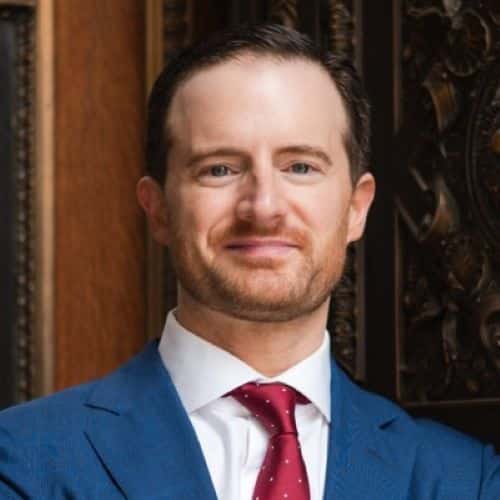
Tim Francis
Super Connector Tim Francis Reveals How One Private Dinner at a Time Built a Network That Drives Demand
Episode 16: Super Connector Tim Francis Reveals How One Private Dinner at a Time Built a Network That Drives Demand
Most agency owners know their network is their best source of new business.
Fewer know how to build one on purpose.
Nine years ago, Tim Francis moved from Canada to Austin, Texas. He knew three people. Within a year he was named one of Austin’s most connected people, and today he hosts rooms with billionaires.
In this conversation, Tim and Stephen Woessner deconstruct the recipe behind that network: one private dinner at a time, every other week, for two and a half years.
Quick answer: Tim Francis, founder of Great Assistant, built a network from three contacts to rooms of billionaires with one private dinner every other week for two and a half years. His recipe: invite people who are ambitious, generous, and kind; hold a retrospective after every dinner; close with the Big Ask, six minutes per guest for introductions only; and hire out everything except strategy, skill, and access. Stephen Woessner connects that recipe to how an agency creates demand.
Stephen’s framing for agency owners is direct. Tim is not wired differently from anyone listening. He became a super connector because he built each relationship with intention, and the process he describes creates intrigue and desire along the way. An In-Demand Agency™ is an agency whose right-fit prospects prefer it, choose it, and say “I cannot lose them,” and whose team is ready to deliver the experience that Demand promises. A curated room is one of the fastest ways to earn that kind of preference, and it never feels like networking.
How did one private dinner at a time build a network that drives demand?
Tim Francis’s network came from a repeatable process, run for years, and refined after every dinner. The process has four parts: a strict filter for who gets invited, a retrospective after every dinner, a closing hour engineered for introductions, and a hosting model that keeps the founder in the surgeon’s seat.
- Invite people who are ambitious, generous, and kind
Tim Francis and his co-host Tan Pham found guests at mixers, happy hours, and personal development workshops. The filter had three words. “If we found someone who met these 3 criteria, ambitious, generous, and kind.” Tim adds what the filter was not: “I did not say as rich as possible, as famous as possible, no clout chasing, no bag chasing.”
When Stephen asked how Tim and Tan decided who to invite to the first Austin dinner, Tim’s answer was the same three words: “We had been networking and we came across people that we thought were generous, kind, and ambitious. It was that simple.”
The filter also works in reverse. Tim met a new neighbor named John in the elevator and had twelve floors to invite a stranger to dinner. He described the dinners as private and invite-only, showed a photo of a set table on his phone, and asked for a number. Four weeks later John was at the table, launching a fund. Tim’s two tips from that ride: “Seeing is believing,” and the words private, invite-only are, in his phrase, catnip for high-level people.
Ambitious. Generous. Kind. Nothing about rich or famous.
- Run a retrospective after every single dinner
The first Austin dinner had six people, cocktail tables from Amazon, bar stools, and a private chef at about $220 a plate. Tim and Tan did a retrospective that night, and after every dinner since. Early on, the last guest left at 10:30 and the retrospective ran until 2:30 in the morning.
The retrospectives did two things. They cut the cost roughly in half, to about $110 a head. And they built a documented system, down to the bathroom supplies guests had asked for once. Over the first two and a half years, Tim counts 48 dinners, about 450 guests, and $50,000 to $55,000 spent. His comparison: “What would you spend to be in a mastermind? Or what would you spend to be part of a private club?”
Stephen’s observation is that the retrospective is why the recipe improved so fast. The biggest fix in the system arrived at dinner number nine, about four and a half months in, and it would never have arrived without dinners one through eight.
The system came from the retrospectives, one dinner at a time.
- Close every dinner with the Big Ask: six minutes, introductions only
At dinner number nine, a guest named Jordan mentioned he wanted to launch a nonprofit for inner-city kids in Austin. The guest beside him, Itay, said his top client was looking to invest in the inner city of Austin right then. Tim’s reaction was not celebration. “How tragic that 9 dinner parties had gone by or 8 dinner parties had gone by and there were probably people 6, not 6 feet from gold. 6 inches from gold, but we failed as facilitators.”
That night Tim created the Big Ask. The whole dinner is now engineered so the final hour works. Each guest gets six minutes to make one ask of the table about whatever they need next, business or personal. The rules are strict: “This is not masterminding, this is not coaching, this is not consulting, this is not soapboxing, this is not storytelling. We rigorously must stick to one thing and one thing only, and that is introductions.” Introductions to people, programs, books, courses, masterminds, communities, and podcasts. A hired hostess types every ask and every offer into a Google Doc. A phone timer or a glass marks six minutes.
Tim’s math on why introductions beat advice: the average person can text about 200 people, so ten people at a table reach 2,000. “Do you want a brain trust of 10 or 2,000?” His result: “Every single person in attendance has gotten between 3 and 8 powerful introductions.” The belief underneath it, in Tim’s words: “You are one introduction away from whatever it is you’re looking for next.”
Six minutes each. Introductions only. Three to eight per guest.
- Be the surgeon in the room and hire out everything else
The objection Tim hears most is time. How do you cook, clean, and coordinate every other week without a part-time job? His answer is the surgeon in the room. “A surgeon does only 3 things: strategy, high-level skill, high-level access.” Strategy is how many dinners, when, and who. Skill is where to find people, how to introduce yourself, and how to invite. Access is what happens around the table.
Everything else is hired. Tim’s dinners use a cleaner before, a caterer for the food, and a hostess during. When he moved to Austin, his first investment was an interior decorator so the apartment was ready. His advice for anyone starting out: “If you’re not the surgeon, hire a surgeon,” and ChatGPT can answer the table-setting and facilitation questions when a hired expert is out of reach.
Stephen’s bridge to the agency world is that the same principle applies to biz dev. The owner’s job is strategy, skill, and the relationship in the room. The setup belongs to a system and a team.
Strategy, skill, access. Everything else gets hired.
Tim Francis’s super connector recipe at a glance
| Step | What Tim does | What it produces |
| Invite filter | Ambitious, generous, and kind. Nothing about wealth or fame. | A table that trusts quickly and gives freely. |
| Cadence | One private dinner every other week, 8 to 10 guests, 6:00 to 10:30 PM. | 48 dinners and about 450 guests in the first two and a half years. |
| Retrospective | After every dinner, what to fix, what to add, what to facilitate better. | Cost cut from about $220 to $110 a head and a documented system. |
| The Big Ask | Final hour. Six minutes per guest. One ask. Introductions only. A hostess records every ask and offer. | Three to eight introductions for every guest. |
| Surgeon in the room | Host owns strategy, skill, and access. Cleaner, caterer, hostess, and decorator handle the rest. | Hosting that stays a practice, not a part-time job. |
| The invitation | “Private, invite-only dinners for entrepreneurs and investors,” plus a photo of a set table. | A stranger in an elevator becomes a guest in four weeks. |
Where did the recipe come from?
Tim Francis answered Stephen’s first question, why Austin, by going further back. In 2010 in Edmonton, Tim had lost $300,000 in the real estate crash, his touring band had broken up, and a mentor he trusted turned out to be the lead promoter of a Ponzi scheme. A stress-related illness left him unable to walk for months. In the second month, he describes a moment that changed his direction: he had been running after fame and fortune through music and real estate when what he needed to pursue was truth and mastery.
Two books arrived around then. Keith Ferrazzi’s Never Eat Alone, which Tim calls the original text for anyone curious about superconnecting, and Cal Newport’s So Good They Can’t Ignore You. Tim also drew on an earlier experience: at 17 he served as a House of Commons page on Parliament Hill in Ottawa, where he saw firsthand that relationships are how business and government get done.
With no design skills and a secondhand dining table, Tim learned to host from YouTube, including how far a chair should sit from the wall and how low a chandelier should hang. His third or fourth dinner in Canada hosted his friend Tan Pham, who had never felt more like a VIP. When Tim later moved to Austin, Tan asked whether they could do the same thing there, and the partnership began.
Stephen’s reason for highlighting the story on air: Tim did two things well that agency owners can copy. He told his origin story before teaching, which Neen James also taught in Episode 12, and he disarmed every reason not to start by showing how basic the first steps were.
What you will learn in this episode
- Why Stephen calls Tim a super connector, and why Tim says he is not wired differently
- The three-word invite filter and why it leaves out rich and famous
- How a retrospective after every dinner cut the cost in half and built a system
- What happened at dinner number nine, and how the Big Ask was born
- The six-minute rule, the introductions-only rule, and the brain trust of 2,000
- What it means to be the surgeon in the room and what to hire out
- How to turn a twelve-floor elevator ride into a dinner guest
Host your first curated dinner this quarter
- Write the filter. Decide the three qualities a guest must have. Tim’s are ambitious, generous, and kind. Write them down before you invite anyone.
- Pick a cadence you can keep. Tim chose every other week. Start with one dinner a month if that is what you can sustain, and put the next three dates on the calendar.
- Hire the surgeon’s help. Line up the caterer, the cleaner, and someone to take notes during the Big Ask, so you spend the evening on strategy, skill, and access.
- Engineer the last hour. Give every guest six minutes for one ask. Introductions only. Set a timer. Record every ask and offer.
- Hold the retrospective that night. What should have been facilitated better? What did a guest need that you did not have? Fix it before the next dinner.
Frequently asked questions
What is a super connector?
Stephen Woessner uses the term for Tim Francis, who moved from Canada to Austin knowing three people and within a year was named one of Austin’s most connected people. Tim’s point in the episode is that he is not wired differently. He built each relationship on purpose, one private dinner at a time, every other week for two and a half years.
How do you decide who to invite to a private dinner?
Tim Francis and his co-host Tan Pham used three criteria: ambitious, generous, and kind. Tim is explicit that the filter was never how rich or how famous someone was. They met candidates at mixers, happy hours, and personal development workshops, and when someone struck that chord, they invited them. The same three words later turned a stranger in an elevator into a dinner guest.
What is the Big Ask at a dinner party?
The Big Ask is the final hour of Tim Francis’s dinners. Each guest gets six minutes to make one ask of the table about whatever they need next, and the table responds with introductions only: to people, programs, books, courses, masterminds, communities, or podcasts. No coaching, consulting, or storytelling. A hired hostess types every ask and every offer into a shared Google Doc. Tim reports that every guest has left with between three and eight introductions.
How much does it cost to host private dinners like this?
Tim Francis says the first Austin dinner with a private chef cost about $220 per plate, and after retrospectives the per-head cost came down to about $110. Over the first two and a half years, 48 dinners and roughly 450 guests, he estimates the total at $50,000 to $55,000. He compares that to the price of a mastermind or a private club. These are Tim’s own figures from the interview.
How do you host dinners without it becoming a part-time job?
Tim Francis calls it being the surgeon in the room. A surgeon does three things: strategy, high-level skill, and high-level access. Everything else, cooking, cleaning, setup, and admin, is hired out. Tim’s dinners use a cleaner before, a caterer for the food, and a hostess during. He hired an interior decorator to set up his apartment and suggests ChatGPT for table settings and facilitation questions when a hired expert is out of reach.
How does hosting dinners connect to agency business development?
Stephen Woessner’s framing is that a curated room is a Transitional Moment, an interaction in which trust goes deeper, and that intrigue and desire are created in the invitation and the experience. Tim’s guests asked whether they could send a friend, a business partner, or a mentor to the next dinner. Tim’s explanation is that the dinner was so good they could not ignore it, which is how a network begins to drive demand without anyone pitching.
Continue the conversation
Episode 9 with Brett Gilliland maps out how leadership capacity turns Demand into predictable growth. Brett is the friend who reconnected Tim and Stephen, and his principle that an agency cannot outgrow its leadership is the surgeon-in-the-room idea at company scale.
Episode 12 with Neen James illuminates how exceptional experiences make your agency the preferred choice. Stephen points to Neen’s teaching on the origin story during this episode, and Tim’s dinners are an exceptional experience by design.
Episode 6, Stephen Woessner’s solocast on what turns trust into demand defines the Transitional Moment. A curated dinner is one: an interaction in which trust goes deeper.
Episode 14, Stephen Woessner’s solocast on intentional experiences argues that intentional experiences create intrigue, curiosity, and desire. Tim’s dinners are the proof in a single room.
Explore The In-Demand Agency Podcast archive.
Research notes and sources
- Tim Francis’s credentials. Stephen Woessner’s introduction states that Great Assistant has placed more than 1,000 executive assistants with a 96% long-term retention rate and a 95 NPS, and that Tim has guest lectured at Yale, NYU, and the University of Texas. These figures come from Tim and his company. Readers can confirm them at Great Assistant.
- Dinner figures. The counts and costs in these notes (48 dinners, about 450 guests, $50,000 to $55,000 over two and a half years, about $220 and later $110 per head, six minutes per guest, three to eight introductions per guest) are Tim Francis’s own account in the interview. They describe his dinners in Austin and are not a study of dinner hosting in general.
- Books Tim names. Never Eat Alone by Keith Ferrazzi, the source of the term anchor tenant as Tim uses it. So Good They Can’t Ignore You by Cal Newport. Tim also credits the Bhagavad Gita for the line about being entitled to the work and not its fruits.
- The Vince Lombardi line. Stephen quotes Vince Lombardi: the person at the top of the mountain did not fall there. The line is widely attributed to Lombardi; these notes present it as Stephen’s attribution rather than a verified primary source.
- Predictive ROI’s frameworks. In-Demand Agency™ and Transitional Moment are Predictive ROI’s terms, and the latter was coined by Erik Jensen. Super connector recipe is Stephen Woessner’s name for Tim’s process, used in this episode.
Resources
Learn more about Great Assistant
Connect with Tim Francis on LinkedIn
Explore The In-Demand Agency Podcast archive
Your right next step
Write down your three-word filter. Then invite the first eight people who fit it to a date on your calendar. The table does not have to be perfect. Tim’s first Austin dinner was six people around cocktail tables with a candle in the middle.
Hold the retrospective the same night, and schedule the next one.
Onward with gusto!
About Tim Francis
Tim Francis is the Founder of Great Assistant, which places executive assistants with entrepreneurs and professional services firms. He has guest lectured at Yale, NYU, and the University of Texas, and his newest venture acquires law firms and rebuilds them to be AI-first. Tim moved from Canada to Austin, Texas, in 2017 knowing three people, and within a year was named one of Austin’s most connected people. Find Tim at Great Assistant, on LinkedIn, and on YouTube, where he posts as Real Tim Francis.
About Stephen Woessner
Stephen Woessner is CEO and Partner of Predictive ROI and host of The In-Demand Agency Podcast. Over the past decade, his team has hosted more than 1,200 conversations with CEOs, bestselling authors, respected researchers, and agency leaders. Connect with Stephen on LinkedIn.
Episode transcript
The transcript below has been edited lightly for clarity, speaker identification, and proper names. The audio remains the authoritative version of the conversation.
Stephen Woessner [00:00:08 – 00:00:54]
Over the past decade, we’ve hosted more than 1,200 conversations with CEOs, bestselling authors, respected researchers, and agency leaders. And that body of work has generated nearly 1 million podcast downloads and YouTube views from listeners and viewers in more than 100 countries. 100 countries. And here’s the red thread running through the insights we’ve collected. Agencies that have built an authority position no longer struggle to be seen. Instead, they struggle to activate latent demand. Agency leaders have said to us, is exactly where we’re sitting right now, authority without demand. So welcome to the In-Demand Agency Podcast presented by Predictive ROI.
Stephen Woessner [00:00:55 – 00:02:08]
Sparked by research from the Harvard Business Review, Edelman, Gallup, Agency Core, all showing that trust has moved upstream. In today’s marketplace, authority earns attention. Yes, but demand, demand is what turns attention into action. Each episode deconstructs the science of demand from behavioral psychology, decision-making research, and the cross-industry strategies behind why in how B2B buyers make their decisions. We interviewed the world’s leading behavioral scientists, agency network leaders, and strategists from industries far beyond ours— experts who are reshaping how demand works. I’m your host, Stephen Woessner, and in each episode, we’ll translate their insights directly into the agency world. And these conversations are now being heard by a community of over 30,000 agency owners and their teams. With me for today’s episode is Tim Francis, founder of Great Assistant.
Stephen Woessner [00:02:09 – 00:03:08]
And Great Assistant has placed more than 1,000 executive assistants with entrepreneurs and professional services firms. with a 96% long-term stick rate and a 95 NPS. Tim has guest lectured at Yale, NYU, and the University of Texas, and his newest venture is rolling up law firms and rebuilding them to be AI first. And here’s why I was so excited when my longtime friend Brett Gilliland from Elite Entrepreneurs, who joined me back in Episode 9 of the podcast when he reconnected Tim and me. 9 years ago, Tim moved from Canada to Austin, Texas. He knew 3 people. Within a year, he was named one of Austin’s most connected people. Today, he hosts rooms with billionaires and is 1 or 2 introductions away from almost anyone you’d want to meet, friends.
Stephen Woessner [00:03:09 – 00:03:59]
Tim is a super connector. And agreed, he’s not wired differently than you and me. He became a super connector because he built each of those relationships with intention. And it was one private dinner at a time every other week in his apartment for 2 and a half years. So Tim and I are going to deconstruct What I’m going to call his super connector recipe, how he curated rooms and how he created intrigue and desire in the process of doing that, how you can earn your way into rooms outside your current ecosystem, and how that network never feels like networking and is on your path to becoming an in-demand agency.
Tim Francis [00:04:02 – 00:04:23]
I fundamentally believe this is my why reason at the heart of all this is anything that you are no more than one connection away from whatever you’re looking for next. I’ll say it again, you are one introduction away from whatever it is you’re looking for next. Clients, mentors, peers, a new staff member, you need an attorney, you need an accountant, you need a doctor.
Stephen Woessner [00:04:26 – 00:04:47]
Tim, welcome to the In-Demand Agency Podcast. I am so grateful that you said yes. And Brett, if you happen to be listening, thank you again for making the reintroduction so that Tim and I could connect and then spend time together in front of our audience. Thank you so much, Tim. Thank you so much, Brett. I’m really, really excited for this conversation.
Tim Francis [00:04:47 – 00:04:49]
I’ve been looking forward to it. Great to be here.
Stephen Woessner [00:04:50 – 00:05:55]
I’m looking forward to it too. I’m starting to like stumble all over my words. So this is going to be a great, great conversation. And I think when you and I connected or reconnected about a week and a half or so, maybe a couple weeks ago, and you and I were talking about how we might kind of frame up this conversation, and you were sharing this path and journey from Canada to Austin, Texas, and knowing 3 people and then building this sort of super network of really amazing, awesome people, which we’re going to talk about here during this conversation. The first thing that I thought about was like, well, how did you do that? Like, what was the first step? And maybe even preceding that, like, why did you want to do that? And maybe that would seem obvious to you now, but, you know, for some it might be like, well, why did he want to do that? And what was the first step in all of that? So friends, we’re going to talk about all of that in full transparency, and it’s just going to be a really, really great conversation. So let’s rewind back 9 years. You moved from Canada, Austin, Texas. First, why Austin as opposed to someplace else in the United States? So why did you choose Austin?
Tim Francis [00:05:55 – 00:06:34]
I’m going to wind it back just a little bit further back than that because knowing only 3 people in a city was actually an advantage. I started out in an even worse position than that, and that was when I was living in Edmonton, Canada. There was actually a period of my life where I couldn’t walk. I had lost $300,000 in the real estate crash. I had been a touring drummer, but we broke up right before going on stage at the West Music Awards. And on top of that, I had a mentor who I thought walked on water, but it turned out he was the lead promoter of a $12 million Ponzi scheme. Oh my. And the owner of the scheme was convicted in court, barred from holding securities, fled the country.
Tim Francis [00:06:34 – 00:06:55]
It was the stuff of movies. All that stress and exhaustion— this is 2010— led to me developing an illness, a stress-related illness called erythema nodosum. I still don’t know what it is to this day. It’s very rare. It’s stress-related. So unbeknownst to me, it led to me not being able to walk for 4, not days, not weeks, but months. Oh, wow. And I had a lot of time to lay in bed.
Tim Francis [00:06:55 – 00:07:18]
I had to move back to my parents for full-time care. And it was actually in the second month of that where a, a, a, I woke up one day and I felt a tingling in my body and a warmth. And I heard a voice that I’d never heard before. And it was, it was the divine speaking to me. And it asked a question. It said, Is this— and by this, I mean entrepreneurship— is this really what you want?
Stephen Woessner [00:07:19 – 00:07:19]
Hmm.
Tim Francis [00:07:20 – 00:07:36]
And I had no idea if a second went by or a minute went by or an hour went by, but time stood totally still. And then I heard another voice, and the voice was quiet and it was weak and it was buried deep inside of me, and it said, yes.
Stephen Woessner [00:07:37 – 00:07:37]
Hmm.
Tim Francis [00:07:38 – 00:07:45]
Suddenly it hit me that I’ve been chasing fame and fortune through rock and roll and real estate when what I needed to be chasing was truth and mastery.
Stephen Woessner [00:07:46 – 00:07:46]
Amen.
Tim Francis [00:07:47 – 00:08:29]
And that was in about February of 2011. That was the second month of the illness. I swear that’s the day I started to heal. I’m getting goosebumps just thinking back to that moment, laying in a bed in my parents’ upstairs bed, uh, parents’ home in an upstairs bedroom. And, uh, suddenly new ideas, quotes, books just serendipitously started coming into my world. One quote that rocked my world was, to the work we are entitled, but not the fruits thereof. And it was only years later that I found out that comes from the Bhagavad Gita from India. Another quote that rocked my world was, hell is meeting the man I could have been.
Tim Francis [00:08:29 – 00:09:15]
And that haunted me from 2011 when I was sick. until 2025. I actually got free from that quote just last year because of something I realized. So maybe we’ll talk about that later. And it was around that time that I was, I was, I was handed the book So Good They Can’t Ignore You. A friend of mine handed it to me, and I can’t remember if it was before that, but I had also received the book, uh, Never Eat Alone by Keith Ferrazzi. Talk about an OG book for anybody who’s curious, even 1% curious about superconnecting. And, and I, when I was 17 years old, I’d had this supreme opportunity to be, as a Canadian, to, to move to Ottawa, Canada, which is the nation’s capital, and to work on Parliament Hill.
Tim Francis [00:09:16 – 00:10:07]
And I was a House of Commons page. So it’s a messenger that’s on the floor of the House of Commons with the Prime Minister and the other members of Parliament. And you pour water for them and make photocopies and exchange messages secretly kind of between them while they’re in the middle of question period or making a bill come into a law. And I’d had the opportunity to see the power of relationships firsthand, firsthand. And to see, like, I was a part of the welcoming committee that invited Tony Blair and his wife, Cherie, you know, once they landed at a military airport and greeting them and meeting them and whatnot. So, you know, there’s a reason prime ministers and presidents fly to see each other, right? And it’s not just for the photo op, right? So I had this kind of like hint that like, okay, there’s something about shaking hands, kissing babies. Okay. That is like the ultimate way to go about building relationships and doing business.
Stephen Woessner [00:10:08 – 00:10:08]
Yeah. And breaking bread.
Tim Francis [00:10:09 – 00:10:36]
Breaking bread. Absolutely. Yes, absolutely. And then I get this book year, you know, that’s 2001 when I’m like 17 years old. Then I get this book, Never Eat Alone, Keith Ferrazzi. I’m like, okay, this seems like something about it just said there’s some wisdom here that’s like, like timeless. And, and I’m, and, you know, and then I lose all this money and then I get sick and then I meet the divine and I start recovering. I ended up after about 3 months of illness being able to walk again.
Tim Francis [00:10:36 – 00:10:53]
And I’ve been able to walk ever since. And let me tell you, we take for granted the gift of health, the gift of being able to walk. There’s a quote, uh, the healthy man or woman, the healthy person has 1,000 wishes, but the sick person has but one.
Stephen Woessner [00:10:53 – 00:10:53]
Yep.
Tim Francis [00:10:54 – 00:11:21]
Right. So I know you have a very personal connection to that. So I am, you know, it’s now, you know, 2011. I can walk again, but I got a new problem. I’m $300,000 in debt. I’ve got no business. I have no way to make money. And I got to pull myself up back from my absolute, like, not even bootstraps, but like negative bootstraps where a homeless person on the road was $300,000 richer than me in that moment.
Tim Francis [00:11:22 – 00:11:52]
It was tough. So I lived in a 1974 townhouse at the time, and I worked in the basement. And because it’s Canada, especially in the winter, it’s dark when you wake up and it’s dark when you go to bed. And Edmonton is halfway between Montana and Alaska, actually. So it is very dark. And so I got to get out of the basement, go on a walk from time to time, and I’m walking around my little neighborhood. And I’m like, you know, one day I want to be an old rich guy. I was like, well, what does that make me today? And I said, well, I’m an old rich guy in training.
Tim Francis [00:11:52 – 00:12:15]
I was like, well, what do old rich guys do? And I said, well, you learn how to write cursive hand notes that are beautiful and timeless and all the rest. So I actually learned how to do beautiful calligraphy. On another walk, I was like, well, what else old rich guys know to do? I was like, well, they host dinners. You know, I saw this happen in Ottawa, the prime minister and etc. I got to learn how to do that too. But here’s the thing. I’m a dude. I was a hockey player growing up.
Tim Francis [00:12:16 – 00:12:31]
In college, I played volleyball. I am not a design guy. I don’t know how to make things look pretty. I have no idea. I mean, I barely know which fork to use from my time on parlay. That’s about it. But like, what is a charger plate or how do I fold a linen napkin? No clue. No clue.
Tim Francis [00:12:32 – 00:13:16]
But I’d witnessed the magic of that kind of ceremony and pageantry and showing people how to feel Like they’re diplomats, like they’re VIPs. I witnessed it firsthand in Ottawa. I just didn’t know how to make it happen. So I jumped on YouTube and I started typing in like how to fold linen napkins to make the little pyramids. And then how do I set a table properly? And then I went on like, you know, like a Craigslist in Canada. We have something called Kijiji. It’s like Craigslist. And I’m trying to find like a dining room table and like I’m I’m on, I’m on, on YouTube, like how many inches from the back of the chair to the wall so people can actually pull up their chairs and how low should the chandelier hang so it’s not like cutting people’s eyeline to each other.
Tim Francis [00:13:16 – 00:13:45]
I’m grinding out like the most basic, like I know nothing. Okay. But I’ve got an idea. So I did that and I hosted my first ever private dinners in my home, in my tiny little home, 1974, nothing fancy about it with secondhand Chairs and dining room table I got off a secondhand website. This is how this started. And it was one of my friends, one of, one of my few American friends. His name is Tan Pham. And to me, he was an internet celebrity.
Tim Francis [00:13:45 – 00:14:04]
And I’d met him in this place called Austin I’d never really been to before. And, uh, and it turns out he’d never been to Canada. He’s a world traveler, but had never been to Canada. So I invited him to come up. He comes up to Canada. And I say, Tan, I host these dinners. It was like my 3rd or 4th dinner ever. I was, I wanted him to be my celebrity guest.
Tim Francis [00:14:04 – 00:14:24]
He’s this, he’s got this big podcast. He’s this internet, you know, famous guy or whatever. I was like, we got to do this. He’s like, well, I’m going to be there anyways to see the Canadian Rockies and see Banff and all these beautiful places. Sure, let’s do the dinner. And he’d never really participated in something like that before. I hosted him at that dinner and he had never felt more like a VIP.
Stephen Woessner [00:14:24 – 00:14:25]
Yeah.
Tim Francis [00:14:25 – 00:15:00]
And he was my anchor tenant, which is a Keith Ferrazzi quote or a term. And so I invited other entrepreneurs and we were all stuffed into this tiny little dining room area with chairs that were not 36 inches from the wall, but just enough we could squeeze in. And we had a, just a spectacular evening. So fast forward and I had flown 140 hours in one month. I was flying to the United States more and more and more, and I was so exhausted from flying. I was like, I have to get a work visa. I have to move to America. This just is not sustainable.
Tim Francis [00:15:01 – 00:15:26]
I have no friendships actively at the moment because I can’t keep them alive because I’m just on planes all the time. And I’m packing LBs around the midsection because I can’t work out. I got just conference food diet. Like, this isn’t good. And all I was optimizing for was I need to fly less. That’s all I care about. And so I said, what’s the one city that’s kind of centrally located that has direct flights everywhere? Las Vegas. Las Vegas has direct flights absolutely everywhere.
Tim Francis [00:15:27 – 00:15:36]
So on Google Maps, I figured out I’m going to live on the Strip, 5 minutes from McCarran International. I think it’s called the Harry Reid. They changed the name of it. And I knew the building. I was like certain I was going to move to Vegas.
Stephen Woessner [00:15:37 – 00:15:37]
Okay.
Tim Francis [00:15:38 – 00:16:02]
And when I was about 2 months away from getting the visa, I happened to talk to Tan. And I said, it’s coming. You know, the visa’s coming and then Tim Francis is coming to America. It’s going to be amazing. He said, well, why not Austin? I said, I never thought about it. So because I’m endlessly nerdy about everything, I actually created a stacked rank list of all the cities I’d been traveling to.
Stephen Woessner [00:16:02 – 00:16:03]
Shocking.
Tim Francis [00:16:04 – 00:16:04]
What’s that?
Stephen Woessner [00:16:04 – 00:16:05]
I said shocking that you did that.
Tim Francis [00:16:06 – 00:16:20]
Yeah, shocking. Exactly. Analysis. Analysis. Yeah. So I’m like, New York, LA, Chicago, Vegas, Orlando, San Diego, San Francisco, all these cities. Lo and behold, I had been going to Austin. I’d been to Austin like 5 times in like the previous year and a half.
Tim Francis [00:16:21 – 00:16:28]
So Terrence says, look, I’m going to be out of town. Why don’t you just live in my downtown Austin apartment for 1 week and see what it’s like?
Stephen Woessner [00:16:29 – 00:16:29]
Nice.
Tim Francis [00:16:29 – 00:16:44]
I was like, oh, that’s awesome. I mean, staying in downtown Austin is not cheap. So I mean, that was a very generous offer. I flew down and I had the like normal locals experience. I’m not just in and out for a conference. I went and got my haircut. I went to the gym. these guys.
Tim Francis [00:16:45 – 00:16:50]
I went grocery shopping. I could not believe the walkability of downtown Austin.
Stephen Woessner [00:16:50 – 00:16:50]
Yes.
Tim Francis [00:16:51 – 00:17:27]
And I came out of his apartment on the final day and I walked out through the front door, but I noticed the leasing office. I walked to the leasing office and said, here’s my date range, here’s my price range. What do you have available in this building? And they said, well, unfortunately, Mr. Francis, we only have one— 220 units, only one meets your criteria. That’s going to be available and someone’s in it right now. I said, okay, well, what’s the unit number? They told me, Stephen, it was the unit literally above my friend Tan’s unit. I was like, that is the sign of the divine telling me I need to move into this building in Austin. And I signed up, basically sight unseen.
Tim Francis [00:17:28 – 00:17:40]
So the moment I told Tan I was moving to Austin, he said, well, hold on. That dinner you hosted for me in Canada, can we do that in Austin now that you’re going to be living here? I said, brother, we are on the exact same wavelength.
Stephen Woessner [00:17:41 – 00:17:41]
Yeah.
Tim Francis [00:17:41 – 00:18:19]
So we partnered on starting to host private dinners for entrepreneurs and investors here in Austin. Now, I had a different problem. I only knew 3 people in Austin. One of them was Tan, and the other 2 were married to each other as a husband and wife team, David and Holly Gonzalez, shout out. And so they have a very similar network. So it’s kind of like knowing 2 people even though it’s 3 people right now. Thankfully, David’s very connected, as is— and Tan had some connections locally too. And the first investment I made when I moved to Austin is actually into an interior designer so I could quickly get like a decent looking place and the right table and the right chairs because I had to start literally from scratch.
Tim Francis [00:18:19 – 00:18:27]
It was less expensive to buy things from scratch than to ship everything from Canada. It was a hard financial reset to have to completely restart from scratch.
Stephen Woessner [00:18:28 – 00:18:28]
I bet.
Tim Francis [00:18:28 – 00:19:11]
But I did it. And Tan and I, our first dinner party, in my apartment had, I think it was 6 people. I didn’t even have a dining room table and I didn’t even have dining room chairs. All I could get in soon enough was cocktail tables from Amazon and bar stools. And it was this weird, it almost looked like a séance, a séance semicircle of cocktail tables with like a little You know, candle in the middle of it and like super weird and awkward. But you know what? 6 people came. And how we found them, everyone wants to know how. Well, if you had so many dinners, like how did you find them? We found people by just networking.
Tim Francis [00:19:12 – 00:19:40]
We would go to mixers and happy hours and we’d go to personal development workshops. And if we found someone who met these 3 criteria: ambitious, generous, and kind. Note, I did not say as rich as possible, as famous as possible. No clout chasing, no bag chasing. Okay. But ambitious, generous, kind. If we met someone that really kind of struck that chord for us, we’d invite them. And lo and behold, the first dinner.
Tim Francis [00:19:41 – 00:19:56]
Oh, Stephen, it was expensive. Oh my God. We did not know what we’re doing. We got a private chef. Our per plate cost, $220 a person. Oh my sweet mother. It was over $1,000. So it’s that first dinner.
Tim Francis [00:19:56 – 00:20:32]
We almost cried when the bill came in. So quickly we started to optimize. Now again, nerd factor 500 over here. Okay. I was like, Tan, we got to do a retrospective after every single dinner. And the dinner would go from 6 PM for, for a bit of a cocktail hour and it would end at 10:30. And sometimes, Stephen, especially in the beginning, the last guest who would walk out the door at 10:30, we would do a retrospective till 2:30 in the morning. We’re talking 4 hours of like, Oh my, like that conversation, we should have facilitated that better because there was opportunity.
Tim Francis [00:20:32 – 00:20:51]
Or, oh my goodness, a guest asked if we had toothpicks. We need to have toothpicks. And in those retrospectives, one after the other, had us starting to create a system and we documented it all. So as it became more financially viable, we got it down to, I think it was $110 a head.
Stephen Woessner [00:20:51 – 00:20:52]
Oh, wow. Okay.
Tim Francis [00:20:52 – 00:21:00]
So slashed it in half, which is amazing. And we also critically, we also got it down in terms of time.
Stephen Woessner [00:21:01 – 00:21:31]
Okay. Because hang on just one second. So because we’re really getting into some really great process here. Yeah. I want to mention 2 things to our audience, our friends who are listening to you right now that I want to highlight 2 really big pieces of how you structured how you kind of set up this process. And here’s what I mean by that. So friends, I want to highlight that you heard that before. So I was asking Tim to jump in, like, you know, why Austin and all of that.
Stephen Woessner [00:21:31 – 00:22:19]
And then he took us backward. And so here’s why I’m calling this out. What he shared with you is his origin story. And so friends, Neen James shared with you back in episode 12, The importance of articulating your origin story when you’re stepping in front of an audience and they don’t know you, they don’t have the context. And so Tim expertly set the origin story that brought him to this path. Okay. So that’s the first thing that I want to make sure, Tim, that our audience catches, because you did that very, very well. Second is when we’re setting up something, you know, big and sort of nebulous or Potentially scary, or like, what’s the investment? All of the things as to why not to go down this path, you expertly disarmed all of that.
Stephen Woessner [00:22:21 – 00:22:53]
You started talking about how that you broke that down even before you had the skills, the connections, and all of that kind of stuff. Like, where are we going to do it? And then what did you talk about? You went to YouTube. How low should the chandelier be? Or like, what’s the clearance between the table and the wall and all of those things, right? So you broke that into layperson, this is what I did in order to be on that path. That was awesome. I know that that wasn’t by accident. Like that is a really great way to kind of set up the skill. Okay. So, uh, I guess actually I’m looking at the clock here.
Stephen Woessner [00:22:53 – 00:23:20]
We should actually take our break here. Um, so friends, we’re going to take like a 2-minute break. Maybe it’s a 1-minute break. That doesn’t matter. We’re going to take a quick break and when we come back, I’ll try to like restart the momentum, which won’t be very easy, or it won’t be very hard with Tim. As you, as you noticed, he’s very passionate about this topic. So we’re going to, we’re going to take a quick break. We’re going to come back and then we’re going to get back into how this process really got refined with the retrospectives and all of those things.
Stephen Woessner [00:23:20 – 00:24:26]
So friends, Tim and I will be right back. Okay, friends. So Tim and I are back and we’re going to now work through this second segment of, we’re going to pick up the momentum with the retrospectives and And how the momentum started to stack. And then in the green room, before we actually started recording, Tim asked me, so I shared a Vince Lombardi quote with him and he said, will you share that during the conversation? I’m like, oh, okay, sure. And the quote is this. So Vince Lombardi, storied Hall of Fame coach of the Green Bay Packers back in the ’60s, said, the person at the top of the mountain Didn’t fall there. And the reason why I’m sharing that with you here is because you’re hearing in full transparency, Tim built this network from scratch and then quickly found some allies who were all in on this mission as well to then build it and so forth. But a lot of it was just getting started and doing the next thing and the next thing and the next thing and the next thing, and then it builds on one another.
Stephen Woessner [00:24:26 – 00:24:33]
So Okay. So Tim, back to you on the retrospective and then how the momentum built from there.
Tim Francis [00:24:34 – 00:24:52]
So I’m going to bring this back with some humor because we ended up doing a dinner like I’ve described, 10 guests, Tan and I, plus 8 new guests every single time, every other week for 2 and a half years.
Stephen Woessner [00:24:52 – 00:24:53]
Amazing.
Tim Francis [00:24:54 – 00:25:00]
We hosted hundreds and hundreds and hundreds of entrepreneurs and investors.
Stephen Woessner [00:25:00 – 00:25:00]
Yeah.
Tim Francis [00:25:01 – 00:25:18]
What it also means is we had dozens and dozens of dinners, which means we also had dozens and dozens of retrospectives. And so, I mean, Stephen, if you were to walk into my bathroom now, okay, we have Tide pens because a guest asked for that one time.
Stephen Woessner [00:25:18 – 00:25:18]
Sure.
Tim Francis [00:25:18 – 00:25:27]
We have We have floss, we have toothpicks, we have, uh, Breathright strip— what’s that called? Uh, like the Listerine strips. Oh
Stephen Woessner [00:25:27 – 00:25:27]
sure, yeah, right.
Tim Francis [00:25:28 – 00:25:45]
Them strips you put on your tongue, right, for breath. Um, we have organic and non-organic tampons. We have, uh, because a woman once had an eyelash emergency where her eyelash fell off, we have professional Hollywood-grade eyelash glue.
Stephen Woessner [00:25:45 – 00:25:45]
Now, wow.
Tim Francis [00:25:46 – 00:26:09]
Okay. Now, Stephen, I’m currently single. What do you think the reaction of a woman is who comes over to my apartment for dinner or something like that? And she goes through and sees this oddly supplied bathroom that even has eyelash glue. It requires some explaining. I’ll just leave it at that.
Stephen Woessner [00:26:10 – 00:26:37]
It most certainly would. Well, okay, so let’s do a, let’s do some quick math here. And see if these numbers hold up. So with roughly 8 to 10 people at each of the dinners every other week, 2.5 years, so see if this math holds up. That’s roughly 65-ish or so dinners and about 500 or so people collectively around the table. Does that math sound about right?
Tim Francis [00:26:38 – 00:26:52]
In the first 2.5 years, and we’ve had dinner since then, but in the first 2.5 years, 48 dinners. Wow. Uh, I forget the number. So 48 times 8, so it’s something like 450 guests or something like that.
Stephen Woessner [00:26:52 – 00:26:52]
Amazing.
Tim Francis [00:26:52 – 00:26:58]
And all in, I think we calculated we spent something like $50,000, $55,000 over 2 and a half years.
Stephen Woessner [00:26:58 – 00:26:59]
Okay.
Tim Francis [00:26:59 – 00:27:10]
Okay. Now, if you ask yourself, what would you spend to be in a mastermind? Or what would you spend to be part of a private club? Or what would you spend to get access to people
Stephen Woessner [00:27:10 – 00:27:10]
Yeah,
Tim Francis [00:27:10 – 00:27:15]
$55,000 is actually a steal of a deal, especially when you start hearing about some of the people we’re getting access to.
Stephen Woessner [00:27:16 – 00:27:16]
Yeah.
Tim Francis [00:27:16 – 00:27:52]
Now, just before our break, I started talking about not just the money, but the time, because that’s an objection almost everyone has. Like, how do you cook? How do you clean? How do you clean? You know, this just sounds like a part-time job. And I’m telling you, Stephen, there’s a version of how a person could do this, and it is a part-time job. We don’t want to do that, though. I wholeheartedly believe in being the surgeon in the room, not just when it comes to hosting dinners, but in running my business. A surgeon does only 3 things: strategy, high-level skill, high-level access. That’s it. They don’t do setup, coordination, maintenance, onboarding, offboarding, basic research, basic errands, etc., etc., etc., cooking, cleaning, candlestick maker and baker.
Tim Francis [00:27:52 – 00:28:28]
Okay. So, so in, when it comes to developing relationships, especially in a dinner party setting, what is the surgeon in the room work? Well, the first is actually just like, do I have a place to do this? And in this case, it was my apartment. I am not a surgeon in the room at picking chairs and tables and whatnot. So I hired a surgeon in the room called an interior decorator, and her name was Julie. And she came in and she said, this table, this picture should be on the wall, blah, blah, blah, blah, blah, blah. If you’re not the surgeon, hire a surgeon, hire a hired gun surgeon. These days, ChatGPT can be a great surgeon in the room to at least get you started.
Stephen Woessner [00:28:28 – 00:28:28]
Absolutely.
Tim Francis [00:28:29 – 00:29:03]
Awesome. Any question you’ve got— how do I set the table? What should the art be? How should I facilitate this thing? ChatGPT all the way. Okay, great. So, so when it comes to networking, what is high-level skill? Facilitation, knowing where to go to find people, right? That’s all strategy. High-level— so the strategy is how many dinners, when, who’s going to be there, etc. High-level skills, where should I go? How do I introduce myself? How do I invite people? There’s a whole skill to that. And then high-level relationships, that’s sitting around the table. None of that is cooking.
Tim Francis [00:29:04 – 00:29:41]
Cleaning, admin, et cetera, et cetera, et cetera. To this day, so I have high-level relationships with billionaires, with literally champions of industry. I mean, one guy I had lunch with at a table not too long ago sold his company for $1.5 billion, and he was sitting next to someone who’d sold for $3 billion. And to the left of him was someone who owned a piece of 53 venture funds and 161 venture companies. Like, You know, we all text each other. It is not my admin talking to his admin. It is not 16 levels of approvals. That is not how the world operates at the high levels.
Tim Francis [00:29:42 – 00:30:27]
So get used to texting, get used to sharing your number and having people’s numbers. I have Gary Vaynerchuk’s cell number in my cell phone right now, right? We’re not bros, but I did host him for an entire day here in Austin alongside Tim. We had a pickleball tournament, a 3-on-3 basketball tournament. The final dinner at the end was a 60-person curated dinner. The AUM, the assets under management of that room was easily over $100 billion. If a bomb had fallen on that room, I’m telling you, the New York Stock Exchange would have quivered. You literally would have seen a quiver in the stock exchange. We— I literally had to contemplate if I would hire private security like I had seen for diplomats in Ottawa when I was in the House of Commons.
Tim Francis [00:30:27 – 00:31:01]
Hmm. I had to come— I see it was like so close to literally doing that. That’s how high level this room was. So, okay, so let’s bring it all the way back to planet Earth here. So we host the dinners, we do the retrospectives, and one of the key items that we stumbled upon happened one day. It was like probably dinner party number 9. 2 seats over from me was a guy named Jordan, and the seat next to him was a guy named Itay. I— we didn’t really have a facilitation format at that time.
Tim Francis [00:31:01 – 00:31:04]
We were really just kind of going for it and noticing.
Stephen Woessner [00:31:05 – 00:31:05]
Hmm.
Tim Francis [00:31:06 – 00:31:41]
And I happened to notice at dinner party number 9, Jordan happened to mention that he wanted to launch a nonprofit in Austin that helped inner-city kids see that they don’t have to turn to entertainment sports or drugs to get a step up in life, that there’s investing and entrepreneurship and college and whatnot. And by total fluke, it had to be the hand of God. Seated next to him was this guy, Itay, who whips around and says, what? My top client is literally looking to invest in the inner city of Austin right now.
Stephen Woessner [00:31:41 – 00:31:42]
How amazing is that?
Tim Francis [00:31:43 – 00:32:18]
Unbelievable. And how tragic. How tragic that 9 dinner parties had gone by, or 8 dinner parties had gone by, and there were probably people 6, not 6 feet from gold, 6 inches from gold, but we failed as facilitators to mine that gold and get it on the table. So on the spot in our retrospective after that dinner, I said to Tan, emergency, emergency, emergency. We gotta, we have got to fix this. So I came up with something called the big ask.
Stephen Woessner [00:32:18 – 00:32:18]
Okay.
Tim Francis [00:32:19 – 00:32:43]
Everything about the dinner is now engineered so that the big ask, which is the final hour of the dinner, is optimized. People feel comfortable. They know who they are. They’ve got a sense of trust, familiarity. You know, they know what they’re willing to say, not say, offer, not offer. I fundamentally believe this is my why reason at the heart of all this is anything that, that you are no more than one connection away from whatever you’re looking for next.
Stephen Woessner [00:32:43 – 00:32:43]
Yep.
Tim Francis [00:32:43 – 00:33:14]
I’ll say it again. You are one introduction away from whatever it is you’re looking for next. Clients, mentors, uh, peers, a new staff member. You need an attorney, you need an accountant, you need a doctor. I mean, we’ve had people around the table say, I’m looking to adopt children. I want to meet other adults, you know, married couples that have adopted children. Help, right? So that’s business or personal. So everything we do in the dinner Before the dinner, during the dinner, leads up to optimizing for the big ask.
Tim Francis [00:33:15 – 00:33:30]
The big ask is the final hour of the dinner. And we go around, each person gets 6 minutes, 6 minutes. They’re invited to make one ask of the table on whatever it is they’re working on next. I’m sorry, right now, on whatever they need next.
Stephen Woessner [00:33:30 – 00:33:30]
Okay.
Tim Francis [00:33:31 – 00:34:10]
At our dinners, we have a host cleaner who comes before, we have a caterer who brings the food, and then we have a hostess. So we have 3 people we hire to help. The hostess sits listening to the big ask with a laptop open and a Google Doc open with everyone’s name and types everyone’s ask as they say it. And then all the big offers that come from that. 6 minutes does not sound like a lot of time, but every single time we’ve done this, every single person in attendance has gotten between 3 and 8 powerful introductions. So the person’s Says their ask, and we, we provide guidelines. This is not masterminding. This is not coaching.
Tim Francis [00:34:11 – 00:34:19]
This is not consulting. This is not soapboxing. This is not storytelling. We rigorously must stick to one thing and one thing only, and that is introduction.
Stephen Woessner [00:34:19 – 00:34:19]
Hmm.
Tim Francis [00:34:20 – 00:34:50]
Introductions to people, programs, to books, to courses, to masterminds, communities, to podcasts like yours, Stephen. Introductions only. Okay. So you got to be ready to facilitate that, right? And then you got to have at least one person be the timekeeper. And it’s socially awkward if someone says, 6 minutes is up. So you get people to pull out a phone and it rings at 6 minutes, or you ring the glass, you know, the, the clink the champagne glass or whatever at 6 minutes. Okay. But you rip around the room, 6 minutes, 6 minutes, 6 minutes, 6 minutes, 6 minutes at the end.
Tim Francis [00:34:51 – 00:35:22]
Here’s the alternative. If you don’t keep it to just introductions, if you get into Coaching, masterminding, all you’re getting is the brain trust of 9 other people. The average person could text around 200 people. By thinking about introductions, you’re going 10 people at the table times 200 people. That’s a brain trust of 2,000 people. Do you want a brain trust of 10 or 2,000? Think about it. Okay. So we would do it that way and over and over and over again.
Tim Francis [00:35:22 – 00:35:39]
Our guests would say, that was the most incredible dinner I have ever been to. And many of them would say, can I send my friend, my business partner, my colleague, my mentor? You should be on this podcast, et cetera. And now this thing starts to get life because why? It was so good they couldn’t ignore us.
Stephen Woessner [00:35:39 – 00:36:11]
Yeah, it’s helpful. So before we come in for a landing here, I want to again highlight a couple of really great points. I think you’ve done a really good job of articulating how valuable the big ask is. It’s in the final hour. That’s really great. 3 to 8 powerful introductions. But the point that I want to emphasize to our friends listening is the fact that it’s because of the retrospective. And I get why you say, you know, geez, these missed opportunities and so forth.
Stephen Woessner [00:36:12 – 00:37:03]
But candidly, it was dinner number 9. You were 4 and a half months-ish into this experiment. That’s pretty fast to have that kind of uncovering at dinner number 9. And so the reason why I want to highlight that is that would never have happened. You would never have gotten to dinner number 9 had you not had dinner number 1 in Canada and then the other additional dinners once you moved to Austin. And it takes the repetitions. So again, as we think about coming in for a landing, one thing that I want to make sure that we have a fine point on is, you know, when you had Tan Pham, I think you said his name is, correct? Okay. And so when you guys were doing this together, like when you thought about having that first dinner in Austin, how did you decide who to invite?
Tim Francis [00:37:05 – 00:37:11]
We had been networking and we came across people that we thought were generous, kind, and ambitious. It was that simple. Yep.
Stephen Woessner [00:37:12 – 00:37:16]
And so it was, it was literally that recipe, the 3-part recipe that you had shared earlier.
Tim Francis [00:37:16 – 00:37:20]
That’s it. And 2 super pro tips I can give people.
Stephen Woessner [00:37:20 – 00:37:20]
Okay.
Tim Francis [00:37:21 – 00:37:29]
If it’s not already obvious, the opportunity to grow your business with dinner parties or other event hosting like this is in the big ask.
Stephen Woessner [00:37:30 – 00:37:30]
Yeah.
Tim Francis [00:37:30 – 00:37:45]
Because you as the facilitator, you get a big ask too. And you can say, I’m looking for speaking opportunities or clients of this type or whatnot. When you make that ask, you will help yourself in no end if you make an ask that has labels. Don’t say, I’m looking
Stephen Woessner [00:37:45 – 00:37:45]
for
Tim Francis [00:37:45 – 00:37:46]
clients. Oh,
Stephen Woessner [00:37:46 – 00:37:46]
okay.
Tim Francis [00:37:48 – 00:38:14]
Give it labels. I want to meet attorneys. Our brain organizes on labels. I want to meet consumer packaged goods brands doing more than $7 million. I want to meet e-commerce companies that are selling on Amazon. Give it labels and you will watch people’s brains will absolutely unlock. Okay? So that’s pro tip 1 and 2 right there. Okay?
Stephen Woessner [00:38:14 – 00:38:14]
Okay.
Tim Francis [00:38:15 – 00:38:21]
Uh, pro tip number 3, this’ll get your conversion rates up on people saying yes to coming to your dinner.
Stephen Woessner [00:38:21 – 00:38:22]
Okay.
Tim Francis [00:38:22 – 00:38:40]
At dinner party number 1, that first time that you set up your table to be pretty and inviting or whatever, take one photo that has a little bit of an artistic flair to it, a little bokeh in the background, portrait mode on iPhone, whatever it takes. Okay. Make this thing look like it’s put together.
Stephen Woessner [00:38:41 – 00:38:41]
Yeah.
Tim Francis [00:38:41 – 00:38:44]
Because seeing is believing. A picture’s worth a thousand words.
Stephen Woessner [00:38:44 – 00:38:44]
Amen.
Tim Francis [00:38:44 – 00:38:59]
And so then I would be networking. I had an experience. I got into my building. My building’s downtown. It’s not a super luxury building, but it’s like a kind of an entry-level luxury building. And someone gets on, on floor 3. Okay. Which is a parking garage level.
Tim Francis [00:38:59 – 00:39:08]
And this guy’s got salt and pepper hair. He’s probably in the late 50s, early 60s, and he hits the top floor of my building. Do you think this guy has money?
Stephen Woessner [00:39:09 – 00:39:11]
It would be reasonable to assume.
Tim Francis [00:39:12 – 00:39:38]
And turns out his name is John. Never met the guy, never seen him before. I said, oh, good day, sir. How are you? Are you new in the building? He says, yeah, I just moved from New York. Is someone from New York who fits this demographic, etc., probably have some means? Probably. Do I— are they probably ambitious, generous, and kind? Well, let’s find out. And I had from floor 3 to my floor, which at the time was 15, I had 12 floors to convert a total stranger to coming to my dinner. Okay.
Tim Francis [00:39:39 – 00:39:40]
And I said to him—
Stephen Woessner [00:39:41 – 00:39:43]
That’s, that’s the true definition of an elevator pitch, Tim.
Tim Francis [00:39:44 – 00:40:09]
Literally. And I said, well, it’s so nice to meet you. What’s your name? He says, John. I said, I’m Tim. I said, you know, and I’m watching the floors go by, 4, 5, 6, you know, And I said, I host private invite-only dinners for entrepreneurs and investors. I think you would really enjoy coming to help you meet some new folks here now that you’re new in Austin. He says, oh, that’s very interesting. I said, yeah, this is what it looks like.
Tim Francis [00:40:09 – 00:40:38]
And this is the hack. When you show someone a picture of your dinner party and it looks put together, instantly they go, oh, I’d go to that. And it’s like, great, what’s your number? He gives me his number. 4 weeks later, he was at my dinner and he was launching a fund, you know, that was fancy and high-flying and all the rest. And now he’s in my network. So that’s another pro tip. Seeing is believing. That whole wording, private invite only, also very catnip-y for high-level people.
Stephen Woessner [00:40:39 – 00:40:59]
Yeah. And you prove it in the experience when, when they arrive. So this has been absolutely fantastic. Thank you for the energy. Thank you for the transparency. Thank you for your generosity. I know we need to come in for a landing. And friends, as we come in for a landing, in case this might be the first time you’re joining us for the podcast, so we’re going to come in for a landing here.
Stephen Woessner [00:40:59 – 00:41:10]
I’m going to say goodbye to Tim and then please stay with me because then I’m going to share some of my biggest takeaways. So Tim, as we come in for a landing, any final advice, any remaining insights that you’d like to share? And then we’ll close out and say goodbye.
Tim Francis [00:41:11 – 00:41:38]
Yeah, absolutely. If anyone wants to get in touch with me on all social media, I’m @RealTimFrancis, whether that’s Facebook, whether that’s YouTube, whether that’s Instagram, LinkedIn. So come say hi to me there. Would love to hear about your own dinner party adventures. If you have any other clarifying questions, hit me up on a DM on LinkedIn. That would be wonderful. My company where we hire executive assistants is called Great Assistant. You can go to greatassistant.com.
Tim Francis [00:41:38 – 00:41:54]
We hold nothing back on the website. If you want to know pricing, timeline, program, all the rest, it’s right there. You don’t have to get on a sales call to know exactly what we’re up to. And with that, I thank you for having me, Stephen. This has not disappointed at all. You’re, you’re so good at this and you’re such a good human.
Stephen Woessner [00:41:54 – 00:42:19]
Well, that is very kind of you to say. Thank you, my friend. And Brett, if you happen to be listening, thank you again for putting Tim and I together again so that we could have this great conversation. Um, so Tim, thank you very, very much for being so generous. Thank you for sharing your insights and wisdom. I’m grateful for that. Thank you. Okay, friends, I hope you enjoyed the conversation with Tim as much as I did.
Stephen Woessner [00:42:19 – 00:42:51]
Holy bananas! Candidly, I’ve been to a lot of dinners, and I’m sure that you have too, and I’ve hosted a few, but none of them were engineered the way that Tim Engineers his. And that’s the word, engineered. This stuck with me as Tim walked us through his recipe. So his invite list has a filter. Yep. Every dinner ends with a retrospective. Yep. That’s the process that they created shortly into this process.
Stephen Woessner [00:42:52 – 00:43:38]
The last hour is built for one purpose. Yep. And Tim only does 3 things that he feels that a host should do running a process like this. So when people call Tim a super connector, in my opinion, what they’re actually describing is a system, a system that produces introductions every other week. That’s the cadence that Tim uses for the dinners every other week. Whether Tim is feeling charming that night or not, it still produces introductions. And a system that produces introductions like that is a system, friends, that can produce demand. So I’m excited to share 4 of my, uh, what I’ll call my biggest takeaways with you here so that you and your team can put them to work this week.
Stephen Woessner [00:43:39 – 00:44:25]
Okay, so let’s dive in. Uh, takeaway number 1, decide who gets a seat before you set the table. Uh, Tim and his co-host have 3 words for who got an invitation. Were they ambitious? Were they generous? Were they kind? 3 words. There’s nothing in there about being wealthy. There’s nothing in there about being some sort of internet famous influencer. And when I asked how they chose the guests for that very first dinner in Austin, Tim said, well, that was pretty simple. Were they ambitious? Were they generous? And were they kind? So friends, think about your right-fit client dossier, or maybe you call it your ideal client profile.
Stephen Woessner [00:44:26 – 00:45:23]
You already know who you want in the room. So Tim is suggesting that you apply that same discipline to the people you gather around a table because the room that you curate is the network that can drive demand. All right, takeaway number 2, run the retrospective every single time. And so that first Austin dinner cost about $220 a plate, and Tim and his co-host almost cried when they got the bill. So they sat down that night and asked, okay, what are we going to fix? And then they ran that same retrospective process after every dinner, sometimes until 2:30 in the morning. And here’s what the retrospectives produced over time. The cost came down by half. The bathroom got stocked with everything a guest had ever asked for or might ask for.
Stephen Woessner [00:45:24 – 00:46:25]
And by dinner number 9, the retrospective caught the biggest miss of all, which is takeaway number 3, and we’ll get to in just a minute. So candidly, this is the same reason we run here at Predictive that we run a debrief after every Help Me Understand conversation because the system gets better one repetition at a time. Okay, so takeaway number 3, engineer the last hour for introductions only. So by dinner number 9, 2 guests sitting next to each other had exactly what the other one needed and Each of them almost missed it. And Tim’s reaction was, oh my gosh, 6 inches from gold, but we failed as facilitators. Now, ultimately, did they fail? No, of course not. And this was only dinner number 9, as you heard Tim and I talk about. But as a result of that discovery, they built what they called the Big Ask.
Stephen Woessner [00:46:25 – 00:47:03]
So the final hour of every dinner became the Big Ask. Each guest received 6 minutes to make one ask of the table. And the rule was pretty darn strict. You know, we rigorously— so I’m quoting Tim here— we rigorously stuck to the one thing and the one thing only, and that was introductions. There was no coaching, no consulting, no storytelling. It was limited to introductions to people, programs, books, communities, and podcasts. And And here is Tim’s math. The average person can text about 200 people.
Stephen Woessner [00:47:05 – 00:48:08]
So let’s say there are 10 people at the table. So that’s 2,000 people. So he asked, quote, and I’m quoting Tim again here, do you want a brain trust of 10 or do you want a brain trust of 2,000? And the result was every single person in attendance got between 3 and 8 powerful introductions. Friends, that is a demand engine. So nobody was pitching around the table, nobody sold, and every guest was left with a reason to send a friend to the next dinner. Okay, so as we come in for a landing here, here’s takeaway number 4: be the surgeon in the room. The objection Tim hears most of the time, like, How do you cook? How do you clean? How do you coordinate all of this every other week? And his answer is, a surgeon does only 3 things: strategy, high-level skill, and high-level access. Strategy is how many dinners, when, and who.
Stephen Woessner [00:48:08 – 00:48:40]
Skill is how do you find people and how do you invite them? And access is what happens around the table. Everything else in Tim’s process is hired out. There’s a cleaner beforehand, there’s a caterer, there’s a host, you know, during the dinner. And Tim’s advice is, if you are not the surgeon at something, then you need to hire a surgeon. So friends, that’s true also of your biz dev. Your job is strategy. Your job is skill. Your job is the relationship in the room.
Stephen Woessner [00:48:41 – 00:49:44]
The setup belongs to a system and a team. Okay. So here’s, here’s how I’m thinking about Tim’s teaching in the context of the authority-demand ecosystem. What is going to close the gap between being admired and being chosen? Authority earns attention. Awesome. A curated dinner could be a transitional moment along your trust bridge, an experience where trust goes deeper because your right-fit prospect felt seen, heard, helped, seen, heard, and valued before you ever asked for anything. And on the demand side, the big ask puts the whole table to work for each other, which is why Tim’s guests ask, hey, can I send a friend? Can I introduce you to my business partner, my mentor? That is demand, one private dinner at a time, friends. So here’s my challenge to you.
Stephen Woessner [00:49:44 – 00:50:20]
Before the end of the year, host one dinner. Write your 3 words. Invite the first 8 people who fit them. Hire the help so you spend the night on the relationships and give the last hour to the big ask. Just like Tim does. 6 minutes for each person, introductions only. One table, one ask, one introduction that would not have happened otherwise because the person at the top of the mountain did not fall there. And Tim’s network did not either.
Stephen Woessner [00:50:21 – 00:50:43]
It was built one dinner at a time, and yours can be too. So friends, thank you for spending your time with Tim and me today. We all have the same 86,400 seconds in a day, and I am grateful that you chose to spend some of your time with Tim and me today. And I look forward to being with you next week. Until then, onward with gusto.

Each episode of the In-Demand Agency Podcast deconstructs the science of demand…from behavioral psychology, decision-making research, and the cross-industry strategies behind why B2B buyers make decisions.